Aminatou Haidar's Vision of Home
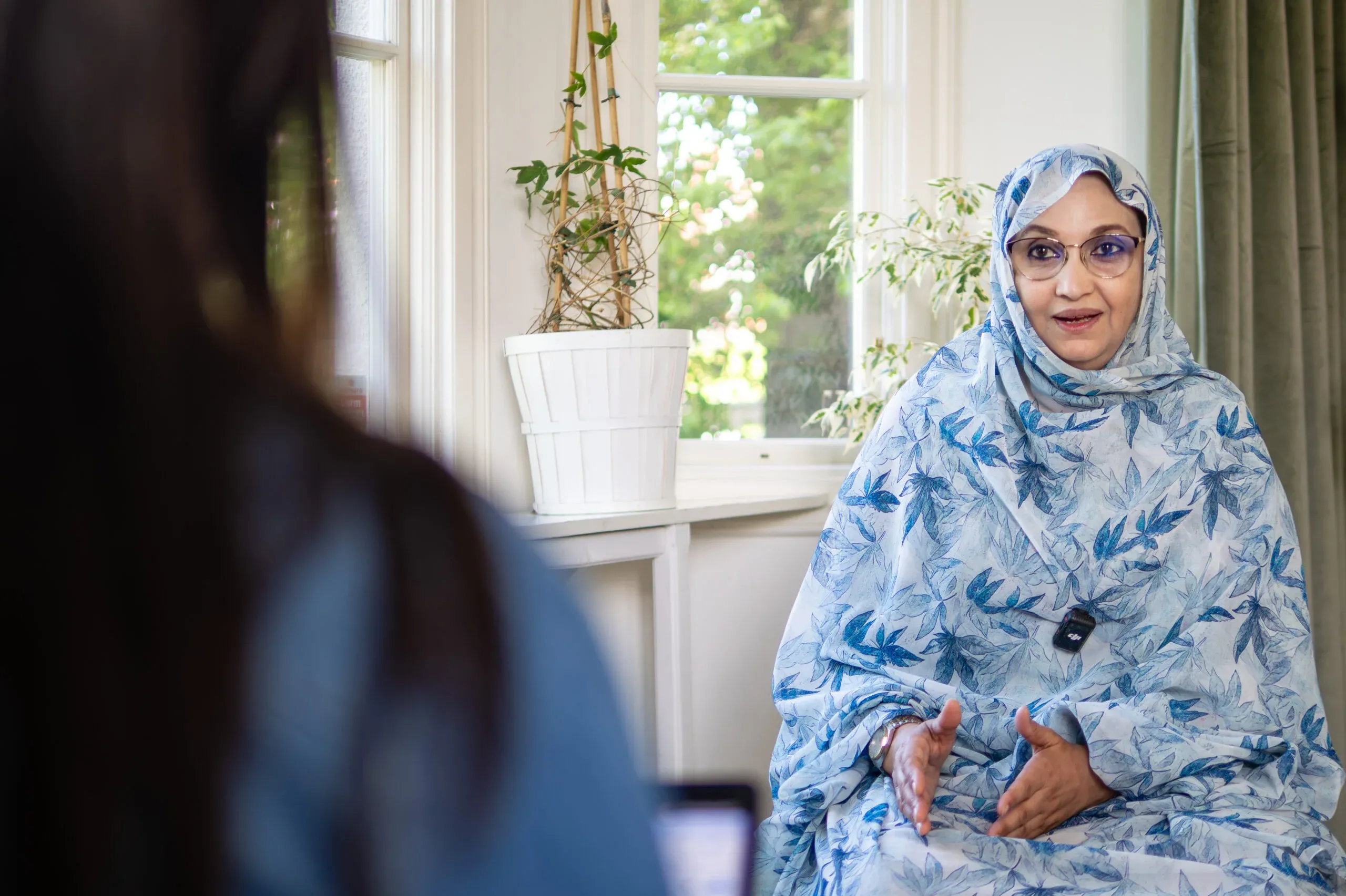
In a poignant interview conducted in Stockholm, Aminatou Haidar, the 2019 Right Livelihood Laureate, painted a stark picture of her homeland, Western Sahara. When prompted to envision home, while many would conjure up comforting memories of recipes, songs, or scents, Haidar’s mind drifts to the grim realities of imprisonment, torture, and the ongoing repression faced by her people, including vulnerable groups such as children, women, and the elderly. Her steadfast commitment as a nonviolent activist and human rights defender has earned her the Right Livelihood Award, recognizing her decades-long struggle against Morocco's illegal occupation of Western Sahara—a fight that has come at a tremendous personal cost, affecting her freedom, health, and nearly her life. During our conversation, Haidar expressed her deep concern for her community, which is now on the brink of despair.
The Harsh Reality of Occupation
Since its occupation began in 1975, Western Sahara has remained Africa's last colony, home to approximately 600,000 people who have been denied any voice in their governance. The situation has exacerbated as Moroccan settlers continue to monopolize wealth and opportunities, forcing the Sahrawi population deeper into poverty and prompting a mass exodus of young people seeking better prospects. Haidar eloquently articulated the plight of her people, stating, "[Morocco] continues with its torture, its violence against protesters, continues with arbitrary detention, and with harsh sentences against detainees." The systematic marginalization of Sahrawis, coupled with preferential access to education and employment for Moroccan settlers, has fostered a sense of hopelessness among the youth. Haidar pointed out that many young Sahrawis are either imprisoned, living abroad, or struggling with substance abuse, a dire strategy employed by Morocco to suppress Sahrawi resistance.
Moreover, the socio-economic landscape is bleak for those who remain, as Moroccan policies encourage the displacement of Sahrawis while making survival increasingly difficult. With over 170,000 Sahrawis living as refugees in neighboring Algeria, the demographics of Western Sahara have drastically shifted. "Today, we represent less than 25 percent of the population," Haidar lamented, emphasizing that a deliberate strategic policy by Morocco is to inundate the territory with settlers, systematically depriving the Sahrawi people of their resources and opportunities, thereby condemning them to poverty in their own homeland.
Activists such as Haidar face even greater challenges, as their dissent often leads to retaliation not only against themselves but also against their families. Haidar recounted how being an activist leads to job dismissals, inhibiting even their loved ones from securing employment. "This is retaliation. Morocco takes revenge — even on our families — to silence our voices, but also to terrorize others so they do not speak out against the occupation," she explained, highlighting the oppressive atmosphere that stifles free expression.
For over fifty years, the Sahrawi people have awaited a United Nations referendum to determine their future, but with little progress and deteriorating living conditions, faith in peaceful solutions has begun to crumble. Haidar reflected on this disillusionment, stating, "Everyone is now saying, ‘What was taken by force cannot be recovered without force.’" Despite her desire for a nonviolent resolution, she recognizes the international community’s failure to oppose the Moroccan occupation and grant the Sahrawi people the opportunity to define their destiny.
However, amid this despair, Haidar remains hopeful that increased media attention and public advocacy can galvanize the international community to act. She urged those interested in understanding the reality of the Sahrawi struggle to visit the occupied territories and witness the situation firsthand. "Raise your voices to put an end to this injustice, so that the international community finally has the will to resolve this conflict," she implored, emphasizing the urgent need for solidarity and action in the face of ongoing oppression.
As reported by rightlivelihood.org.