Significant Milestone for Morocco
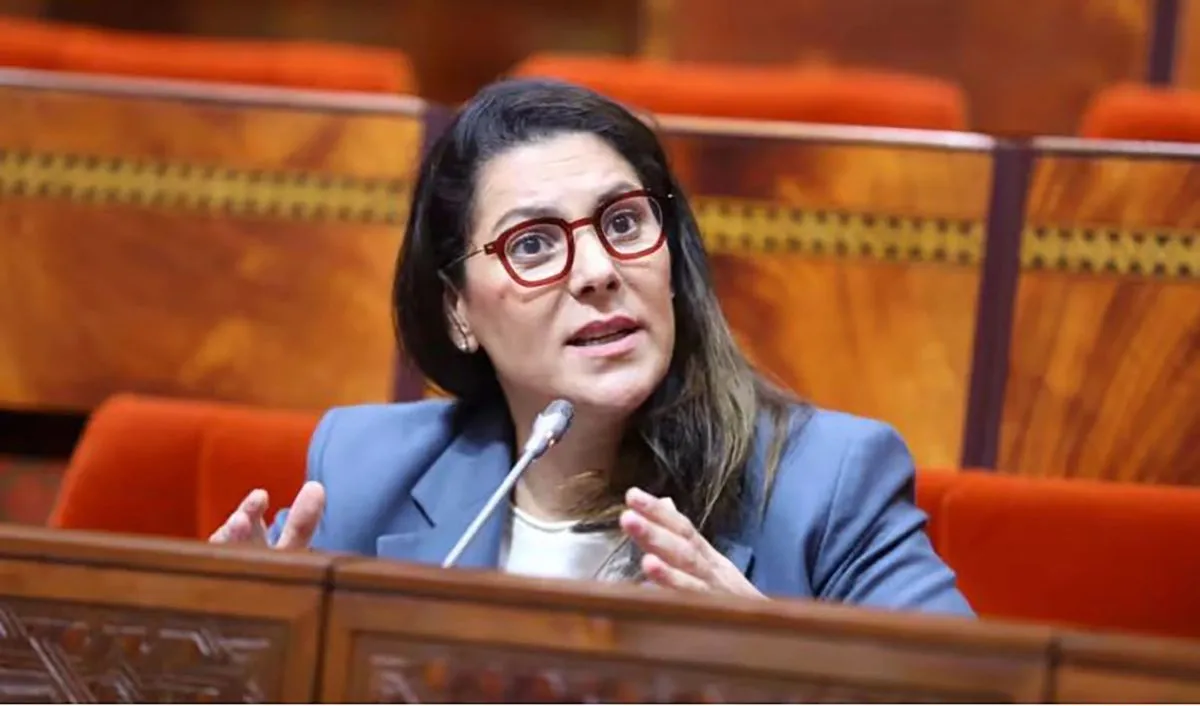
The recent appointment of Fatima Zahra El Mansouri as the first female Prime Minister of Morocco has marked a significant milestone in the nation's political landscape, igniting renewed discussions about the role of women in governance and the impact of religious and conservative traditions on society. While many view this historic appointment as a progressive step, it raises important questions regarding the potential implementation of tangible reforms aimed at achieving gender equality, particularly in areas such as family law, inheritance rights, and education for girls. Despite her position, it is essential to acknowledge that El Mansouri's influence may be curtailed by the extensive powers held by the monarchy and the ongoing political and social challenges that could obstruct change within the country.
An Islamic proverb, "A nation that entrusts its affairs to a woman will never succeed," has resurfaced in Morocco following King Mohammed VI's historic decision to appoint El Mansouri as Prime Minister. This sentiment reflects the ongoing tension between traditional beliefs and the evolving political framework.
Challenges and Opportunities for Women in Morocco
Mustafa Ramid, a former justice minister from an Islamist-led government, recently echoed this proverb in a detailed Facebook post, questioning whether a woman should hold the highest office in the country. He suggested that Morocco, a nation with a predominantly Muslim population, has struck a balance between equality and governance responsibilities, with the highest office, that of the king, still reserved for men. Morocco remains a monarchy where the king's powers are enshrined in the constitution, yet executive authority resides with the 63-year-old monarch.
El Mansouri's party, the Authenticity and Modernity Party (PAM), secured the most seats in the September parliamentary elections and subsequently announced the formation of a coalition with three other parties, controlling 207 of the 395 seats in the parliament. While her appointment is historic, it underscores the persistent reservations regarding women's roles in positions of power within Moroccan society.
In a street interview conducted by local channel Chouf TV the day after her appointment, reactions from Moroccan men varied, with many expressing hesitation. Some accepted the king's decision, while others voiced discomfort with a woman in such a high-ranking position. One elderly man remarked on the strangeness of a woman leading the government and questioned the implications of her role.
Criticism of the monarchy in Morocco can lead to legal repercussions, as the penal code criminalizes certain forms of insult or attack on the king, the royal family, and the institution of the monarchy. This political climate adds another layer of complexity to the challenges faced by El Mansouri and women in leadership roles.
The appointment has also sparked political satire online, with videos circulating that depict humorous scenarios, reflecting public skepticism about a woman leading the government. Nevertheless, many young Moroccans, particularly women, have welcomed the news as a sign of progress.
While attitudes in Morocco are evolving, conservative and religious views still exert significant influence, particularly concerning gender equality debates surrounding family law, inheritance, marriage, and divorce. Current inheritance laws dictate that daughters typically receive half the share of sons under similar conditions. The Supreme Council of Ulema, Morocco's religious authority, has resisted calls for equality in inheritance laws, citing Islamic jurisprudence as justification.
In a 2022 report, the Moroccan National Human Rights Council noted that unequal inheritance rules contribute to the poverty of women. Additionally, polygamy remains legal under specific conditions, with proposed changes to family law allowing women to stipulate in marriage contracts that their husbands cannot marry additional wives, although exceptions exist for infertility or illness of the first wife. Women's rights organizations have criticized these exceptions, raising concerns over privacy and medical confidentiality.
These issues are at the heart of proposals for reforming the Moudawana, Morocco's family code governing marriage, divorce, and child custody. A reform package was announced for 2024, but these changes have yet to be enacted. Alongside family law reform, many young women hope that El Mansouri will prioritize improving education for girls.
According to the Moroccan High Commission for Planning, the official national statistics office, only 55% of girls aged 15 to 17 in rural areas were attending school as of 2025. Issues such as poverty, early marriage, and high dropout rates continue to pose significant barriers to education. In urban areas, the attendance rate is 100%. Chifae Laazouzi, a young Moroccan, expressed concerns about the challenges faced by girls in rural areas, including the lack of access to menstrual hygiene products and the stigma surrounding menstruation. "Menstrual health is still considered taboo... I wish menstrual products were available for free in schools," she noted.
El Mansouri is no stranger to politics. With over two decades in public service, she has held various positions, including mayor of Marrakech and minister of national planning, urban development, housing, and city policy. Following her appointment, she described the moment as a historic achievement for Moroccan women, stating, "Being the first woman to lead the government is not only a source of pride for me but for all women in the kingdom."
However, she has not indicated whether she plans to pursue reforms to family law. Throughout her political career, she has not publicly addressed women’s rights, even as discussions surrounding inheritance law, polygamy, and family code reform have gained momentum. Irene Fernandez-Molina from the University of Exeter emphasizes that El Mansouri's appointment should be viewed in the context of broader political interests of the monarchy. "Two headlines have dominated media coverage of the parliamentary elections in Morocco: the lowest voter turnout in two decades and the king's appointment of a woman as Prime Minister—both unprecedented in the country's history," she explained.
Official figures indicate that only 38% of registered voters participated in the elections. Fernandez-Molina characterizes the appointment as an example of "authoritarian state feminism," which she defines as the selective, top-down use of the struggle for women's rights to legitimize the regime. She argues that appointing a woman to the highest government position may be aimed at portraying an image of modernization and progress, even if the political system and the pace of social reforms largely remain unchanged.
For Yasmina Benslimane, a Moroccan women's rights activist, El Mansouri's appointment represents a breakthrough against longstanding barriers, but her background is significant. "This nomination challenges stereotypes because it finally breaks a barrier that has never been crossed before," she stated. "However, it depends on how she got there." El Mansouri's late father was a Pasha, a high-ranking local official and diplomat, which Benslimane argues sets her apart from many Moroccan women who have fewer opportunities to engage in public life. For Benslimane and many women's rights organizations in the country, reforming the Moudawana remains a critical test for the new government. Yet, El Mansouri's actions will be constrained by the country's political system, where the king retains extensive powers in key areas such as defense and foreign policy, and where the head of state operates in a system of shared power.
Regarding proposed reforms to the Moudawana, El Mansouri will face challenges from the country’s male-dominated religious scholars. While some Moroccan women celebrate her appointment, they emphasize the importance of her actions as Prime Minister. "I don’t think El Mansouri should be judged solely because she is a woman. Being in a position of power doesn’t automatically make her a defender of women's rights," remarked Sara Zouiten, a young Moroccan. "Her party presents itself as a political force aiming for modernization, so I want to see if this translates into concrete changes."
As reported by koha.net.