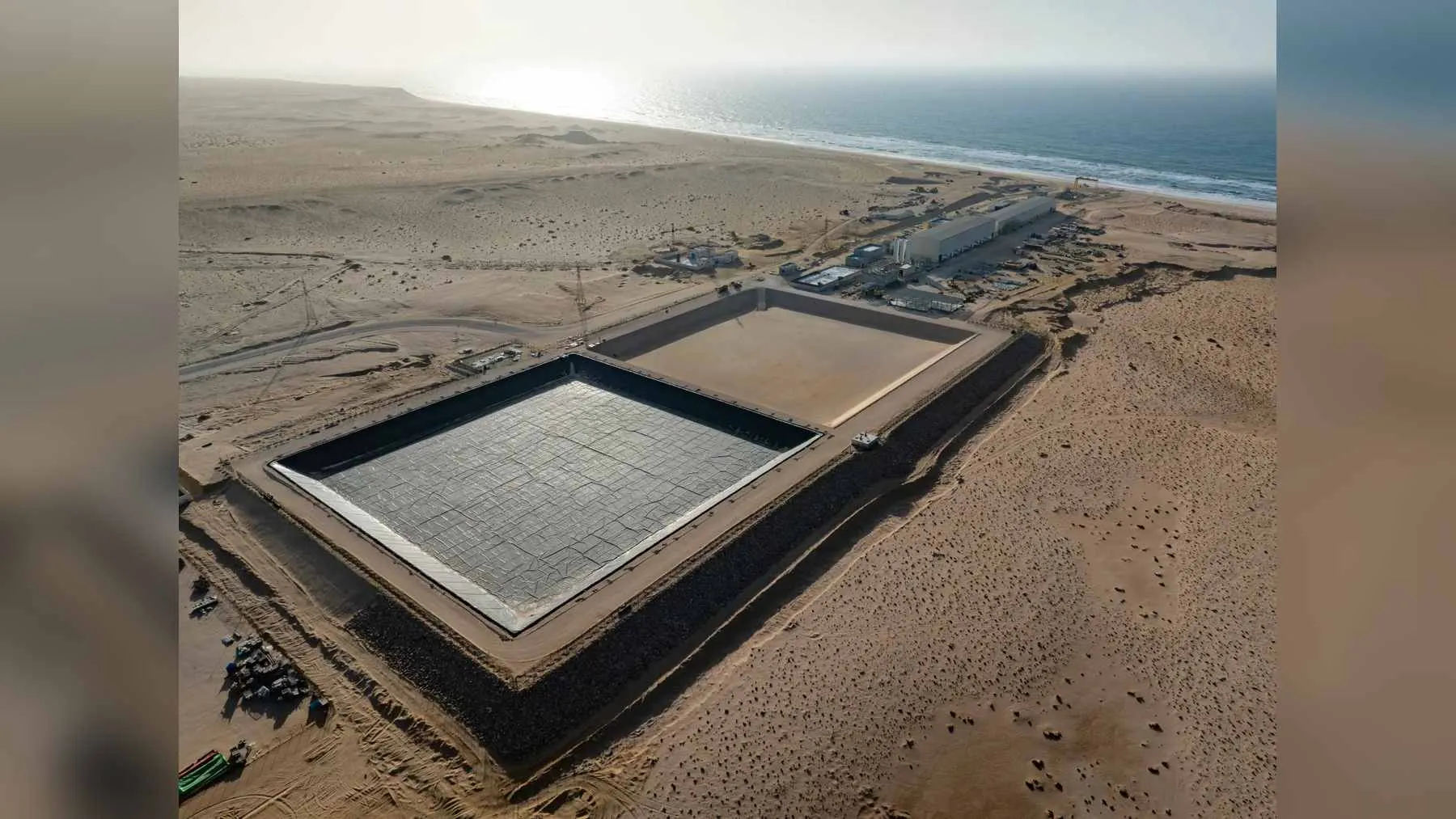
In a significant boost to agricultural development, Morocco’s Agricultural Development Agency (ADA) recently announced a third bidding round for 35 farm projects near the coastal city of Dakhla, situated in the Oued Ed-Dahab province. Launched in late June 2026, this initiative encompasses approximately 2,694 acres (1,090 hectares) of land that will be irrigated using desalinated Atlantic seawater. This area is part of a larger planned irrigation zone of around 12,355 acres (5,000 hectares) located in Bir Anzarane, aimed at enhancing agricultural productivity in the region.
Among the noteworthy elements of this project is the operational 60-megawatt wind farm, developed by Nareva, which stands adjacent to the desalination unit that is currently under construction. The desalination plant, strategically positioned about 47 miles (75 kilometers) north of Dakhla, is designed to produce 100,000 cubic meters of freshwater daily, equivalent to approximately 26.4 million gallons. The Moroccan energy ministry has earmarked an investment of 1.7 billion dirhams for this endeavor, with the expectation that the desalinated water will primarily support high-value crop irrigation.
This latest bidding round offers state-owned farmland, with winners receiving long-term leases while the land remains under state ownership. The tender consists of one small project, 28 medium-sized projects covering approximately 855 acres (346 hectares), and three larger projects spanning about 419 acres (169 hectares). Notably, three projects are designed to foster local producer collaboration, collectively utilizing 1,396 acres, which constitutes about 52 percent of the total land available for this bidding.
The Dakhla Water and Energy Company, co-owned by Nareva and Engie's subsidiary, International Power, is responsible for the development of the desalination facility. The consortium was appointed as provisional contractor in 2019, following a competitive tender by the Ministry of Agriculture. The reverse osmosis technology employed in most desalination plants is noted for its efficiency, although it does generate highly concentrated brine as a byproduct, which poses environmental challenges if not managed properly. The facility is touted as the world’s first desalination unit powered entirely by renewable electricity, emphasizing Morocco's commitment to sustainable energy solutions.
In terms of water distribution, it is estimated that around 80 percent of the desalinated water will be allocated for agricultural use, while the remaining 20 percent will cater to the drinking water needs of the local populace. However, details regarding the timeline for the first deliveries of desalinated water to farms remain unspecified, as the energy ministry continues to project the wind farm's operational date to be in 2024, a target that has already elapsed without further updates.
Over the past few years, the ADA has conducted multiple bidding rounds for agricultural projects in the region, with previous calls covering extensive areas and numerous projects aimed at boosting local agricultural output. While Morocco continues to navigate the complexities of water management in arid regions, the success of these initiatives will ultimately depend on the delivery of water and the effective management of salt and brine byproducts.
As reported by ecoticias.com.