Morocco's Strategic Move Towards F-35 Fighter Jet Training
As of October 28, 2026, Morocco is reportedly taking significant steps to enhance its military capabilities by requesting to start training pilots from the Royal Moroccan Air Force on the advanced American F-35 stealth fighters. This development is seen as a precursor to an official announcement regarding a potential deal for the acquisition of these state-of-the-art aircraft. If the information is confirmed, the initiation of this training program could pave the way for Moroccan pilots to become proficient in operating the F-35, coinciding with ongoing speculations about a possible agreement for their purchase and obtaining the necessary American approvals for their export to Morocco.
The discussions surrounding the pilot training program emerge in the context of Morocco's continuous interest in acquiring this advanced fighter jet. Typically, pilot training is closely linked with contract negotiations and production schedules, as theoretical and technical preparations commence before actual flight training begins. This training will likely proceed alongside the delivery of the aircraft and their entry into service.
In this regard, there is a possibility that early preparations could serve to shorten the time required to qualify pilots. Additionally, there are speculations that Morocco might acquire F-35 jets that have already been manufactured but not delivered to the contracting countries due to delays in certain deals. An example circulating in this context is the existence of six F-35 jets intended for Turkey, which were not delivered after Ankara's suspension from the program.
Understanding the F-35 Variants
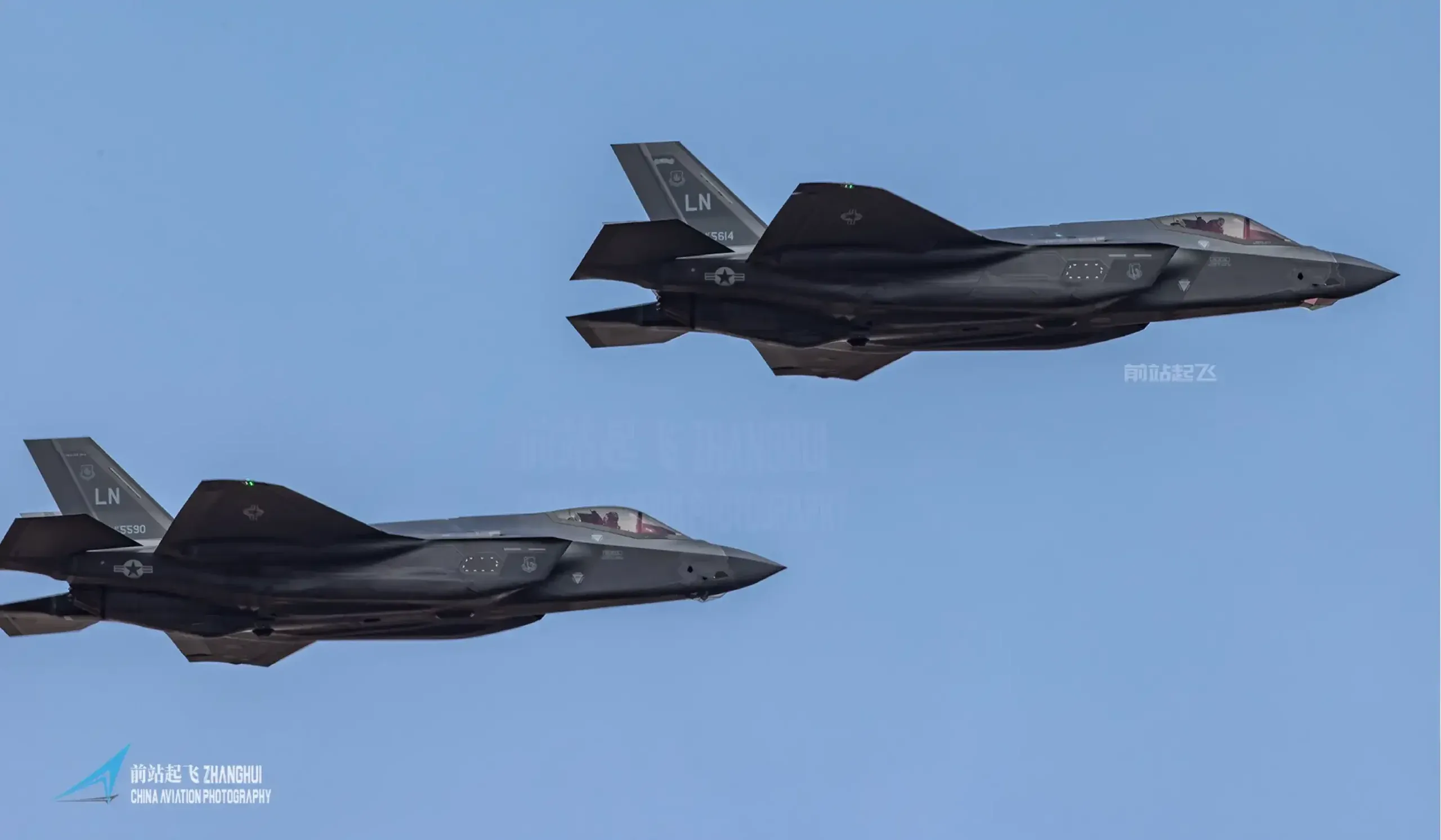
The F-35 family of American fighter jets includes three main variants: F-35A, F-35B, and F-35C, each designed for different operational needs. The F-35A variant is tailored for operations from conventional airbases and is the most widely used among the three versions. It can withstand loads of up to approximately nine times the force of gravity and features a 25mm internal cannon as part of its armament for air-to-air combat and ground engagement. This variant is particularly suitable for air forces that rely on land-based airfields, such as Morocco, should the acquisition deal be finalized.
Conversely, the F-35B was designed for operations from short takeoff and vertical landing (STOVL) platforms, allowing it to operate from both naval vessels and land bases that require limited space. This version is utilized by the U.S. Marine Corps and is also operated by the British and Italian air forces. The F-35B incorporates a more complex propulsion system, which impacts its maintenance and operational requirements.
The third variant, the F-35C, is specifically designed for operation from large aircraft carriers of the U.S. Navy. It includes features that facilitate catapult launches and arrested landings, alongside wings that are about 40% larger than those of the F-35A and F-35B, enhancing its low-speed flying characteristics during carrier approaches and landings.
For Morocco, the F-35A variant aligns best with the operational structure of the Royal Moroccan Air Force, which relies on land-based airfields and does not possess aircraft carriers. Selecting this variant would also spare the air force from the unique maritime operational requirements associated with the other two variants.
The training required for F-35 pilots involves a specialized program, considering the differences in systems and operational methods compared to traditional third and fourth-generation fighters. Training encompasses not only piloting the aircraft but also mastering an integrated system of sensors, electronic warfare, information management, and communication between aircraft and various military units.
Typically, training occurs in three main phases. The first phase involves theoretical and technical training, where pilots familiarize themselves with the aircraft's technical characteristics, stealth principles, mission planning methodologies, and tactics for penetrating air defenses. They also receive training on managing information flow from various sensors and understanding how to integrate and present data to the pilot within a unified operational interface.
The F-35 is equipped with advanced radar, electro-optical and thermal sensors, electronic warfare capabilities, and communication systems for data exchange with other aircraft and military platforms. These features allow pilots to build a comprehensive picture of the operational environment, identify and track targets, and leverage information from multiple sources.
The second phase focuses on simulator training, where pilots practice operating the systems and executing air missions within virtual environments that replicate operational conditions. This includes air combat scenarios, interaction with enemy air defense systems, and coordination with other platforms while managing emergency situations without risking actual aircraft.
The third phase comprises actual flight training on the F-35 after completing the theoretical and simulator requirements. This phase involves pilots learning the aircraft's flying characteristics, takeoff and landing procedures, operating systems during flight, and executing training missions in accordance with established qualification levels.
Transitioning to actual flight represents an advanced stage in the training program, especially since the F-35 family does not include a two-seat training version, unlike some other fighter jets.
Unlike aircraft such as the F-16, which are available in both single-seat and two-seat versions (like the F-16C and F-16D), allowing an instructor to accompany a trainee pilot during certain training phases, the F-35 was designed with only a single seat in each of its three variants. Thus, pilot training relies on a mix of theoretical instruction, simulation, and actual flight within a progressive program, prior to allowing them to undertake more complex missions.
This aspect is particularly significant for Morocco, as integrating a fighter of this caliber necessitates preparing pilots, technicians, and maintenance crews, alongside establishing the necessary infrastructure for its operation, securing spare parts, and providing technical support and associated systems.
If negotiations regarding the F-35 progress favorably, pilot training will be part of a broader program that encompasses equipping air bases, training maintenance teams, providing logistical support systems, and integrating the fighters into the command, control, and air defense network of the Royal Armed Forces.
Should the deal be confirmed in the future, Morocco would enter a new phase in enhancing its air force capabilities by introducing a fifth-generation fighter that combines stealth technologies, advanced sensors, electronic warfare capabilities, and real-time data exchange.
Some estimates suggest that Morocco could become the third country in Africa and the Middle East to operate this fighter, following Israel and Saudi Arabia, if the deal is concluded and the aircraft are indeed put into service.
As reported by defense-arabic.com.