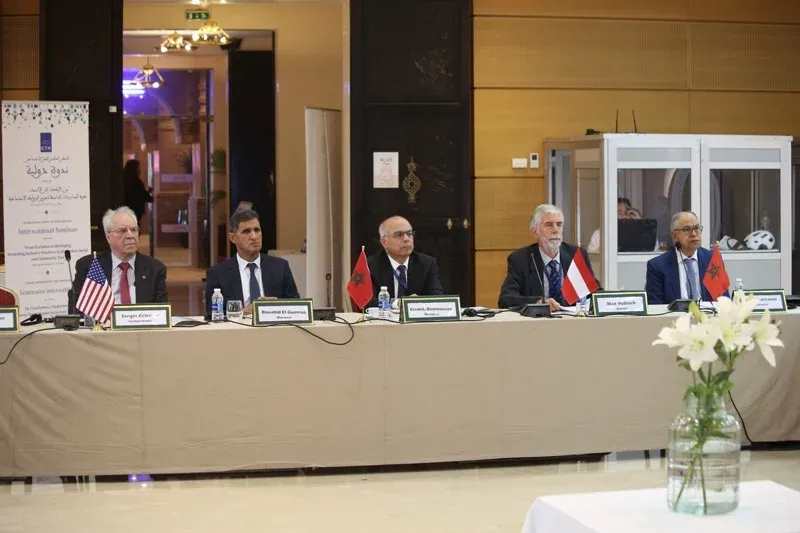
In an enlightening international conference held in Marrakech, Morocco, on Thursday, various Moroccan and foreign actors highlighted the concerning rise of social isolation and exclusion, primarily driven by current demographic, cultural, and technological transformations occurring globally. This gathering, organized by the International Council on Social Welfare (ICSW), bore the title "From Exclusion to Belonging: Strengthening Inclusive Practices to Enhance Social Bonds." During the opening session, speakers underscored that tackling these social phenomena necessitates moving beyond traditional approaches and implementing public policies that are more responsive to the evolving dynamics of societies. Emphasis was placed on enhancing inclusive practices and leveraging digital technology to combat these issues, ensuring that diverse segments of society participate both socially and economically.
Serge Zelenev, President of the International Council on Social Welfare, expressed that since its inception, the council has aimed to transform our understanding of emerging social issues. In his opening remarks, he emphasized the importance of asking fundamental questions regarding the changes occurring in our societies, why existing approaches are no longer sufficient, and what new forms of social policy and organization are required. Zelenev pointed out that current conceptualizations aim to develop connected housing strategies to mitigate isolation and loneliness, as well as to explore how digital technology can be utilized to combat social exclusion. He noted that social policies must now transcend borders to address these challenges effectively.
New Public Policies Required
Idris Al-Karawi, Deputy President of the International Council on Social Welfare, affirmed that the world is generating new generations of poverty, unemployment, exclusion, and vulnerability, driven by multiple factors. He elaborated in his speech that these social phenomena are evolving due to unprecedented shifts in demographic structures both in the West and in the Global South, alongside profound changes in our social models, particularly the family unit. Such transformations contribute to human loss and, crucially, to the isolation of individuals and entire communities, at a pace reminiscent of the changes experienced by societies in the 20th century.
Among the consequences of this new generation of social phenomena, Al-Karawi pointed out that the issue of isolation and exclusion of individuals stands out as one of the most striking features in 21st-century societies. He stressed the urgent need to address the phenomenon of isolation, understand its causes and extent within our communities, recognize its new and varied forms of expression, and grasp its specificities in both the West and the Global South. Furthermore, it is essential to anticipate the developmental trajectories that will inevitably arise as a result of demographic dynamics in the coming years.
Al-Karawi highlighted the necessity for communities to be made aware of the issue of isolation, advocating for it to be embraced as a societal concern. He called for the stimulation of innovations and local initiatives to offer alternative solutions better suited and adapted to the social contexts linked to these transformative processes. He emphasized the importance of preparing public policies aimed at combating all forms of isolation to foster a sense of belonging to society and, consequently, to enhance social bonds and cohesion within our communities.
Challenges and Opportunities Ahead
Bashir Tamer, representing the International Council on Social Welfare, articulated that contemporary societies are confronted with a fundamental challenge: how to maintain and enhance human relationships in a world witnessing profound social, demographic, cultural, and technological changes. Tamer, who serves as the council's president for the Middle East and North Africa region, noted that the fragmentation of social life is increasingly alarming. Accelerated urbanization, migration, changing family structures, and demographic transformations are reshaping individual interactions.
While digital technologies have created new opportunities for communication, Tamer cautioned that they could also deepen existing inequalities, particularly when access and digital skills are unevenly distributed. He emphasized that the strength of any society cannot solely be measured by its economic performance, technological achievements, or institutional efficiency; rather, it should also be assessed by the quality of relationships among its members, its ability to protect vulnerable groups from exclusion, and the opportunities it provides for all individuals to participate in public life.
As reported by hespress.com.