The Importance of Digital Identity in Morocco and Beyond
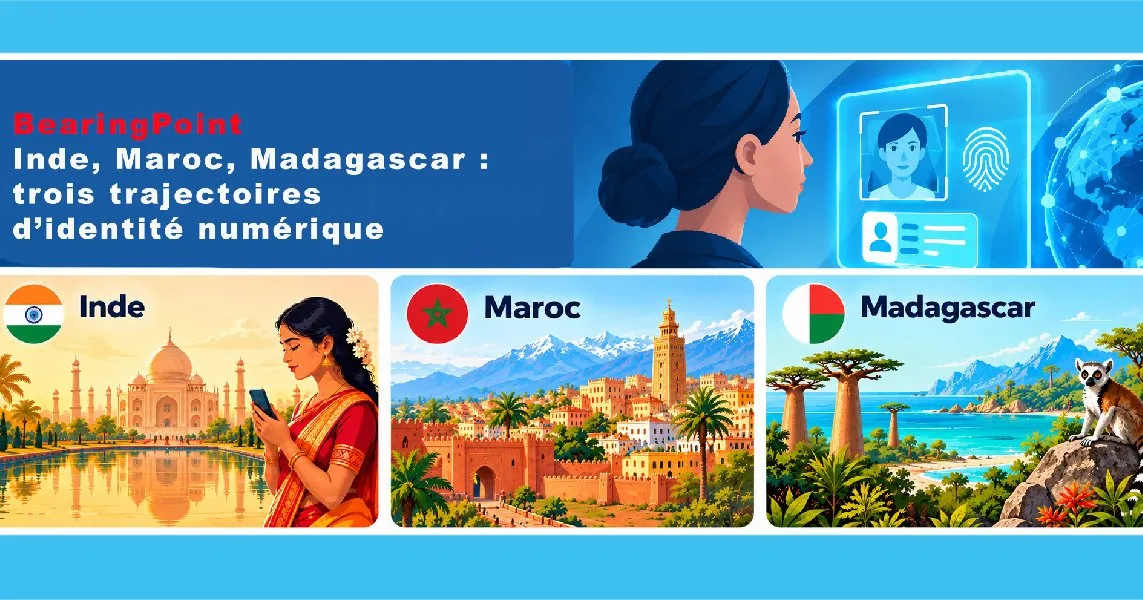
In the realm of technological advancement, the significance of digital identity has gained widespread recognition, especially in Morocco, where a strategic focus on this area has been established since 2018. Countries around the globe are now evaluating various models to adopt, whether it be a dedicated national platform, an open-source framework like MOSIP, or enhancing existing foundational registries. The paths taken by different nations greatly depend on their institutional maturity, existing infrastructures, objectives, and implementation capabilities. In this context, India, Morocco, and Madagascar emerge as prime examples, each showcasing distinct approaches to digital identity.
Morocco: A Progressive Approach to Digital Identity
Morocco has embarked on a reform journey centered around two complementary registries: the National Population Registry, which identifies individuals and assigns them a Digital Civil and Social Identifier, and the Unified Social Registry, which centralizes socio-economic information regarding households and assesses their eligibility for assistance. This progressive trajectory focuses initially on social targeting, with plans to subsequently utilize this infrastructure for digital administration, identity verification, and electronic Know Your Customer (e-KYC) processes. By constructing its registry on the MOSIP platform, Morocco aims to reduce dependency on a sole vendor while enhancing the skills of its teams. The deployment of this system necessitated strong technical governance and a genuine capacity for integration, particularly regarding biometrics.
As reported by africapresse.paris.
Understanding the Diverse Paths to Digital Identity
The experiences of India and Madagascar further illustrate the varying approaches to digital identity. India's Aadhaar initiative, launched in 2009, stands as the world's largest digital identity infrastructure, assigning a unique 12-digit number to residents linked to biometric data such as fingerprints, iris scans, and facial photographs. This system not only facilitates over 2 billion authentications monthly but also connects to more than 300 social transfer programs, ensuring direct benefits to recipients.
On the other hand, Madagascar initially aimed for an ambitious biometric identity system. However, challenges such as the uneven administrative coverage of the territory and partial digitization of civil registries led to a strategic pivot, focusing on modernizing civil registries with the support of the World Bank. This involves improving birth registration and enhancing administrative interoperability, as the quality of foundational data is deemed essential for any future digital identity broadening.
Ultimately, the experiences of these three nations underline a vital lesson: the trajectory of digital identity development must be tailored to each country's unique circumstances and needs, prioritizing foundational governance and the actual maturity of existing systems. For African governments and their partners, adopting a strategy that builds upon the current state of registries and institutions is crucial for creating effective, widely accepted, and sustainable digital identity systems.