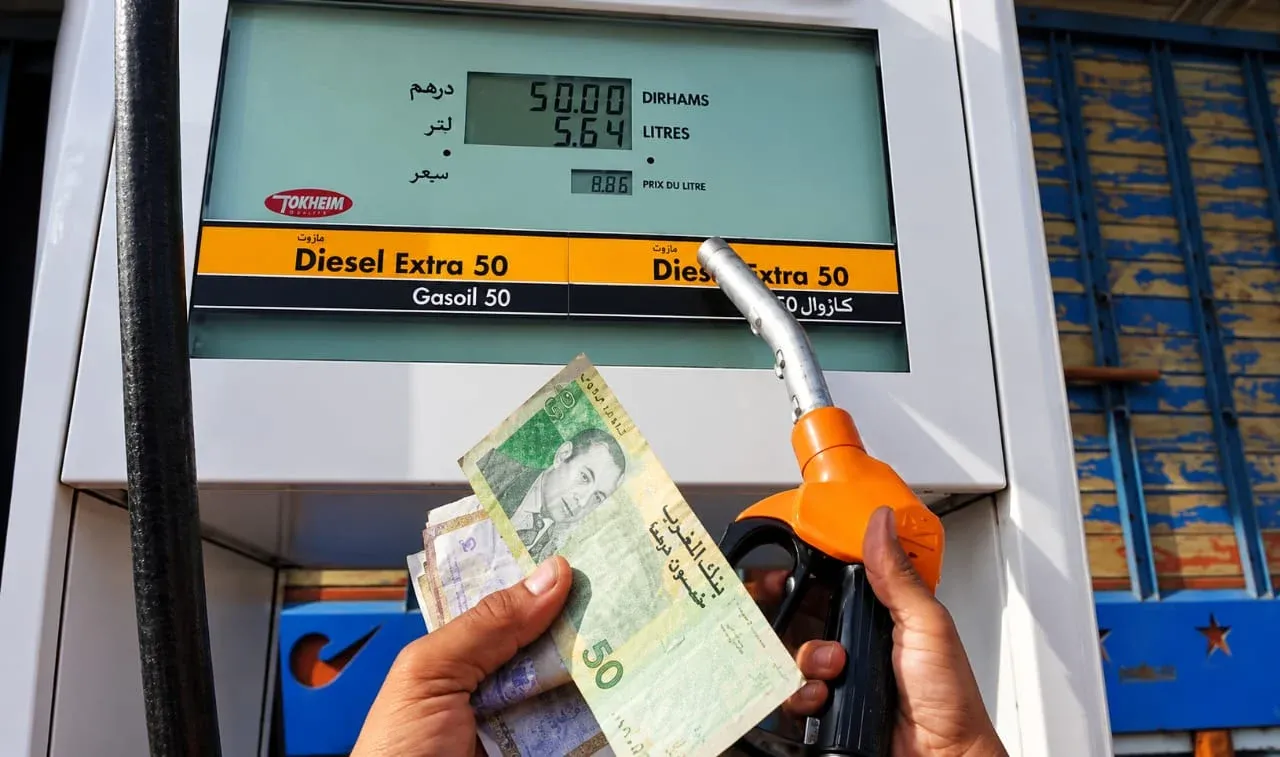
The fuel prices in Morocco have placed the new government under significant economic pressure as it grapples with the escalating cost of living and growing concerns over a potential new wave of diesel price hikes on the global market, which could adversely affect local markets in the coming weeks. According to observations from the energy platform based in Washington, these challenges align with the commitments of the newly formed Moroccan government to stabilize prices at a time when the country is facing rising energy import bills and the repercussions of disruptions in global oil markets.
Fuel Prices in Morocco: Current Trends and Impact
Morocco relies heavily on importing most of its fuel needs, rendering it susceptible to fluctuations in global prices. An increase in the cost of importing gasoline and diesel directly leads to higher local selling prices, which in turn elevates transportation costs and may ultimately affect the prices of goods and services. The International Energy Agency has issued warnings about the continuing tightness of diesel supplies globally, further complicating the task for the Moroccan government, which aims to balance alleviating living costs while maintaining economic stability.
As of mid-October 2026, Moroccan fuel prices saw a slight decrease after a series of consecutive increases that had burdened consumers and transport companies over recent months. The latest update from the energy platform reported the following fuel prices in Morocco: the price of diesel ranged between 15.90 and 15.98 Moroccan dirhams per liter, while gasoline was priced at approximately 15.60 dirhams per liter. This slight reduction in diesel prices, which fell by about 0.20 dirhams per liter, came after six consecutive hikes since mid-July.
The total energy import bill for Morocco reached 96.37 billion dirhams during the first eight months of 2026, up from 72.66 billion dirhams over the same period in 2025, marking a substantial increase of 32.6%, according to data from the Moroccan Foreign Exchange Office. The value of diesel and fuel oil imports alone surged by 44.9%, amounting to 50.71 billion dirhams compared to around 34.99 billion dirhams the previous year. This increase raises further concerns about the implications for the economy and consumers, especially with the ongoing global volatility in energy prices.
Government Commitments and Economic Outlook
The new Moroccan government, led by Prime Minister Fatima Zahra Mansouri, faces the challenge of fulfilling its economic commitments after presenting its program to Parliament on October 19, 2026. Mansouri emphasized that improving living conditions, protecting purchasing power, and ensuring the country’s energy and food needs are among the government's top priorities for the next five years. The government aims to keep inflation at around 2%, reduce the budget deficit to less than 3% of GDP, and achieve an average annual economic growth rate of 5% between 2027 and 2031.
The proposed measures include lowering food prices, expanding social support programs for low-income families, and enhancing private investment. Additionally, the previous government had raised exceptional support for workers in the land transport sector at the beginning of October to mitigate the impact of rising fuel prices on transportation fares and the prices of goods. A study from the High Commission for Planning revealed that over 76% of Moroccan households reported a decline in their living standards, reflecting the significant social challenges facing the new administration.
Amid these commitments, the International Energy Agency warned of potential increases in imported diesel prices in several markets, including Africa, in the coming weeks due to rising shipping costs and disruptions in the flow of petroleum products. In a report released on October 14, 2026, the agency noted that wholesale diesel prices exceeded $200 per barrel in Singapore by mid-September, reaching about $220 in Europe and the United States. Although prices have retreated from previous peaks, they remain nearly double the levels recorded before the crisis, placing additional pressure on importing nations.
The agency anticipates that supply tightness will persist until 2027, with the potential for delays in replenishing depleted stocks extending into the second half of next year. This continuing trend underscores the importance of strategic planning and responsive measures by the Moroccan government to navigate the complex landscape of energy prices and their impact on the economy.
As reported by attaqa.net.