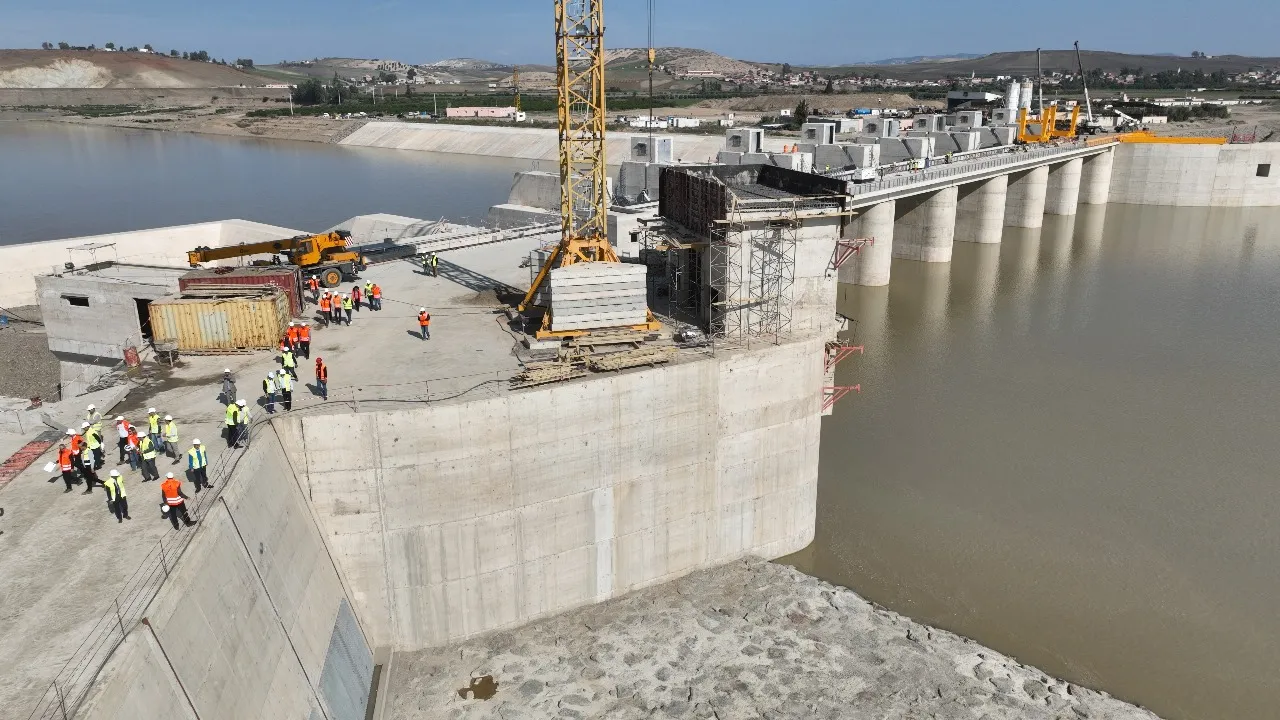
Morocco is steadfastly advancing its initiatives to enhance water storage capabilities and mobilize water resources, with projections indicating that the total storage capacity of dams will exceed 24 billion cubic meters by the end of 2027. This ambitious objective is outlined in the preliminary report for the 2027 finance law, which reveals ongoing construction of numerous large, medium, and small dams across various regions of the kingdom.
The data highlights that since 2020, eight major dams have been completed, including the Qdousa, Tidass, Toudgha, Aakdez, Fesque, Kadiat Al-Barnah, Madaz, and Ghiss dams. These infrastructures have contributed to an overall increase in storage capacity of 1.89 billion cubic meters, significantly bolstering the nation’s water mobilization and storage capabilities.
In addition to these completed projects, the proactive filling of five major dams has commenced, namely the Sakia El Hamra Dam in Laâyoune, Ait Ziyat in Al Haouz, Sidi Abou in Taounate, Beni Azziman in Driouch, and Tamri in Agadir, which collectively add a storage capacity of 746 million cubic meters. When combined with the eight completed dams, the total additional storage capacity from these projects amounts to approximately 2.64 billion cubic meters.
Regarding ongoing projects, the construction of 14 major dams continues, alongside the initiation of works on six medium-sized dams as part of a comprehensive program that encompasses 20 large dams. Furthermore, 2027 is anticipated to witness the launch of a new large dam project and the heightening of another dam, as part of the national water infrastructure development strategy.
At the level of small and hill dams, the 2022-2027 program includes the construction of 155 dams, of which 24 have been completed and 32 are under construction, totaling 56 facilities. The ongoing projects involve seven initiatives being directly implemented in partnership with the Ministry of Interior, with plans to initiate work on about 30 additional dams before the end of 2026.
In parallel, efforts to mobilize groundwater are progressing, with 5,059 exploratory wells completed between 2020 and 2025. Additionally, the inter-basin connectivity system is being enhanced through a water transfer project between the Oued Makhzen and Dar Khroufa dams, designed to deliver 3.2 cubic meters per second, aimed at ensuring drinking water supply for the city of Tangier. Another initiative, the water highway project, transports water from the Sebou basin to the Abir Raqraq basin at a flow rate of 15 cubic meters per second, supporting water supply security in the Rabat-Casablanca axis.
These programs also encompass the establishment of a real-time water quality monitoring system at the Sebou River, as well as the Idriss I, Al-Haris Sebou, and Sidi Mohammed Ben Abdullah dams. Additionally, there are efforts to revise the regulations governing the allocation and distribution of dam water. These measures fall within the framework of continued advancements in water resource governance and the enhancement of water security in Morocco, aimed at expanding storage capacities and improving water management while linking water basins effectively.
As reported by maadialna.ma.