Morocco is taking significant strides toward enhancing its water resources, with plans to produce more than 1.8 billion cubic meters of desalinated water annually by 2031. This ambitious initiative is part of the country's broader strategy outlined in the 2027 Finance Bill and aligns with the New Development Model, which seeks to balance the utilization of conventional water resources in inland areas while simultaneously addressing the growing demand for water in coastal regions through advanced desalination technologies.
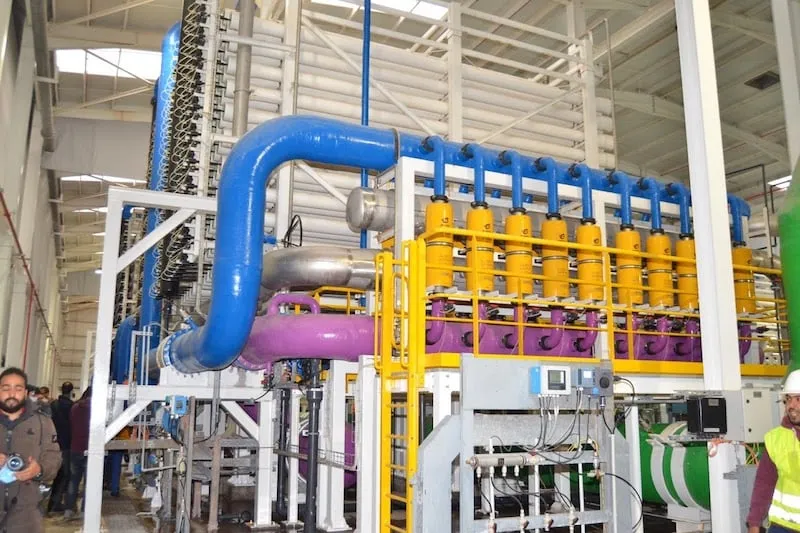
Currently, operational desalination stations in key cities such as Agadir, Jorf Lasfar, and Safi are complemented by a network of 186 modular desalination units designed for both seawater and brackish water. These units, boasting a combined capacity of 35 million cubic meters per year, represent a substantial investment of 2.94 billion dirhams and are crucial for providing alternative water sources to regions facing water scarcity.
Upcoming projects include the Dakhla station, which will supply water to Marrakech, and the expansion of the Safi facility, alongside the first phase of the Greater Casablanca desalination plant, all set to commence operations in the near future. Furthermore, a new generation of renewable energy-powered desalination plants is slated to be established in regions such as Oriental, Souss-Massa, Tangier, Guelmim-Tantan, and Rabat, with operational timelines projected between 2029 and 2030. To support these facilities, approximately 1,000 MW of renewable energy has already been earmarked, including wind farms located at Bir Anzarane, Jraïfia, and Dakhla.
In terms of infrastructure, a significant investment of 20.8 billion dirhams is planned for the transportation of desalinated water, which will connect the stations in Casablanca, Safi, Souss-Massa, Oriental, Rabat, and Tangier to various demand centers. The immediate focus for 2027 will be ensuring a reliable supply of water for Marrakech from the Safi station and for the Greater Casablanca area.
Moreover, the agricultural sector is poised to benefit from these developments through public-private partnerships that are already underway. Notably, the Chtouka project aims to irrigate 15,000 hectares, preserving an estimated 9 billion dirhams in added value and creating nearly one million workdays. Similarly, the Dakhla initiative is anticipated to produce approximately 500,000 tons of early vegetables and generate nearly 10,000 permanent jobs, highlighting the significant economic implications of Morocco's desalination efforts.
As reported by northafricapost.com.