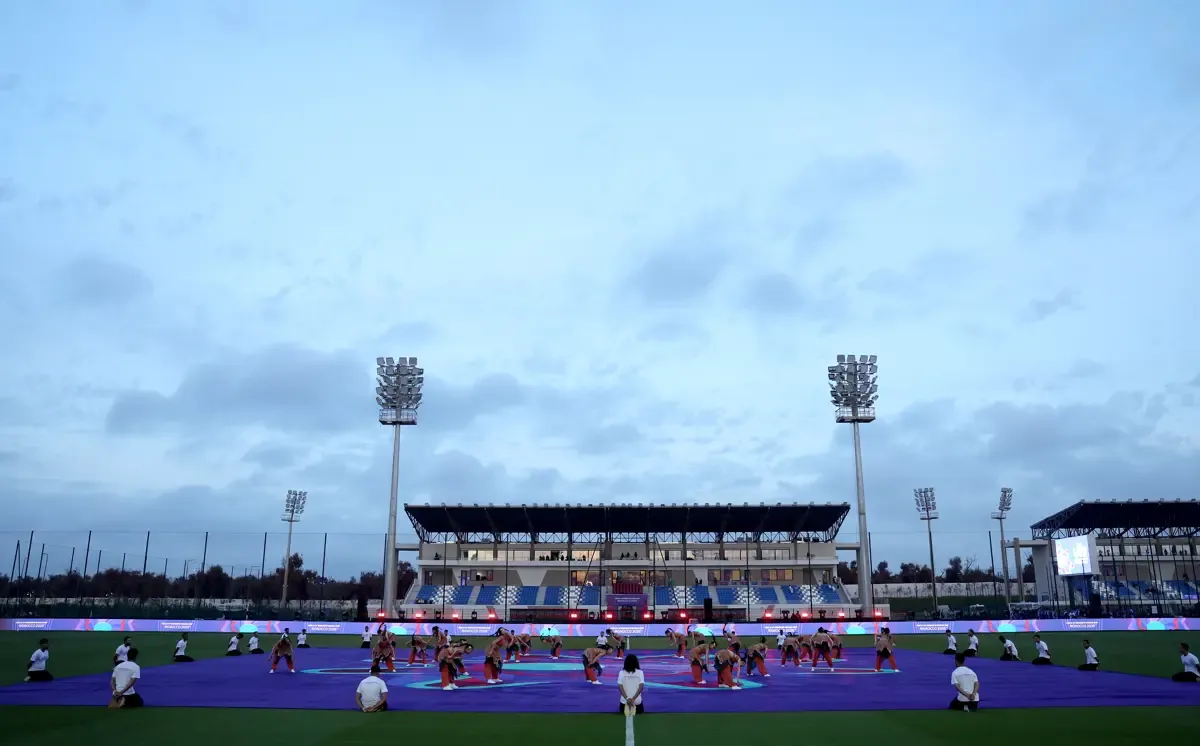
Rabat, Morocco, is poised to take center stage as the host city for the 2026 FIFA U-17 Women’s World Cup, showcasing its commitment to women’s football through a centralized tournament format that features four state-of-the-art pitches. This event is not merely a competition for a trophy; it represents a unique opportunity for the world’s emerging female football stars to engage with fans, display their talent, and highlight Morocco’s aspirations as a premier destination for international sporting events.
The Mohammed VI Football Complex in Rabat is the heart of this vision, where matches will be held from the opening round through to the semi-finals. The grand finale and the third-place match will take place at the Prince Moulay El Hassan Stadium, also situated in the capital city. This setup creates a distinct atmosphere, fostering a sense of community among teams, supporters, and the global football community by bringing them together in one central location.
The tournament will feature 24 national teams from six different confederations, providing fans with the practical advantage of experiencing multiple matches in a single day. On the opening day alone, four exciting fixtures are scheduled: Germany will face Argentina, the Democratic People’s Republic of Korea will take on Puerto Rico, hosts Morocco will welcome New Zealand, and Poland will challenge Nigeria. This opening lineup not only highlights established youth football nations but also introduces emerging teams and newcomers to the tournament, enriching the overall experience.
Rabat's Football Complex: A Testament to Morocco's Ambitions
Morocco’s preparation for major competitions reflects its broader investment in football facilities and development. The Mohammed VI Football Complex, located in Maâmora near Salé, was established by the Royal Moroccan Football Federation as an integrated center dedicated to performance and football development. Occupying an impressive 29.3 hectares, this complex is designed to host national team training camps while also accommodating foreign teams seeking preparation grounds in Morocco. With facilities that include natural-grass pitches, synthetic surfaces, a covered football pitch, hybrid pitches, accommodation blocks, sports medicine facilities, and rehabilitation areas, the complex embodies Morocco’s commitment to advancing the sport.
In a reported investment of 630 million Moroccan dirhams, the infrastructure not only enhances training environments but also emphasizes the importance of player development and medical support, ensuring that athletes are well-prepared over extended periods. The FIFA U-17 Women’s World Cup will shine a spotlight on this infrastructure, showcasing Morocco's ability to host elite football competitions.
Moreover, the significance of the tournament transcends the venue itself. Morocco has been awarded the rights to host the FIFA U-17 Women’s World Cup for five consecutive editions from 2025 to 2029, marking a historic milestone as the first African nation to host this prestigious global competition. FIFA’s multi-year hosting strategy aims to establish a solid organizational foundation while maximizing the use of tournament infrastructure, technology, broadcast, transport, and accommodation. This annual competition not only serves as a platform for young players to compete on an international stage but also encourages local audiences to engage with women’s football.
The Legacy of the 2026 FIFA U-17 Women’s World Cup
As the tournament approaches, it presents an essential opportunity for Morocco to enhance its profile as a host of major football events while simultaneously strengthening its domestic game. The progress of the Atlas Lionesses in international football, combined with the nation's investment in youth development, has brought increased attention to women’s football. Hosting the U-17 World Cup propels that progress onto an international platform, but the true measure of success will not only be the organization of the tournament itself. It will also depend on whether the visibility and excitement generated by the event lead to improved opportunities for girls to play football, better development pathways, and enhanced structures for women’s football in the long term.
The tournament will feature 24 teams from across the globe, divided into six groups, with the top two teams from each group and the four best third-placed teams advancing to the knockout stage. This expanded format allows more young players to experience the thrill of a global championship while exposing teams to a diverse range of opponents. For African participants, including Nigeria and hosts Morocco, this competition serves as a vital opportunity to assess their development against teams from Europe, Asia, North America, South America, and Oceania.
As the tournament kicks off on October 17, Rabat will transform into a vibrant hub for the next generation of women’s football talent. The challenge for Morocco and the broader football community will be to ensure that the impact of this prestigious event endures well beyond the final whistle on November 8. Ultimately, the most significant legacy of a world-class football complex lies not in the number of matches it hosts but in the opportunities it creates for future generations of players.
As reported by cafonline.com.