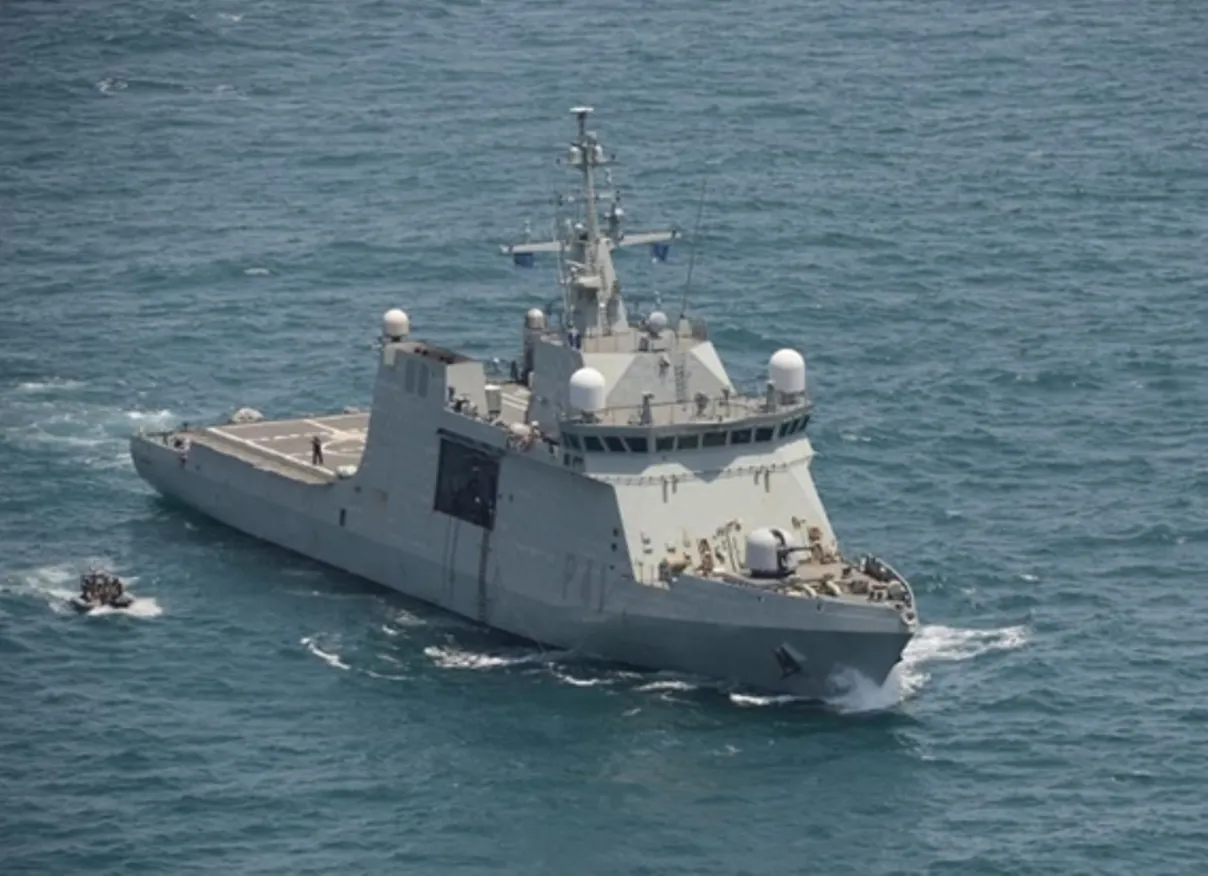
The Strait of Gibraltar, a vital 58 km maritime corridor between Spain and Morocco, serves as a crucial link connecting the Atlantic Ocean to the Mediterranean Sea. Notably, it boasts its narrowest point at 13 km, situated between Punta Marroquí in Spain and Punta Cires in Morocco, while its widest point spans 44 km. With an average depth of 300 meters and a maximum depth reaching 980 meters, the strait is characterized by turbulent waters, including a strong surface current flowing from west to east, coupled with a deeper countercurrent. This unique hydrological profile renders navigation within the strait particularly complex. Unlike other significant maritime routes, such as the Malacca Strait, there are no alternative passages available through Gibraltar. The strait is a critical artery for global maritime trade, supporting the livelihoods of approximately 512 million people across 22 nations. Consequently, any decline in traffic through Gibraltar directly impacts trade across the Mediterranean region, making it an indispensable maritime route.
According to the International Maritime Organization (IMO), the Strait of Gibraltar sees an impressive volume of traffic, with around 300 vessels traversing its waters daily—this translates to one ship every 4.8 minutes, summing up to approximately 110,000 vessels annually, which includes ferries. These ships collectively transport over 10% of global maritime trade, including 3.3 million barrels of oil per day and 100% of the traffic between the Mediterranean and the Atlantic. The strait uniquely constitutes the only maritime gateway to the Mediterranean from the western side. In terms of ship classification, around 54,000 merchant vessels navigate these waters each year, translating to an average of 148 per day, excluding ferries. Among these, 28,000 vessels operate on the Algeciras-Ceuta-Tangier route, while 16,000 are oil tankers, representing 30% of merchant traffic. Additionally, 19,000 container ships account for 35% of the overall merchant traffic, establishing the Strait of Gibraltar as the location with the highest density of maritime traffic per kilometer globally. This density enables operators to monitor the volumes of Mediterranean ports and the operations of European refineries in real time using the Automatic Identification System (AIS).
Given its strategic significance, the Strait of Gibraltar shares the distinction with the Turkish straits of being an impenetrable choke point, devoid of alternative maritime routes. Other major straits, such as Malacca and Suez, provide alternatives, albeit with considerable delays. For instance, the Malacca Strait has alternative routes like Sunda, Lombok, and Makassar, while the Suez Canal has the Cape of Good Hope as a backup, which incurs delays of around 10 to 15 days. However, in the case of Gibraltar, there are absolutely no alternatives. A hypothetical closure of the strait could have dire economic consequences, potentially cutting off 3.5 trillion euros from the GDP of Mediterranean nations and resulting in a rapid surge in regional commodity prices by 20% to 40% within a week. Additionally, the strategic role of Gibraltar extends beyond mere maritime traffic; it serves as a vital entry point into the Mediterranean and correlates with the operations of the Suez Canal. Military confrontations, albeit with a low annual probability of less than 0.1% between Spain and the UK, could lead to a closure of the strait. In contrast, the likelihood of conflict with Morocco hovers between 1% and 2%, and this probability is on the rise. A mere seven-day closure of Gibraltar could deny access to Mediterranean refineries, creating a crude oil deficit of approximately 23 million barrels and causing diesel prices to spike by 15% to 25% within a week. Disruptions in the Suez Canal tend to reduce traffic destined for and originating from the Mediterranean via Gibraltar, while simultaneously increasing Atlantic routes that bypass the Mediterranean altogether.
The geopolitical implications of the Strait of Gibraltar are profound, particularly in the context of Spain's foreign policy toward Morocco and the United Kingdom. The contested borders in this region have significant ramifications for maritime boundaries and navigation, particularly concerning the waters and airspace over the Sahara, which remains a contentious issue. This vital area for Spain encapsulates numerous potentially conflict-ridden topics, yet the Spanish government has historically approached these challenges in a fragmented manner, failing to establish a cohesive strategic position on the Strait that acknowledges the interconnections among various foreign policy issues. Different political administrations have offered divergent directives regarding these matters, emphasizing the need for a unified approach.
Moreover, the evolution of drug trafficking in the Strait since 2000 has transitioned from local hashish smuggling to a violent transnational network, which has increasingly involved massive cocaine imports. Since 2021, immigration has also emerged as a component of Morocco's hybrid warfare against Spanish interests, peaking during the invasion in July 2026. The importance of securing the external borders in the Strait has not been adequately recognized by Spain, necessitating specific lines of action, including enhanced physical fortifications along these borders.
Spain uniquely possesses the sovereign capability to control the entry and exit points of the Atlantic to the Mediterranean through Ceuta and Melilla, both located at strategic access points of the Strait. If Spain chooses to shed its apprehensions and allocate the necessary military attention to the traffic flowing to and from the Strait, it can solidify its sovereignty in Ceuta, which would tilt the balance of power in favor of Spain concerning the control of the strait. The proximity of Melilla to Algeria, a traditional ally of Russia, also renders it imperative for Spain to monitor navigation in this context of a new Cold War.
To bolster the defense of the Strait, it is crucial to establish a unified command structure that integrates various maritime agencies, including the Navy, Civil Guard, and the Maritime Safety and Rescue Society. Additionally, there are underwater electrical links that allow for electricity exchange between both shores, contributing to the stability of their electrical systems. Moreover, the presence of eight submarine cables ensures the transmission of communications and data between Morocco and other nations, further emphasizing the strategic importance of this region.
In conclusion, the critical nature of choke points in the evolving geopolitical landscape necessitates a reinvigorated focus on the defense and control of the Strait of Gibraltar. Spain must recognize the ongoing offensive by Morocco to undermine its predominant position through alliances with the United States and Israel. To remain strategically secure, Spain must enhance its control and defense capabilities in the Strait, adapting to the modern dynamics of warfare that increasingly see terrestrial forces imposing their dominance over maritime domains. The reinforcement of anti-ship missiles, long-range firepower, drones, and autonomous surface and underwater vehicles must be prioritized under a unified authority, ideally led by a General Officer of the Navy, alongside representatives from the various involved agencies.
As reported by defensa.com.