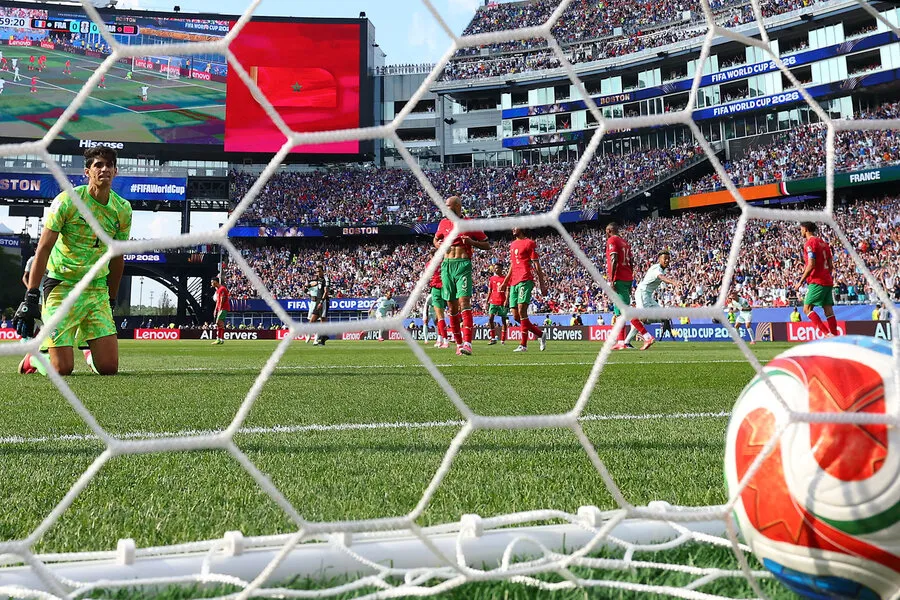

In a thrilling World Cup quarterfinal match, the French national team secured a 2-0 victory over Morocco, propelling them into the semifinals. While this was a jubilant occasion for French fans, it also sparked reflection on the diverse backgrounds of the players involved. Among the Moroccan lineup were six players born in France, highlighting the intricate tapestry of national identity and representation in modern football.
This match also resonated with a broader African context, as Kylian Mbappé, who scored one of the goals, could represent Cameroon through his father, and Algeria through his mother. As the excitement unfolded, Senegal celebrated Ousmane Dembélé's fourth goal in the tournament, a player who also holds familial ties to the nation through his mother, while Mali claims him through his father. This game serves as a microcosm of the evolving nature of national identity within the global sporting arena.
The Globalization of Football
The World Cup has traditionally been viewed as a competition between nations, yet the reality is that the rosters of many teams are increasingly transnational. This phenomenon was exemplified in the recent match between France and Morocco, where only six of Morocco's players were born in the country itself. The remaining players included six from France and others from Spain, underscoring a trend where players are more willing to represent countries linked to their heritage rather than the nations of their birth. This trend has led to discussions about the motivations behind these choices, with some suggesting opportunism, while others emphasize genuine connections to heritage.
For instance, Ayyoub Bouaddi, who has emerged as a standout player for Morocco, previously played for France's under-21 team. However, the fierce competition within the French squad meant he could not secure a spot. His story reflects a broader narrative, as many players navigate complex feelings about national allegiance. One notable case is Esmir Bajraktarević, who opted to represent Bosnia and Herzegovina despite being born in the U.S. His decision is deeply rooted in his family's tragic history during the Srebrenica massacre, illustrating how personal histories can shape national identities in significant ways.
A World Cup for Everyone
As the World Cup progresses, it has become evident that the tournament is richer for its diversity. Concerns that smaller nations would be mere stepping stones for more dominant teams have been dispelled, as teams like Cape Verde and Curaçao have showcased exceptional skill and determination. Cape Verde’s success in qualifying for the knockout stages, aided by players recruited from Portugal who share Cape Verdean heritage, exemplifies this shift. Similarly, Curaçao's roster consisted predominantly of players born in the Netherlands, highlighting the global nature of the sport.
Moreover, the dynamics of old rivalries are being redefined as players with dual heritage face off against their countries of origin. The recent match between France and Morocco, once steeped in colonial history, saw supporters of both teams celebrating together in Paris, blurring the lines of national identity. As one supporter aptly put it, "This is the new France!" The evolving landscape of international football reflects a world where connections transcend borders, and the essence of competition is enriched by the diverse backgrounds of the players on the field.
As reported by csmonitor.com.