Rediscovering Jewish Roots in Morocco
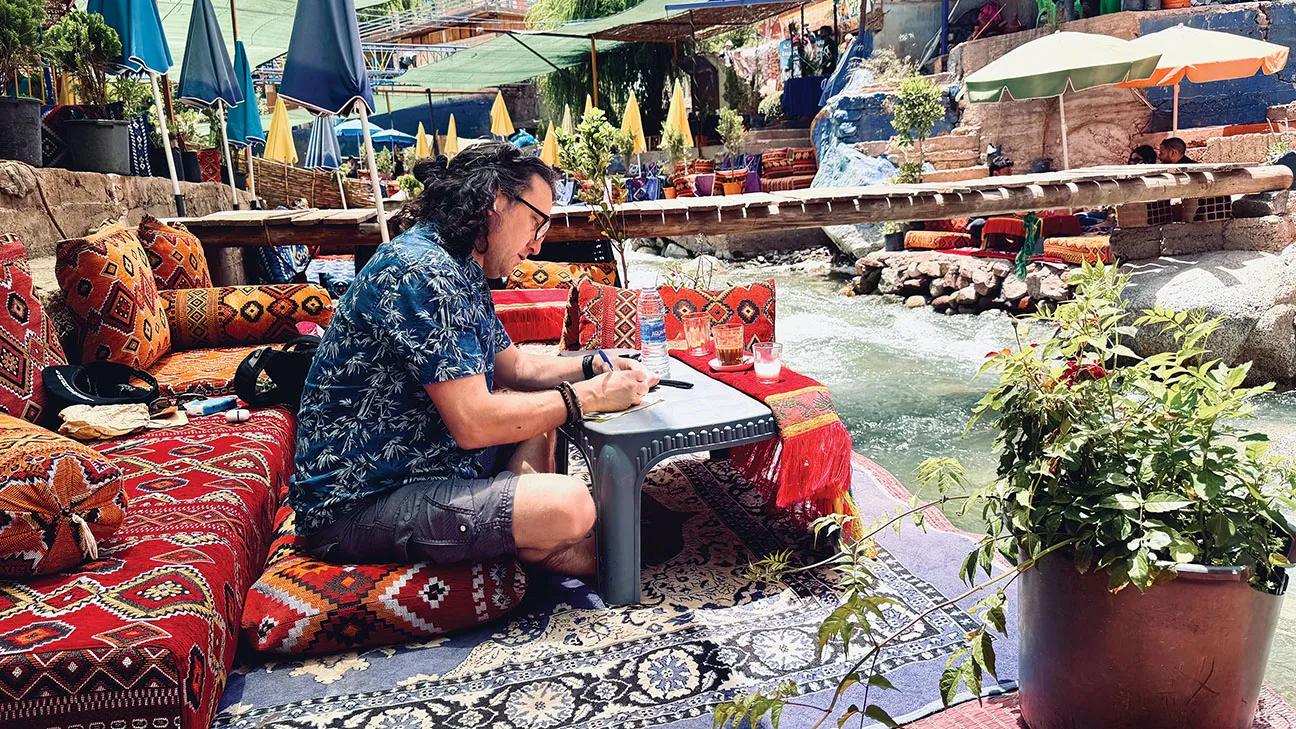
There are certain moments in life that remain etched in our memory, such as the first time you openly express your Jewish identity in an Arab country, or the moment you purchase a unique bar of soap made from donkey’s milk. My recent journey to Morocco was filled with such unforgettable experiences. After temporarily relocating from my home in England to accommodate visiting relatives, I opted for Airbnbs in Morocco instead of booking a hotel in North London, believing it would be a more economical choice. My intention was simple: to find a modest space for remote work and writing, coupled with some leisurely sightseeing in the afternoons. Little did I know that this trip would transform into an extraordinary exploration of Jewish culture and history, igniting a newfound passion for this vibrant North African land.
As my departure grew nearer, I found myself grappling with concerns regarding safety as a Jewish traveler, especially in light of the recent rise of antisemitism in England. My feelings were mixed about visiting a predominantly Muslim country, and I was faced with the dilemma of whether to wear my kippah openly or opt for a baseball cap as a more subtle expression of my Jewish pride. Ultimately, I chose the cap, which I had purchased at the NOVA music festival in New York, to mask my identity during my travels.
This veil of anonymity was quickly lifted when my Uber driver, en route to the historic Slat Al-Zamir synagogue in Marrakech, inquired about my background. Upon confirming my Jewish identity, he exclaimed, "We love Jews! Our history is rich with Jewish heritage! Did you know the Mellah was built for the Jews?" This was a fascinating revelation, as the Mellah served as the Jewish quarter in Marrakech, akin to the ghettos of Eastern Europe, yet devoid of the tragic violence that often accompanied them.
Contrasting Cultures and Unexpected Connections
Morocco presented a refreshing contrast to my experiences in Los Angeles and London; it felt akin to quenching an unrecognized thirst with a glass of cool water. The cultural landscape was strikingly different, with modestly dressed tourists and a conspicuous absence of the modern trappings such as tattoos, pet dogs, and drunken revelry. The serene atmosphere was momentarily interrupted by a woman donning a full niqab, taking a selfie, which left me pondering how she perceived her image through the limited visibility of her head covering.
During my time in Marrakech, I visited the elegant Slat Al-Azama synagogue and later made my way to the nearby cemetery, a site of great significance for the Jewish community. Friday afternoon, just before Shabbat, was an auspicious time to pay respect to the graves of revered rabbis. I was moved to find myself alone amidst the resting places of numerous Torah giants. This experience led me to reflect on the profound disconnect between my love for the Moroccan kabbalistic tradition and my previous ignorance of its rich historical roots.
The cemetery held the final resting places of notable figures such as Rabbi Chaim Ibn Attar, known as the Ohr HaChaim HaKadosh, whose teachings have enriched Jewish thought across generations. It saddened me to consider how many other manuscripts and teachings have been lost to time, given that many were handwritten and never published due to the lack of a printing press in Morocco during their lifetimes. The Ohr HaChaim was an exception, with his works having been published in Italy, allowing his wisdom to endure.
On Shabbat, I attended services at Beth-El, the main synagogue in the community, where I was struck by the devotion of the elderly congregants. Each prayer was recited aloud, and it was evident that many had memorized the liturgy from a young age. This experience shattered my preconceived notions of Jewish literacy, showcasing the rigorous Jewish education prevalent in their youth.
Just as I began to grasp the Moroccan Jewish experience, I encountered a moment that reminded me of the complexities that still exist. During a late-night stop at a mini-market, the shopkeeper recognized my kippah and assumed I was Israeli. Despite my attempts to clarify my English origins, he expressed a fondness for Jews but a vehement opposition to Israel, sharing his pro-Palestinian sentiments. This exchange highlighted a troubling dichotomy: a genuine affection towards Jews coexisting with deeply ingrained prejudices against Israel.
My journey continued as I encountered more local Muslims who expressed warmth towards the Jewish community. One taxi driver, Achmed, insisted that I visit a synagogue in the indigenous Berber region, leading me to the beautifully maintained Rabbi Salomon Bel-Hench synagogue in Setti Fadma. It was remarkable to see such dedication to preserving Jewish heritage, even in areas where the Jewish population had long diminished.
Throughout my travels, I found that Moroccan Jews have not only retained their cultural identity but have also forged deep connections with the local Muslim community. A shop owner I met in a souk articulated this sentiment beautifully, stating, "There are no Jews here, no Muslims and no Christians. Here we are all one people." This sentiment echoes the historical context that the Sultan of Morocco, Mohammed V, had during World War II when he famously stated that Moroccan Jews were his subjects and he had a duty to protect them.
As I concluded my journey in the coastal town of Essaouira, a historic trading port that once boasted over 30 synagogues, I stumbled upon Rabbi Chaim Pinto's final resting place. My explorations led me to Bayt Dakira, a cultural center and synagogue, where I had the opportunity to engage with tourists and locals alike, sharing insights about Judaism. I even had the privilege of meeting André Azoulay, a prominent Jewish figure and advisor to the Moroccan monarchy.
In the end, my Moroccan adventure left me with more questions than answers. The complexities of Moroccan Jewish identity and the coexistence of love for Jews alongside political tensions were evident. As I departed, I reflected on the importance of preserving Jewish heritage in Morocco, and how it serves as a bridge between cultures. Ultimately, my initial concerns about anti-Israel sentiments were overshadowed by the genuine warmth I experienced from the local community.
In this land where the past and present intertwine, I discovered a newfound appreciation for Morocco, its people, and its rich Jewish heritage—a journey I hope to continue in the future.
As reported by jewishjournal.com.