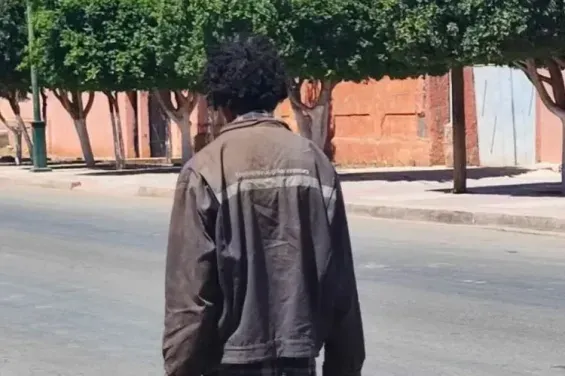
The tragic attack on a young man in Sidi Bou Othmane, located in the Rehamna province, has drawn renewed attention to the alarming increase in the number of individuals suffering from mental health issues who are living on the streets of Morocco. The incident, which resulted in the victim's death after being struck in the head by a stone thrown by a person with a mental disorder, highlights a pressing public health concern that has been escalating in recent months.
This particular incident is not an isolated case; rather, it is part of a disturbing trend of similar attacks that have occurred in various Moroccan cities, including Driouch, Taza, and Taounate. Residents in these areas have increasingly reported aggressive behavior from homeless individuals suffering from mental illnesses, with some confrontations tragically ending in fatalities. The growing fear among the public regarding safety issues raises questions about the adequacy of the current mental health care system in Morocco.
Systemic Failures and Shared Accountability
Omar Arbib, who serves as the vice president of the Moroccan Association for Human Rights (AMDH) and heads its Marrakech-Menara branch, identifies a multitude of systemic failures contributing to this dire situation. He points to a shortage of psychiatrists, inadequate hospital facilities, a lack of specialized care centers, and inefficient procedures for admitting patients deemed dangerous as critical factors exacerbating the issue. Furthermore, he emphasizes the need for a shift away from a security-focused approach towards a more therapeutic framework in handling cases of mental illness.
During an interview with Yabiladi, Arbib held the Ministry of Health and Social Protection accountable for the escalating crisis. He expressed concern over the state's reliance on punitive measures instead of focusing on comprehensive mental health care solutions. He underscored the importance of addressing the rampant prevalence of drugs and hallucinogenic substances that can trigger or worsen mental health disorders among vulnerable populations.
According to Arbib, the AMDH has persistently raised alarms about the deteriorating mental health services through official memorandums and correspondence over the years. He lamented that Morocco has a mere 600 psychiatrists available to address the needs of a population grappling with mental health challenges. The lack of capacity within hospitals and specialized facilities often results in families facing immense difficulties when attempting to admit relatives suffering from severe mental health issues. In many cases, there are no available beds, leading to patients being administered sedatives and discharged prematurely, despite the potential risks they may pose to themselves and others.
“Families are left overwhelmed and unable to manage the burden, while hospitals are ill-equipped to provide necessary care, resulting in many individuals being left to fend for themselves on the streets,” Arbib stated. He contended that the crisis is not solely due to infrastructural deficiencies; it is also influenced by protracted legal processes that hinder timely intervention when homeless individuals with mental disorders exhibit aggressive behavior.
Navigating Complex Procedures and the Need for Comprehensive Solutions
Arbib elaborated on the complex procedures involved in transferring individuals with mental health issues to medical facilities, which often require authorization from the public prosecutor's office, thorough investigations, and efforts to locate relatives before any action can be taken by local authorities or police. This bureaucratic red tape adds to the challenges in managing mental health emergencies effectively.
Furthermore, he criticized the practice of relocating homeless individuals with mental illnesses from larger cities to smaller towns, viewing this as a misguided attempt to alleviate the issue. Instead of addressing the root causes, this policy merely displaces the problem, perpetuating the cycle of neglect and inadequate care.
Arbib advocates for the Ministry of Health and Social Protection to implement a cohesive strategy that begins with a comprehensive national census of homeless individuals living with mental health issues. He calls for the establishment of specialized centers dedicated to providing psychiatric care, as well as ensuring free access to treatment, ongoing medical follow-up through a well-defined national protocol, and long-term solutions that integrate psychiatric support, housing, social assistance, and reintegration efforts. Only through such a multifaceted approach can Morocco hope to effectively address the mental health crisis that has tragically come to light.
As reported by en.yabiladi.com.