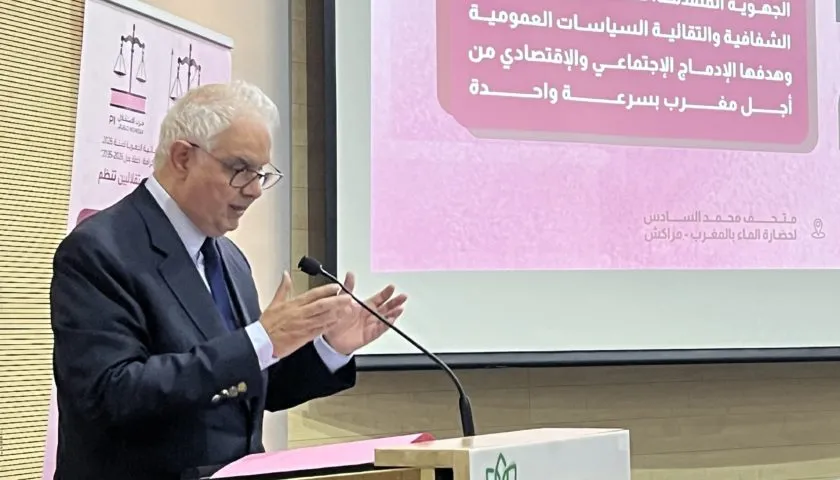

The Secretary-General of the Independence Party, Nizar Baraka, has emphasized that reducing social and spatial disparities has become an urgent priority for ensuring balanced and comprehensive development in Morocco. He argues that the current challenge is not one of resource scarcity or a lack of programs, but rather the necessity to improve the distribution of development benefits across various regions and territories.
During his speech at the thematic meeting organized by the Association of Independence Economists in Marrakech, themed "Enhancing Trust and Preserving Dignity: Action Plan 2026-2035," Baraka pointed out that the ongoing inequalities between different areas directly reflect on human development indicators. These disparities significantly influence the social and economic integration opportunities for a large segment of the population.
Baraka remarked that inequalities are no longer confined to differences between regions; they now extend within individual regions themselves. Certain cities are experiencing investment dynamism and improvements in infrastructure and services, while rural and mountainous areas continue to struggle with limited access to essential services such as education, healthcare, transportation, and digital infrastructure.
The Secretary-General warned of the repercussions of what he termed the "silent gap" between various territories, asserting that the persistence of this situation could deepen feelings of exclusion and marginalization, thereby impacting social cohesion. He called for the advanced regionalization project to be an effective tool for redistributing development opportunities more equitably within each region.
Baraka underscored the importance of achieving a greater balance between urban and rural areas, as well as between coastal, inland, and mountainous regions. He asserted that spatial justice has become a fundamental entry point for enhancing social equity and reinforcing trust in public policies.
In this context, he highlighted the positive results achieved by the National Initiative for Human Development in several areas, considering it a successful model for territorial targeting that has contributed to reducing poverty and vulnerability rates in regions benefiting from targeted and sustainable interventions.
As reported by marrakechpost.com.