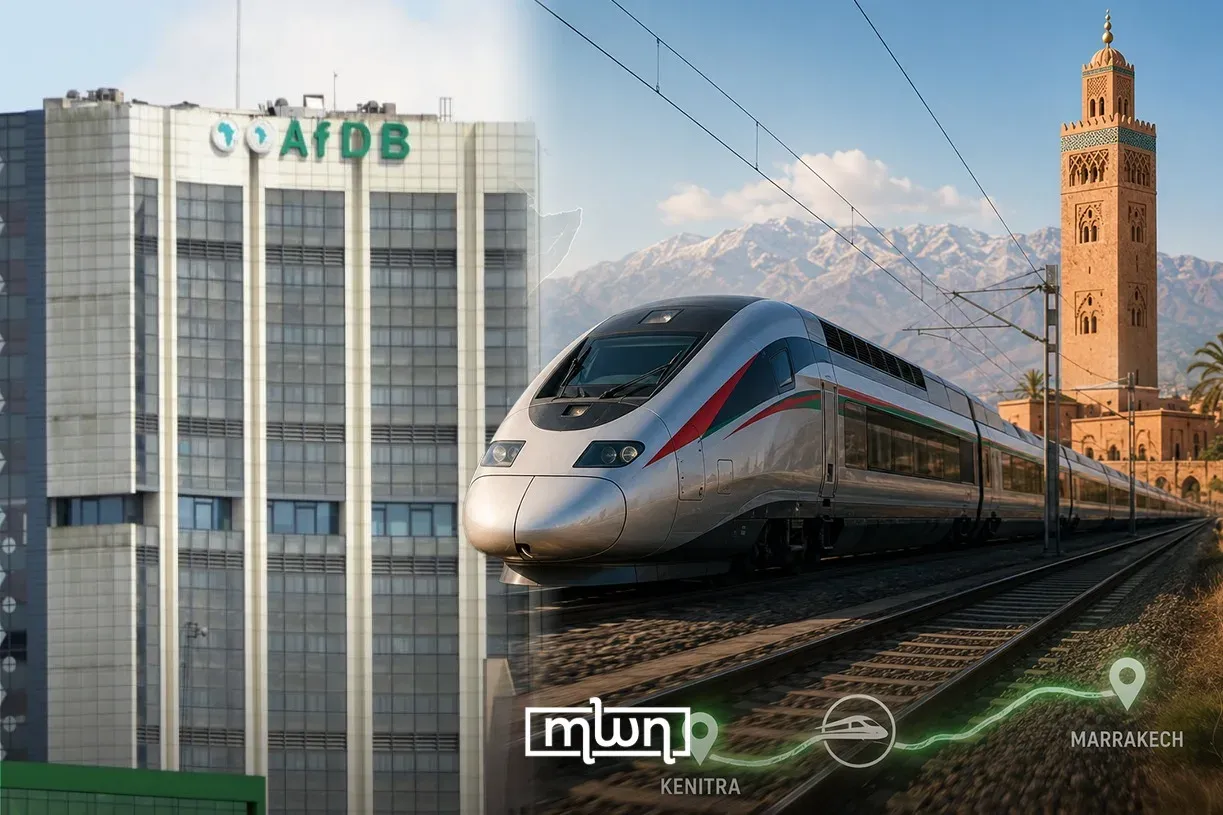

The African Development Bank (AfDB) has officially approved a significant loan of €205 million to Morocco as of July 8, aimed at financing the Railway Infrastructure Development Support Project (PADIF). This funding is poised to play a crucial role in extending the nation’s high-speed rail (LGV) network and modernizing the existing rail infrastructure along the vital Kenitra-Marrakech corridor, which is already a major conduit for both passenger and freight rail traffic in Morocco. The initiative is strategically designed to enhance the corridor's capacity and operational efficiency, thus catering to the increasing demands of rail transport.
In addition to extending the high-speed rail line, the financial backing will facilitate the upgrading of traditional rail infrastructure along the same route. This includes the procurement of new rails and switching devices, which are essential for the smooth operation of the rail network. Moreover, a key focus of the project will be on improving the rail hub around Casablanca, a critical junction that handles a significant amount of rail traffic within the network.
Enhancing Logistics Competitiveness in Morocco
Achraf Tarsim, the AfDB Group’s country manager for Morocco, emphasized that this project is expected to enhance the rail network's capacity to accommodate rising passenger and freight volumes. He stated that it will also alleviate traffic congestion and reduce travel times, ultimately reinforcing Morocco's logistics competitiveness and solidifying its status as a strategic transport hub connecting Europe and Africa.
The PADIF project encompasses not only the extension of the rail line but also includes a project management component that focuses on contract supervision, engineering oversight, and the monitoring and evaluation of outcomes. This approach aims to ensure that the allocated funds are utilized effectively, thereby maximizing the project's impact.
This loan aligns with the AfDB's broader strategic framework for Morocco, which is detailed in its Country Strategic Paper for 2024-2029. Additionally, it resonates with Morocco's own developmental goals, notably the “Rail 2040” initiative, aimed at modernizing the national railway framework as part of the country’s New Development Model.
The Kenitra-Marrakech extension represents a critical phase in Morocco's ambitious high-speed rail expansion, which commenced with the inauguration of the Tanger-Kenitra line in 2018, marking the establishment of the first high-speed rail service in Africa. The construction of this 430-kilometer extension was launched by King Mohamed VI in April 2025, with a total investment of MAD 96 billion. This extensive rail program is anticipated to significantly reduce travel times among key cities such as Tangier, Rabat, Casablanca, and Marrakech, especially in light of Morocco's co-hosting of the 2030 FIFA World Cup alongside Spain and Portugal.
A Historic Collaboration
The AfDB's support for Morocco's railway sector spans decades, with the most recent instance being a €300 million loan in 2010, which aimed at enhancing capacity on the Tangier-Marrakech route and financing essential infrastructure, including the Casa-Port station. The rail sector is just one facet of a broader partnership; the Bank has also financed significant projects such as the Guercif-Nador highway, the Nador West Med port, and the modernization of airports in Marrakech, Rabat, Agadir, Tangier, and Fez.
Since initiating its operations in Morocco in 1978, the AfDB has committed nearly €15 billion across over 150 projects, with a record €1.3 billion in financing allocated in 2025 alone. The railway system has emerged as a cornerstone of Morocco's economic strategy, with passenger traffic on the high-speed network witnessing substantial growth since the launch of the Tangier-Casablanca line, Africa's inaugural high-speed rail project. Furthermore, automotive manufacturers like Stellantis (formerly PSA) rely on dedicated freight services to transport vehicles to Tangier Med for export, thereby alleviating road congestion.
As Morocco advances its “Rail 2040” plan, aiming to establish approximately 1,500 kilometers of high-speed track, officials highlight the railway network as vital for reducing logistics costs and reinforcing the country's strategic role as a transport hub between Europe and Africa.
As reported by moroccoworldnews.com.