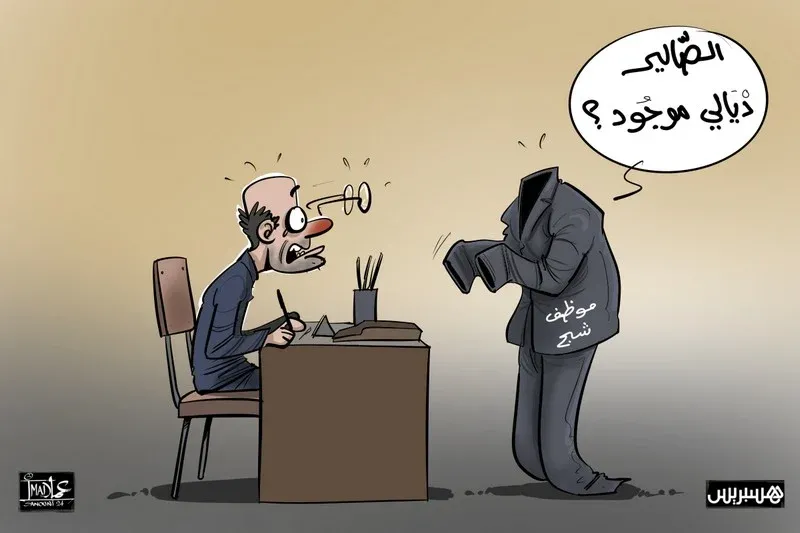
Significant Irregularities in Local Governance Uncovered
Recent reports from the "Internal Affairs" departments of various regions in Morocco, including Casablanca-Settat, Rabat-Salé-Kénitra, Fès-Meknès, and Beni Mellal-Khénifra, have shed light on troubling irregularities involving temporary workers. These reports have prompted inspections of local communities, as the General Inspectorate of Territorial Administration is actively updating its inspection schedules. Central committees will be redirected to evaluate urban and rural communities based on the findings presented in these reports.
The information disclosed by these sources is shocking, particularly regarding the employment of temporary workers who own substantial commercial enterprises such as ready-to-wear clothing stores, car rental agencies, nursing clinics, and beauty salons. Furthermore, these individuals reportedly possess significant assets, both real and personal. Alarmingly, some of these temporary workers have received financial compensations for tasks that they did not actually perform, as investigations revealed they were "ghost" workers listed in payroll records submitted to local treasury officials.
Evidence from the reports indicates that numerous temporary workers have filed written requests to regional administrations for the reimbursement of unearned financial amounts, acknowledging receipt of payments without actual work performed. This situation is particularly prevalent in communities surrounding major cities, with Casablanca being at the forefront. The reports highlight a concerning increase in the number of temporary workers in certain municipalities, surpassing the number of official employees in some departments. This raises suspicions regarding the employment of these workers for political and electoral favors, alongside legal violations in the management of their contracts.
According to sources close to the situation, the "Internal Affairs" reports have pointed out that the capacity of regional administrations to control the financial drain from municipalities that excessively employ temporary workers is severely limited. This has led to a refusal to endorse expenses related to the salaries and compensations of this category of workers, particularly those involved in community budget projects. It is evident that elected councils continue to approve unjustified allocations and appropriations to fund compensations for temporary workers, which do not reflect the actual demographic size or needs of these communities.
Earlier, Interior Minister Abdelouafi Laftit urged regional officials in a previous correspondence to ensure that local community leaders adhere to the provisions of the 2009 circular concerning temporary workers. He requested updated reports on the status of these workers in municipalities across various regions of the country as part of a comprehensive evaluation of this group, especially regarding their financial impact on municipal budgets and suspicions of political exploitation. Notably, several communities have begun mandating temporary workers to renew their contracts every three months and to provide their bank identification numbers (RIB) to receive their payments.
Furthermore, the irregularities identified in the internal reports extend to the management of temporary worker contracts, with instances of non-compliance regarding their periodic renewal every three months. There have been failures in accurately assessing the financial implications and respecting the legal framework governing such contracts. Reports also noted that numerous temporary workers have been assigned marginal roles, such as guarding abandoned facilities or community playgrounds, without any performance tracking or evaluation mechanisms in place, and in the absence of documentation verifying the nature of the services rendered.
As reported by hespress.com.