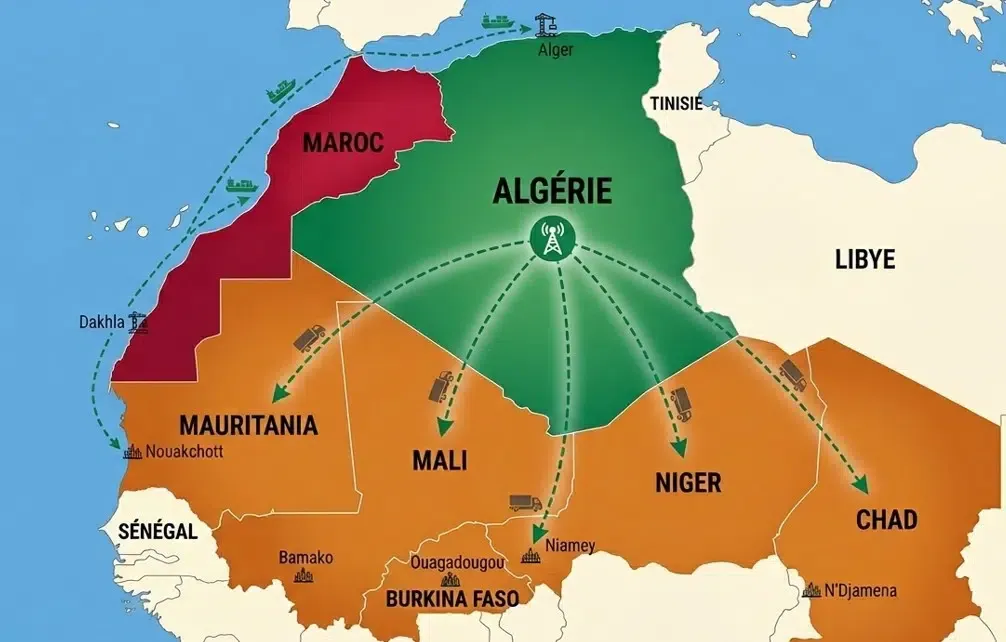
In a significant move following the recent Algeria-Chad government committee meeting, Algerian Foreign Minister Ahmed Attaf has announced a strategic realignment aimed at enhancing the economic landscape of the Sahel and Sahara regions. Algeria plans to develop the Djen Djen port in Jijel province into a central hub for landlocked countries in the area. This initiative is closely tied to the completion of the Trans-Sahara Highway and the establishment of a modern fiber optic network, both of which are expected to foster economic integration with partners like Chad.
This strategic push is a direct response to Morocco's 'Atlantic Africa' project, which seeks to provide Sahel countries with access to the Atlantic Ocean. While Rabat pursues this objective, Algeria is emphasizing its established North-South axis. President Abdelmadjid Tebboune has already articulated intentions to open seaports and railway networks for African transit traffic while establishing free trade zones with Mali, Niger, and Mauritania.
The Moroccan initiative has drawn critical scrutiny from experts who perceive it as an effort by Rabat to assert itself as an indispensable regional player, particularly in a period marked by increasing diplomatic challenges. The proactive stance of the kingdom appears to be a response to various external criticisms, especially amid international diplomatic tensions, aimed at forging new alliances through economic initiatives. However, the geopolitical landscape reveals a significant vulnerability for Morocco: it lacks a direct land border with the core nations of the Sahel region.
For Morocco's vision of an Atlantic corridor to materialize, cooperation from Mauritania is essential. Every truck and shipment would need to traverse Mauritanian territory, placing Nouakchott in a complex balancing act. The Mauritanian leadership is evidently keen on preserving its historically significant and security-relevant ties with Algeria. In return, Algeria is leveraging its status as an energy supplier and a stabilizing force in the region to foster closer ties with Mauritania. Should Mauritania opt against an exclusive partnership with Morocco or complicate transit, the $1.4 billion port project in Dakhla could face logistical challenges.
While Algeria capitalizes on existing geographical advantages and land connections, Morocco aims to gain favor through neutrality towards the new military governments in the Sahel. Mali has already renounced the peace agreement brokered by Algeria, granting Morocco an opening. Nonetheless, the feasibility remains in question: Algeria's infrastructure is either in place or under construction, whereas Morocco must first establish the physical and political bridge over Mauritania. In this geo-economic contest, both nations are vying for nothing less than dominance over future trade flows in North Africa.
As reported by maghreb-post.de.