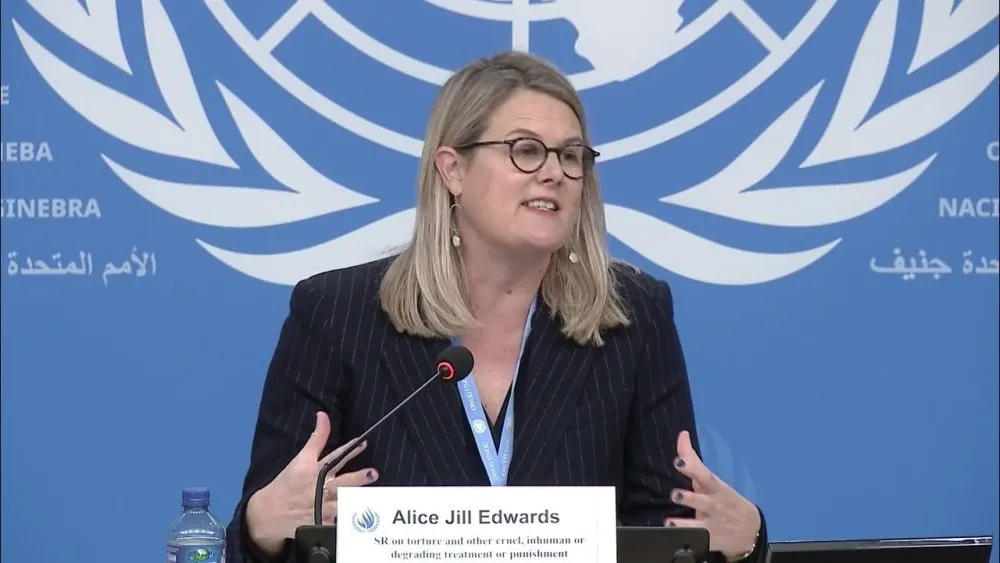
UN Special Rapporteur Alice Edwards to Examine Human Rights in Morocco
The UN Special Rapporteur on Torture, Alice Jill Edwards, is scheduled to undertake an official visit to Morocco from March 23 to April 2, 2026. This visit, which comes at the invitation of the Moroccan government, will encompass two significant locations: Rabat, the capital, and Laayoune, a city in the disputed Western Sahara region. The purpose of this visit is multifaceted, focusing on crucial aspects of justice, complaints, investigations, and interviews, particularly in light of recent amendments to the penal code.
According to the Office of the High Commissioner for Human Rights, Edwards will delve into the workings of the criminal justice system, examining the legal and procedural safeguards established to protect against torture and other forms of ill-treatment during the early hours of detention. Additionally, her assessment will include a review of the equipment, weapons, and restraints utilized by law enforcement agencies, as well as health and psychiatric conditions in prisons. Throughout her visit, Edwards is expected to engage in discussions with both government officials and various international committees, including UN entities and non-governmental organizations (NGOs). At the conclusion of her visit, she will present her preliminary findings to the Moroccan government and address the media during a press conference.
Morocco's Commitment to Human Rights and the Fight Against Torture
Morocco has expressed a steadfast commitment to combating torture, as part of a broader strategy aimed at enhancing the protection of human rights. Amina Bouayach, the President of Morocco's Human Rights Council (CNDH), has been vocal about the council's efforts to reinforce the foundations of human rights and the safeguarding of freedoms within the country. Bouayach has frequently highlighted the essential role of legislative measures in ensuring justice and the protection of human rights. In a recent workshop held in Casablanca in collaboration with the UN High Commissioner for Human Rights Regional Office for the Middle East and North Africa, she reiterated Morocco's dedication to addressing issues of torture and ill-treatment in detention facilities nationwide.
During her remarks, Bouayach emphasized the importance of establishing robust legislative guarantees to prevent torture, asserting that such measures are fundamental to building a state founded on the rule of law and justice. She noted that while progress has been made, challenges remain in achieving universal adherence to anti-torture frameworks and called upon human rights advocates and stakeholders to mobilize efforts for the universal ratification of the Convention Against Torture. Bouayach acknowledged the strides made since 2019 in implementing human rights measures, encompassing both legal and non-legal dimensions, but also urged the development of a more effective approach to monitor human rights and protection interventions to ensure that these efforts resonate with the local populace.
As reported by moroccoworldnews.com.