Unveiling a 1,200-Year-Old Game in Morocco
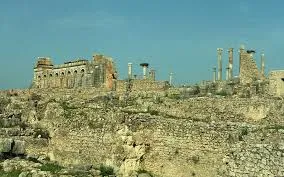
Recently, archaeologists in Morocco have made a remarkable discovery that sheds light on the social and recreational activities of medieval life. They have uncovered evidence of a 1,200-year-old strategy game, known as tāb or sīg, whose game board was ingeniously carved into a stone step within a medieval bathhouse located in Walīla. This significant finding stems from research conducted by experts at Cambridge University.
The intricate carvings on the step are believed to represent the oldest known evidence of the tāb game in North Africa, dating back to the Idrisid era, which spanned between 700 and 800 C.E. The board was skillfully chiseled into the upper step adjacent to a cold-water pool, strategically placed where bathers could easily see it as they entered or exited the water. This unique positioning not only highlights the social atmosphere of the bathhouse but also indicates the significance of leisure activities during that period, as noted by Archaeology Magazine.
A Window into Medieval Social Life
The discovery of the game board is particularly noteworthy due to the confidence with which it can be dated. Unlike other carved game boards found on structures with extensive histories, which often complicate dating efforts, the bathhouse in Walīla had ceased operation by the 10th or 11th century. The presence of coins, pottery, and other artifacts, along with radiocarbon dating, allowed researchers to establish a clearer timeline for the site.
The simple yet effective design of the carved holes offers a fascinating glimpse into how individuals in medieval North Africa engaged in their leisure time. This find not only illustrates the types of entertainment that were popular at the time but also emphasizes the importance of communal spaces. According to the researchers, the design of the board makes it the earliest known evidence of the tāb game in the region, providing valuable insights into how games were interwoven with public life and social interactions in early medieval North Africa.
Furthermore, the fact that the game of tāb appears in historical texts much later enables scholars to trace its evolution and longevity in the region. Beyond the identification of the game itself, this discovery offers a deeper understanding of daily life over 1,200 years ago. It suggests that medieval bathhouses served not just as places for personal hygiene but also as vibrant social hubs where individuals gathered, interacted, and engaged in recreational activities, including playing games in the presence of others.
As reported by yahoo.com.