Celebrating Cultural Heritage and Dialogue
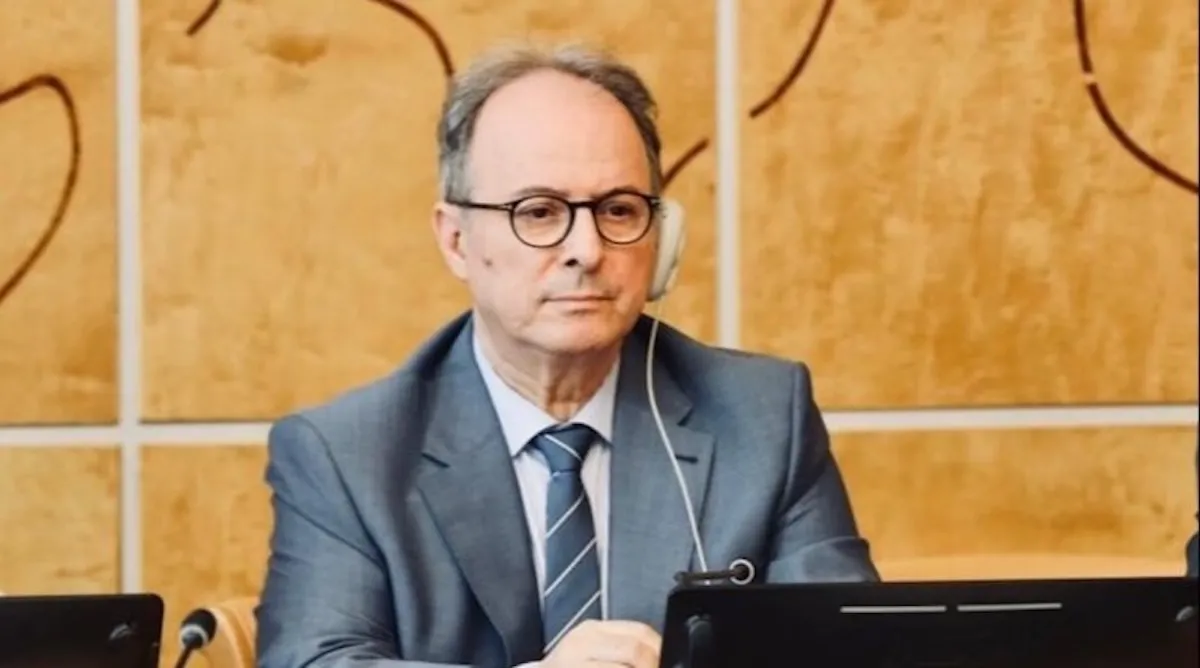
André Azoulay, advisor to King Mohammed VI of Morocco, has emphasized the profound cultural significance of both Morocco and Greece, highlighting how these ancient civilizations have historically transformed diversity into a source of strength. During his speech at an international conference titled "Dialogue of Civilizations" held in Athens, Azoulay noted the deep symbolism of convening in a city renowned for its philosophical roots and democratic ideals. He asserted that this gathering transcends mere diplomatic or academic discourse; it embodies a meeting between two ancient cultures that have uniquely contributed to teaching the Mediterranean region how diversity can become a powerful asset.
Azoulay articulated that both Morocco and Greece have historically served as open spaces for maritime exchange and dialogue. He portrayed the Mediterranean not as a dividing line between peoples but rather as a vibrant space that connects various cultures, religions, and human imaginations. The advisor remarked on the current global challenges, stating that the world is presently grappling with fragmentation, fear, and isolation. He underscored the collective responsibility to revive the notion of coexistence, a vision epitomized by King Mohammed VI through Morocco's commitment to its pluralistic identity, openness to Africa, Europe, and the Mediterranean, and its embrace of all cultural and spiritual traditions that enrich its history.
Embracing Diversity as a Cultural Choice
Azoulay further emphasized that Morocco's uniqueness lies in viewing diversity as a "civilizational choice" rather than a challenge. He highlighted how various components, including Jewish, Islamic, Amazigh, Arab, African, Andalusian, and Mediterranean influences, coexist within the Moroccan identity, forming a shared national narrative. Additionally, he reiterated that the preservation of Jewish heritage in Morocco, along with the restoration of places of worship—be they synagogues, churches, or mosques—reflects a political, cultural, and humanitarian conviction. This belief holds that dignity and coexistence are inseparable values.
Turning the focus to Greece, Azoulay acknowledged that it too embodies a rich cultural legacy, emphasizing the importance of dialogue, critical thinking, and humanism as essential foundations for building peaceful societies. He noted that both nations share a "common Mediterranean message." The essence of this conference, according to Azoulay, is to affirm that civilizations do not clash when they understand themselves well and respect one another. He elucidated that civilizations begin to retreat when they cease listening, sharing knowledge, and imagining a shared future.
Azoulay called for the Mediterranean to once again become a "laboratory of hope," advocating for it to be a realm of shared responsibility and closeness rather than division or fear. He asserted that cultural diplomacy and interfaith dialogue are increasingly vital in this context. He concluded by stating, "Culture is not a luxury; it is a strategic choice. Memory is not merely nostalgia for the past; it is a transformative power. Dialogue is not a weakness; it is wisdom." In closing, Azoulay expressed his gratitude to Greece, the Moroccan Embassy in Athens, and all partners and organizers who contributed to the success of this event. He expressed hope that Morocco and Athens will continue to remind the world that coexistence is not an abstract idea but a daily commitment that requires courage, intelligence, and generosity.
This gathering also featured contributions from representatives of the three major religions, alongside the Minister of Education and Sports of Greece. During the event, a wooden cross crafted by Moroccan artisans was presented to the Orthodox Church, symbolizing the commitment to interfaith dialogue and collaboration.
As reported by hespress.com.