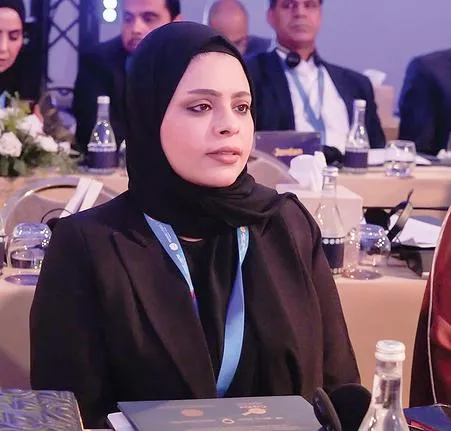

Deputy Hanan Fardan Emphasizes Bahrain's Balanced Approach to Financial Reform and Development Investment
During her participation in the fourth parliamentary economic forum of the Mediterranean Parliament for the Euro-Mediterranean and Gulf regions, Deputy Hanan Mohammed Fardan, a member of Bahrain's parliamentary delegation, delivered a compelling presentation that underscored the significance of aligning financial reform requirements with ongoing investments in development projects and essential services. This alignment is crucial for maintaining economic, social, and environmental stability.
Deputy Fardan elaborated on Bahrain's economic vision, which is rooted in principles of sustainability, competitiveness, and fairness. She highlighted the various programs and initiatives implemented by the Kingdom aimed at enhancing financial stability, improving government expenditure efficiency, and diversifying income sources. Furthermore, she pointed out that Bahrain is committed to demonstrating that achieving financial sustainability is not at odds with economic growth, provided that reform policies are linked to clear programs designed for economic diversification, investment stimulation, and efficient public spending.
This discussion took place during her speech in a session dedicated to addressing global challenges surrounding economic integration, free trade, and public debt, held yesterday (Friday) in Marrakech, Morocco. In her remarks, she stressed that these issues are interconnected and represent some of the most critical strategic topics in light of global market fluctuations and increasing financial and economic pressures. She noted that international experiences have shown that transitioning from individual approaches to public debt issues toward comprehensive cooperation and integration contributes significantly to enhancing financial stability and mitigating risks associated with global volatility. She cited the CETA agreement between Canada and the European Union as a comprehensive framework for economic and trade cooperation.
Additionally, Deputy Fardan advocated for the activation of a comprehensive Euro-Mediterranean Gulf economic framework that enhances institutional cooperation and coordinates economic, trade, and investment policies. She emphasized that this represents a strategic step that serves the common interests of member states.
She also highlighted the importance of developing legislative frameworks related to public debt management, including strengthening requirements for transparency and periodic disclosure regarding the structure of debt, servicing costs, and usage allocations. This must be balanced with the financial sustainability needs and the necessity for investment in development projects, infrastructure, and productive sectors.
Moreover, she explained that developing performance indicators to measure the efficiency of government borrowing and linking it to projects with direct economic and social impacts enhances the effective management of public resources. This approach allows parliaments to play a pivotal role in monitoring the implementation of economic and financial reform programs and evaluating their outcomes periodically.
Lastly, she asserted that expanding the realms of regional economic integration by removing trade barriers and facilitating the movement of investments and the exchange of expertise and knowledge among countries is fundamental to fostering shared growth. She stressed the need for sustainable and accessible financing mechanisms for developing countries, enabling them to confront economic and financial challenges while achieving sustainable development goals.
As reported by alayam.com.