The Landscape of Women Entrepreneurship in Morocco
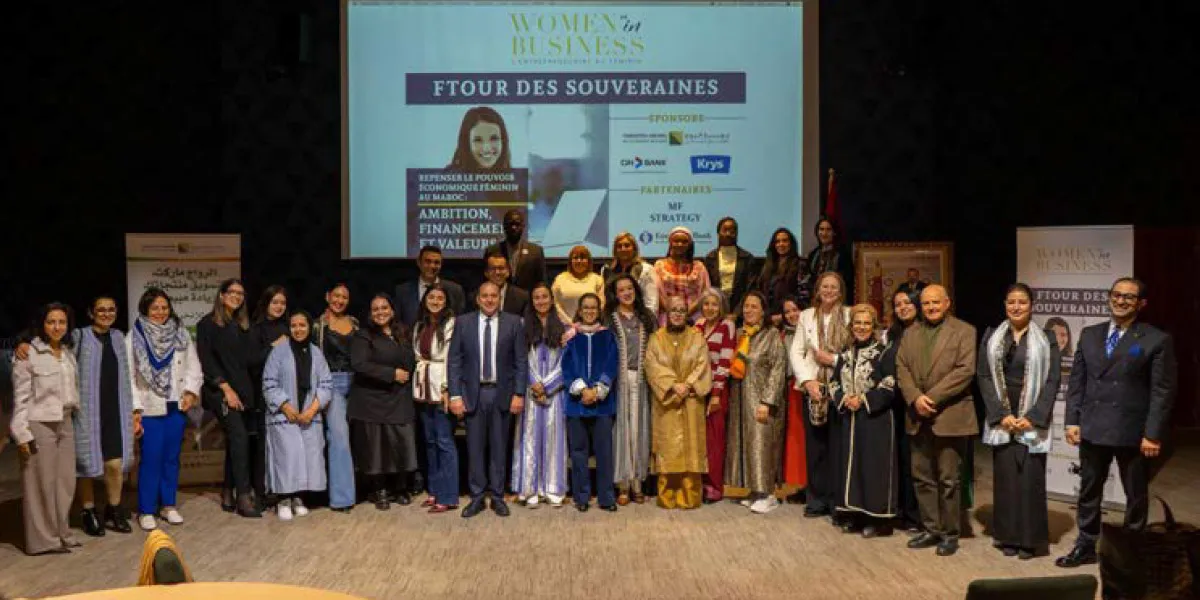
During the second edition of the "Souveraines" event organized by Women in Business, a collective of female entrepreneurs, partners, and institutions converged to discuss a critical reality: in Morocco, the growth of female entrepreneurship faces not only financial obstacles but also a myriad of structural barriers ranging from a lack of networking opportunities to the digital divide. These discussions revealed that while women in business often articulate their experiences in terms of commerce, management, and market expansion, underlying issues such as time constraints, the balance between personal and professional life, and the isolation they experience are equally significant.
At this gathering, women entrepreneurs shared not only their achievements but also the challenges they face in a resilient yet often hindered economic landscape. This highlighted the fact that female entrepreneurship has evolved beyond a peripheral issue, recognized now as a central economic theme. However, it's essential to acknowledge the conditions under which these women operate. Many find themselves in fragile, small-scale structures with limited access to markets and vital resources, including digital tools and professional networks. According to data from the European Bank for Reconstruction and Development (EBRD), female entrepreneurship in Morocco is responsible for a cumulative turnover of 273 billion dirhams, contributing around 20% to the national GDP.
An Integrated Approach to Support
Currently, there are approximately 5.4 million women entrepreneurs in the informal sector and around 191,000 in the formal sector in Morocco. A staggering 98% of these entrepreneurs express a desire to grow their businesses, with an average employment of 3.2 people and half of them engaging in online sales. These statistics reflect not only a vibrant entrepreneurial spirit but also a paradox; despite the evident entrepreneurial force, numerous barriers remain. Key challenges include mental load, the need for training, the digital divide, and stark income disparities between informal and formal sectors, with informal activities generating revenue five times lower than their formal counterparts.
During the event, Omar Naimi, the marketing and development director at the Arrawaj Foundation for Inclusive Finance, emphasized that while financing remains a challenge, it is not the sole obstacle. "Entrepreneurship is not merely about securing a loan; it's about navigating often conflicting demands within an environment that doesn't always provide necessary support," he stated. This realization necessitates a redefinition of support mechanisms. The Arrawaj Foundation has progressively broadened its offerings beyond pure financing to include two essential pillars: digitalization and formalization. They now provide packaged services designed to meet the comprehensive needs of women entrepreneurs.
Moreover, the EBRD's Women in Business program adopts a similar integrated approach, targeting companies registered in Morocco with at least two years of operation, local majority ownership, a minimum turnover of 1 million dirhams, and female leadership. Support extends beyond financing to encompass financial structuring, marketing, information technology, operations, strategy, quality management, and environmental sustainability.
Ultimately, the discussions at the "Souveraines" event illuminated a more comprehensive reality of energetic yet insufficiently supported female entrepreneurship. Historically, institutional responses have often reduced the issue to access to credit. However, it has become clear that the challenges faced by women entrepreneurs extend far beyond funding. They also encompass a lack of time, support systems, visibility, digital literacy, commercial contacts, and even recognition. Transitioning from activity to business, and from business to growth, remains a significant hurdle.
Thus, the "Souveraines" initiative has played a pivotal role in reshaping perspectives, encouraging stakeholders to view women entrepreneurs not merely as a marginal audience requiring assistance but as integral economic actors whose development is crucial for the country's productive future. Sustainable entrepreneurship necessitates not only financial resources but also tools, networks, advisory services, market access, and, perhaps most importantly, a supportive environment conducive to growth.
As reported by leseco.ma.