
Exploring the Economic Synergy Between Bremen and Morocco
The city of Bremen, with its rich maritime history, Hanseatic entrepreneurial spirit, and world-class industry, stands out as one of Europe's most surprising economic metropolises despite its modest population of 400,000. While Bremen may seem small in size, its industrial depth and technological prowess rival that of much larger cities. For Moroccan businesses seeking reliable German partners, Bremen presents a unique blend of global expertise, grounded small-to-medium enterprise stability, and a proven commitment to international collaboration.
With approximately 705,000 residents in the state and a Gross Domestic Product that positions Bremen among the most productive states per capita in Germany, the city is far more than a historical backdrop. Around 345,000 employees contribute to a diverse range of goods and services that reach global markets, with Bremen’s port being one of Europe’s key logistics hubs.
Maritime Industry and Technological Innovation: Opportunities for Moroccan Enterprises
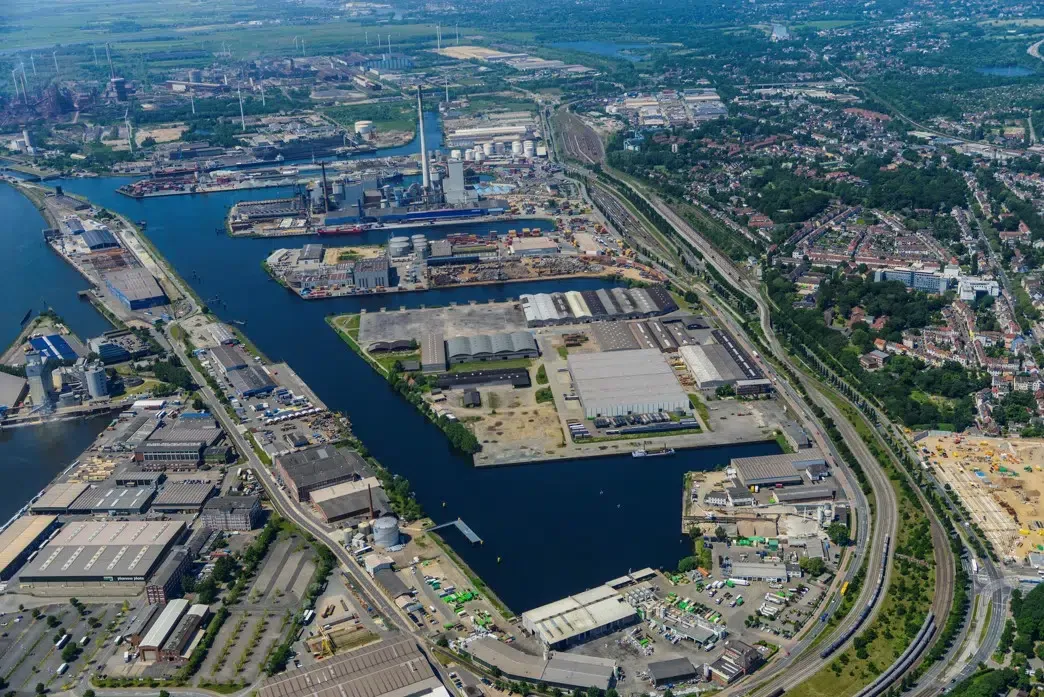
No other sector influences Bremen as profoundly as the maritime industry. The overseas port of Bremen and the nearby port of Bremerhaven form one of Europe’s most significant port complexes. Bremerhaven boasts the world’s longest container quay and ranks fourth in Europe for container traffic. This information is particularly crucial for Moroccan importers and exporters: the direct shipping routes between North Africa and the North Sea ports are steadily increasing. Companies seeking reliable logistics partners—such as freight forwarders, warehousing services, port agencies, or ship brokers—can find an interconnected ecosystem of over 500 maritime businesses in Bremen. Additionally, the city’s Smartport initiative is advancing the digitalization of port processes, promising efficiency gains for international partners.
Bremen is also a hub for aerospace activities. Airbus operates one of its key European plants here, where the Bremen High Lift Center develops wing systems for all Airbus passenger aircraft. Approximately 4,500 employees work at the Airbus site in Bremen. Furthermore, OHB SE, a publicly listed European space company, is based in Bremen, developing communication satellites and scientific missions, having grown from a small startup to a corporation with a respected standing across Europe.
Components manufactured in Bremen are integral to the European Ariane 6 launch vehicle. The high-caliber cluster surrounding aerospace is supported by a dense network of specialized suppliers and research institutions, including the ECOMAT Center for Lightweight Construction, which provides companies with state-of-the-art infrastructure for research and development in composite materials and lightweight technologies. For Moroccan companies in manufacturing or precision engineering, this cluster offers unique opportunities to engage as suppliers or technology partners. As Morocco significantly invests in its aerospace industry, Bremen can serve as a learning hub, partner, and potential customer all in one.
The future of energy will also determine the trade partnerships of tomorrow. Bremen and the surrounding Northwest region have been pioneers in wind energy for decades, both onshore and offshore. From this base, offshore wind farms in the North Sea are developed, constructed, and operated. Bremen’s companies are recognized internationally for their planning, operation, and maintenance of wind energy facilities. Conversely, Morocco is known as one of the sunniest and windiest countries globally and has impressively demonstrated its potential with the Noor Solar Complex in Ouarzazate. The overlaps are evident: Bremen’s renewable energy companies are actively seeking international markets, while Morocco has declared its ambition to become an exporter of green hydrogen to Europe. The Bremen hydrogen ecosystem, which integrates research, industry, and port logistics, could serve as a critical point of connection for Moroccan stakeholders.
Not every strength in Bremen lies in high technology. The Mercedes-Benz plant in Bremen, employing over 12,000 people, is one of Germany's largest automobile factories, producing coveted models like the C-Class and GLC SUV. A dense network of nearly 400 automotive suppliers has established itself around this plant, providing parts, components, and production systems of the highest quality. For Moroccan automotive suppliers looking to expand alongside Stellantis and Renault’s growth in Morocco, these Bremen companies are natural partners for quality standards, technology transfer, and collaborative development projects.
Less known but economically significant, Bremen is one of the oldest coffee trading cities in the world. Brands like Jacobs and HAG have their roots along the Weser River. The chocolate and confectionery industry, as well as the entire food and delicatessen sector, are strongly represented. For Moroccan food producers and agricultural exporters—whether dealing in olive oil, argan products, citrus fruits, or delicacies—Bremen’s trade structures, trade fairs, and networks provide direct access to the German and European markets.
The state of Bremen pursues an ambitious artificial intelligence strategy that integrates business, science, and public administration. The University of Bremen, the German Research Center for Artificial Intelligence (DFKI), and the Bremen Institute for Production and Logistics (BIBA) are at the forefront of research at the intersection of AI and industry. Particularly in healthcare, AI is being rigorously tested, from automated image evaluation to personalized therapy.
Start-ups like Polaris Spacecraft exemplify how Bremen’s research excellence translates into tangible businesses. The entrepreneurial spirit is alive: Bremen actively promotes spin-offs from universities and provides infrastructure through its technology and start-up centers, as well as the World Trade Center Bremen, for international companies looking to establish operations in Germany. For Moroccan businesses eager to enter the European market, Bremen is an ideal starting point due to its manageable size, connectivity, and openness to innovation.
Over recent years, economic relations between Germany and Morocco have gained remarkable momentum. Morocco stands as Germany's most important North African trading partner and ranks among the top three economic partners of Germany across the African continent. Bremen, as a gateway to the world and a location for numerous export-oriented companies, is an integral part of this growing relationship.
The Bremen Economic Development Agency (WFB) assists international companies in establishing contacts, finding partners, and settling in the city. The World Trade Center Bremen not only offers office space but also fosters a vibrant network of international companies. Initial joint economic delegations, trade fair visits, and bilateral discussions between Bremen and Moroccan chambers illustrate that the foundation for collaboration has been laid.
Whether it’s in ports, wind energy, automotive, food trade, or aerospace technology—Bremen is not a universal provider but a location with clear, deep competencies. This specificity is precisely what makes it attractive to Moroccan companies: those who find the right partner in Bremen are not merely engaging with a broker but with a specialist. The Hanseatic city lives up to its name, embodying Hanseatic reliability, openness to the world, and depth.
As reported by maghreb-post.de.