
The Role of Morocco in the Energy Transition
During the recent "KEY – Energy Transition Expo" held in Rimini, Italy, from March 4 to 6, 2026, there was a consensus regarding Morocco's strategic importance in the European industrial landscape. Alessandra Astolfi, Director of the Italian Exhibition Group (IEG), referred to Morocco as a "strategic partner" for Europe, emphasizing the kingdom's ambitious plans and the development of industrial competencies in renewable energy as crucial to the decarbonization efforts in the Mediterranean region. However, beneath the polished surfaces of the expo halls in Rimini and Vicenza lies a transformation process that faces significant challenges.
Morocco's Renewable Energy Goals and Current Challenges
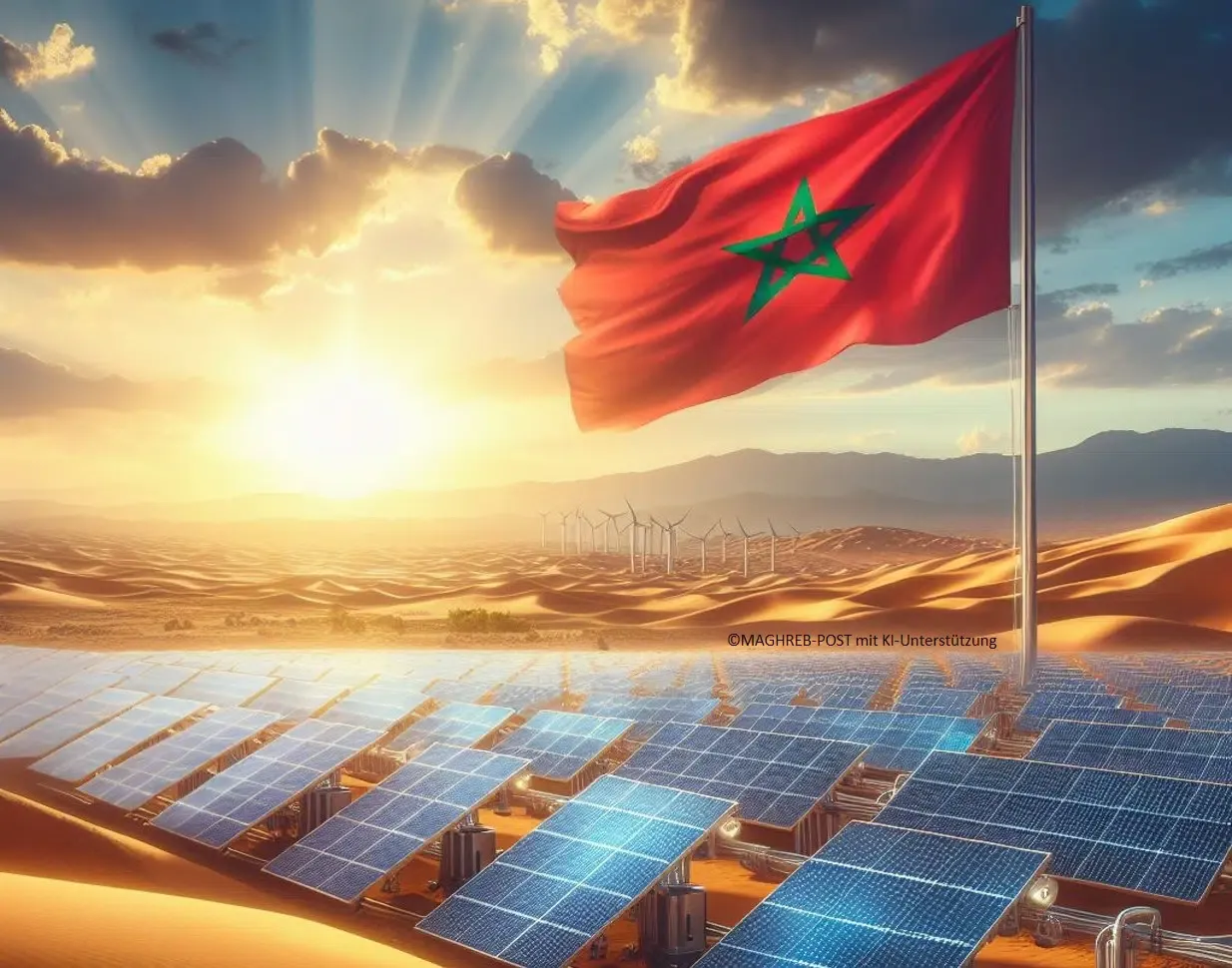
Morocco has set an ambitious target of achieving 52% of its installed capacity from renewable sources by 2030. It is essential to differentiate between installed capacity and actual electricity generation. While the installed capacity continues to grow, the backbone of Morocco's energy supply is still largely reliant on fossil fuels. A particularly sensitive issue is the country’s dependency on coal imports. The Safi power plant exemplifies this contradiction: while Morocco is globally praised for solar projects like "Noor," the industrial stability continues to hinge on coal. In comparison, Germany generated over 50% of its consumed electricity from renewable sources in 2023, a benchmark Morocco has yet to reach, with the current share of renewables in its energy mix fluctuating between 20% and 25%.
Often portrayed as Africa's leader in renewable energy, a data-driven analysis reveals a more nuanced reality. Countries like Rwanda and Ethiopia have significantly higher proportions of renewable energy in their energy mixes. Rwanda efficiently harnesses its geographical advantages for hydropower and methane extraction from Lake Kivu, occasionally covering over 80% of its electricity needs through renewable sources. Ethiopia generates nearly 90% of its electricity from hydropower, showcasing the potential that exists beyond Morocco.
Despite these statistical differences, Morocco remains a focal point in European strategies, not primarily due to its current green energy percentage, but because of its scalability potential. The country's political stability and proximity to Europe position it as an ideal partner for exporting green hydrogen and direct electricity supplies via undersea cables. This aspect is particularly significant in the Italian "Mattei Plan" and the associated "Africa Investment HUB." The upcoming "Storage & Solar Expo Conference" (SSEC) in September 2026 in Vicenza further emphasizes that the focus is no longer solely on energy generation but also on energy storage and intelligent management through artificial intelligence.
From a European perspective, the approach is pragmatic; the search is not for the country with the highest self-consumption rates but for a partner capable of producing green energy for the global market. Morocco provides the necessary infrastructure and legal certainty, even if the domestic path to complete decarbonization is still extensive.
As reported by maghreb-post.de.