
The Journey of Underdogs in World Cup History
As the anticipation builds for Switzerland's clash against defending champions Argentina at 3 AM, the nation enters the tournament as an underdog. However, history has shown that underdogs can defy expectations and make remarkable advances in World Cup competitions. In fact, looking back at previous tournaments reveals a notable trend: often, teams that were not expected to perform well end up reaching the semifinals, and sometimes even two underdogs manage to make it that far.
With France and Spain already securing their spots as the first two semifinalists for the 2026 World Cup, attention now turns to which underdog might join them. Will it be Norway, who face England later tonight? Could it be Switzerland? Or might we witness a sensational semifinal matchup featuring both teams?
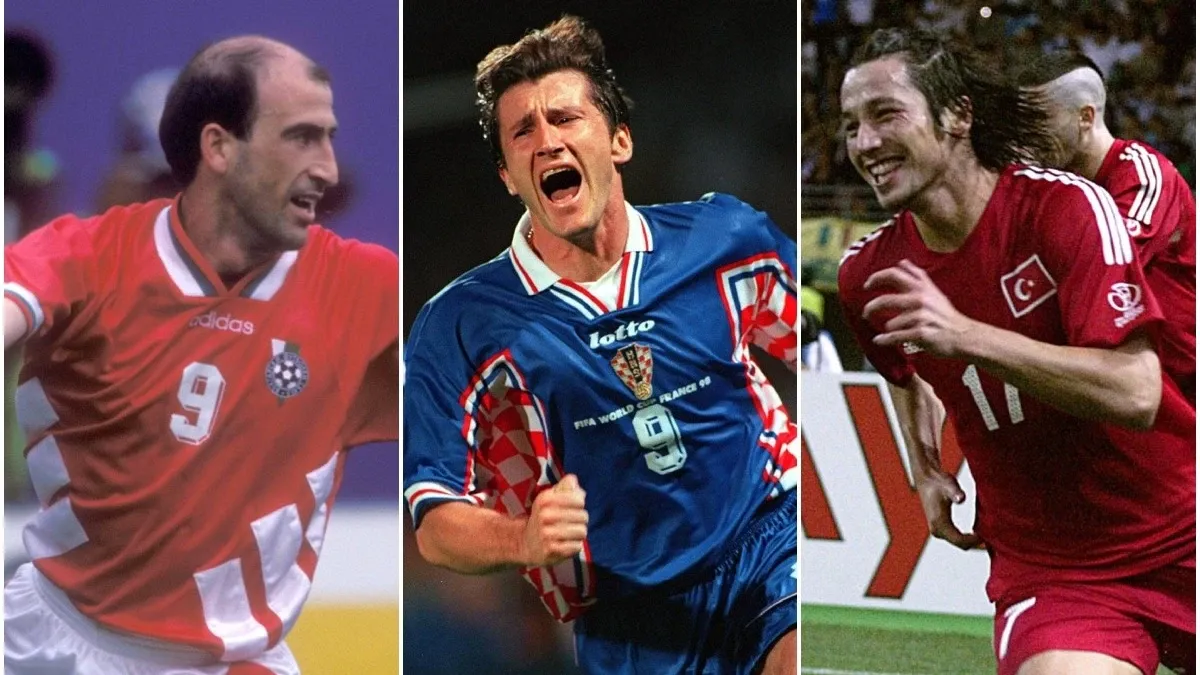
Reflecting on the last World Cup held in the USA in 1994, we saw two underdogs—Sweden and Bulgaria—advance to the semifinals. Sweden, led by stars like Tomas Brolin, Martin Dahlin, and Henrik Larsson, advanced with just one victory in the group stage. They reached the semifinals but were ultimately defeated by Brazil, finishing in third place with a 4-0 victory over Bulgaria. Meanwhile, Bulgaria's remarkable journey included a shocking upset over defending champions Germany in the quarterfinals, spurred by the brilliance of Barcelona's Christo Stoichkov.
Fast forward to the 1998 World Cup, where another underdog, Croatia, eliminated Germany once again. This small Balkan nation made an even more significant impact in 2018 by reaching the final, ultimately losing to France. The 2002 tournament in Japan and South Korea saw co-host South Korea storm into the semifinals, aided by some controversial officiating in key matches against Italy and Spain.
Additionally, Turkey's Ilhan Mansiz became a household name by scoring the Golden Goal against Senegal, propelling his team into the semifinals. Uruguay also had its moment in 2010, making it back to the semifinals after a lengthy absence. Notably, it wasn't a goal from Luis Suarez that secured their place; rather, it was a last-minute handball that denied Ghana a victory in the quarterfinals. The resulting penalty miss by Asamoah Gyan allowed Uruguay to triumph in the shootout, with Suarez hailed as a national hero while facing criticism internationally.
The most recent World Cup in 2022 saw Morocco achieve a historic milestone by becoming the first African team to reach the semifinals, following impressive victories over Spain and Portugal. Sweden, Bulgaria, Croatia, South Korea, Turkey, Uruguay, and Morocco are just a few examples of underdogs who have managed to write their own narratives and challenge the established powers in football. Will Switzerland join this esteemed list, or will the giants of the game, as witnessed in 2006 (Germany, Italy, Portugal, France) and 2014 (Germany, Brazil, Netherlands, Argentina), continue to dominate?
There is perhaps nothing more beautiful in football than authentic jubilation, much like the celebration following Mikel Merino's winning goal in the World Cup quarterfinals.
As reported by watson.ch.