
Issues Plaguing Jemaa el-Fnaa Square Renovations
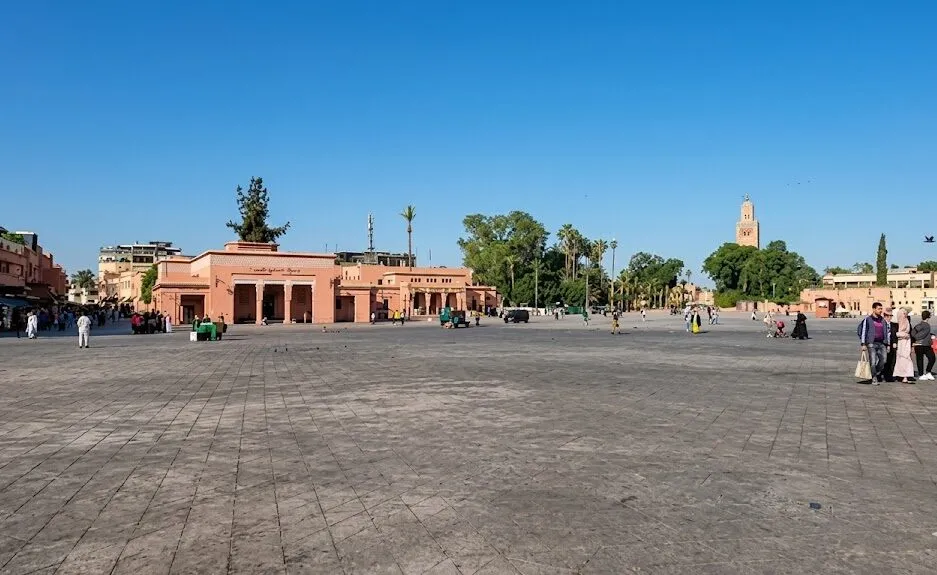
The recent renovation and rehabilitation projects at the UNESCO World Heritage site of Jemaa el-Fnaa in Marrakech have come under intense scrutiny from civil society activists and local stakeholders. These criticisms emerged following the appearance of defects in the square's flooring and the accumulation of dirt, particularly in areas designated for food carts and local eateries. The discontent has been amplified by the circulation of videos and photographs on social media, which illustrate the deterioration of the square's surface. Observers have interpreted this as symptomatic of underlying issues that contradict the substantial financial investments allocated by the Marrakech-Safi region and the municipal council for the rehabilitation, tiling, and sewage system upgrades.
Zakaria Laminechri, a prominent activist in Marrakech, expressed in an interview with the newspaper "Al-Omq" that the management of these projects lacks the necessary efficiency, especially considering the unique nature of this space. He emphasized that Jemaa el-Fnaa hosts the largest open-air restaurant in Morocco, which necessitates that design firms select pavement materials with specific technical specifications, ensuring they are resistant to grease and food waste, and suitable for high temperatures. According to Laminechri, comparisons between the previous state of the square and its current condition in 2026 reveal a decline in both its visual and cultural identity, highlighting that many renovation projects suffer from poor quality, leading to the need for maintenance or renewal shortly after completion.
Impact of Recent Rainfall and Concerns of Sustainability
Moreover, the recent rainfall has exposed deeper technical flaws in the execution of these projects. Laminechri pointed out that the observations made were not limited to the fading color of the pavement, which has detracted from the square's aesthetic appeal, but also highlighted significant issues related to water pooling during the rainy season and inadequate preparations. He attributed these shortcomings to the pressure of deadlines and a hurried pace of work in anticipation of events hosted in Marrakech, including the Africa Cup of Nations, which adversely affected the quality of the outcomes. The activist linked these deficiencies to past experiences during major events in the city, such as the COP22 summit and the annual meetings of the International Monetary Fund and the World Bank, where accelerated urban improvements led to the emergence of flaws immediately after these events, raising questions about the oversight mechanisms and the role of consulting firms.
Social activist Mohamed Chaker also expressed his strong disapproval of the current state of Jemaa el-Fnaa, arguing that the identified flaws in the flooring do not align with the historical significance of this site or the magnitude of investments made in its rehabilitation project. He reiterated that the ongoing situation in the square raises numerous questions regarding the quality of execution and adherence to contractual obligations, particularly concerning the materials used and maintenance strategies post-construction. The transformation of the square into a hotspot for accumulated waste and grease reflects a lack of a comprehensive vision for the sustainable management of this vital space.
Chaker further asserted that the issues extend beyond technical aspects, encompassing the management of the area following its renovation. He emphasized that the success of a project of this magnitude should not only be evaluated based on the inauguration phase but also on its sustainability and resilience to the daily pressures experienced by a space that attracts thousands of visitors each day. He warned that delays in addressing these discrepancies could negatively impact Marrakech's reputation as a global tourist destination, underscoring that Jemaa el-Fnaa is not merely a public square but a cultural and historical symbol that necessitates exceptional care and stringent management to uphold its status with UNESCO.
In this context, Chaker called for all stakeholders to take responsibility from their respective positions, stressing the need for a comprehensive audit of the project to identify the root causes of the issues and accurately assign accountability, thus preventing the recurrence of such discrepancies in the future.
As reported by al3omk.com.