
Transparency Issues in Arabic Language Education
On March 20, 2026, the association Aixeca’t-Levántate raised significant concerns regarding the apparent lack of transparency surrounding the management of Arabic language education programs in primary and secondary educational institutions across Spain. The organization has formally requested information from both the Ministry of Education and various regional administrations, yet it has not received any responses to crucial questions that are essential for ensuring the effective operation of these courses. Among the inquiries made are critical aspects such as the budget allocated for these programs, the sources of funding, the curricular content being taught, the qualifications of the teaching staff, and the pedagogical supervision mechanisms in place. However, the association claims that none of the consulted administrations have provided these details through official public information channels.
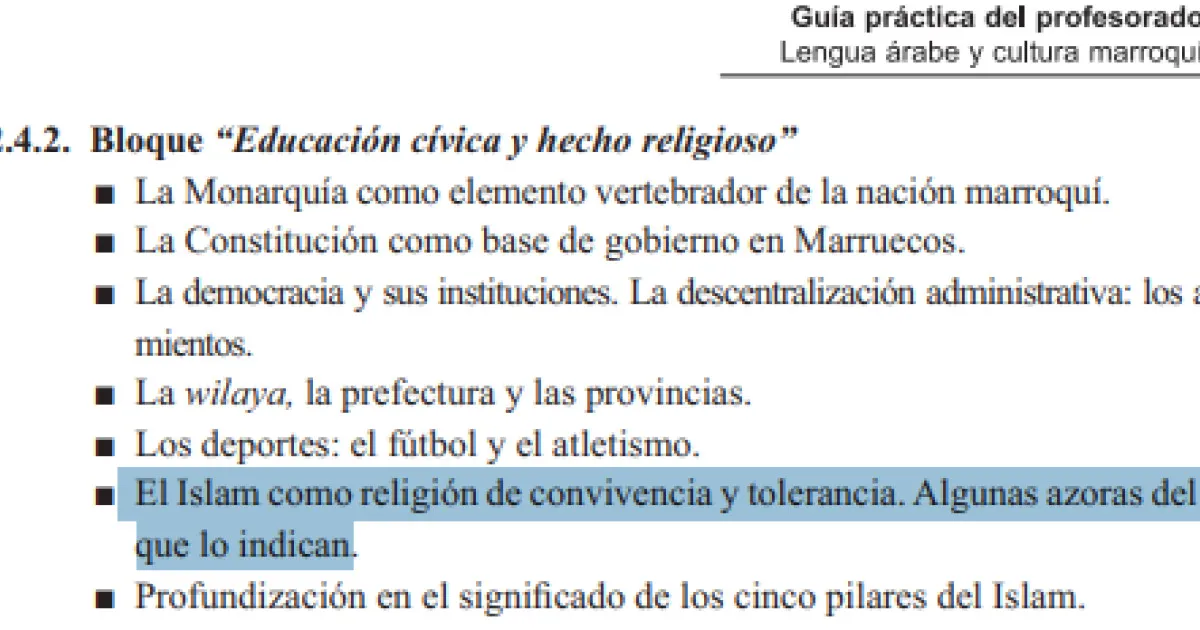
Aixeca’t-Levántate warns that this lack of response hinders the ability to verify whether the programs adhere to the principles that govern the Spanish educational system, such as ideological neutrality and the secular nature of public education. In this context, the organization emphasizes that while it supports the right of Moroccan students to learn their language, such education must be strictly confined to the linguistic domain. They express concern that without adequate oversight, these programs could become avenues for introducing religious, identity, or territorial content that they believe does not align with public educational spaces or existing legislation. The association firmly states, "The teaching of a language cannot be transformed into a vehicle for indoctrination."
Call for Action and Accountability
Furthermore, Aixeca’t-Levántate raises questions about who is actually supervising these courses, whether the teaching staff is selected solely based on academic criteria, or if there may be individuals with confessional backgrounds involved. The organization also inquires about the potential existence of agreements with foreign institutions and highlights the absence of public information regarding the mechanisms for controlling the content delivered in classrooms. They assert, "Public education in Spain is constitutionally secular, and no linguistic instruction can serve as an indirect channel for religious transmission." In light of this situation, Aixeca’t-Levántate is calling for specific measures from educational administrations: increased transparency in funding and program design, clear information regarding the training and selection of teaching staff, assurances that the content is limited to language acquisition, and the involvement of educational oversight to ensure compliance with constitutional principles. The association concludes that transparency and supervision are essential elements for safeguarding students' rights and maintaining the neutrality of public schools, reiterating that any program developed within educational settings must adhere to the principles of pedagogical control and accountability established by current legislation.
As reported by eldebate.com.