A Historic Shift in African Football
The world of African football has been rocked by a monumental decision that has altered the course of the 2025 Africa Cup of Nations (AFCON). Senegal, which believed it had secured its place in history as the tournament's champion, has faced a devastating blow as the African Football Confederation (CAF) Appeals Jury has ruled that Morocco is the rightful winner by forfeiture. This unexpected outcome not only overturns Senegal's triumph but also marks a significant legal victory for Morocco.
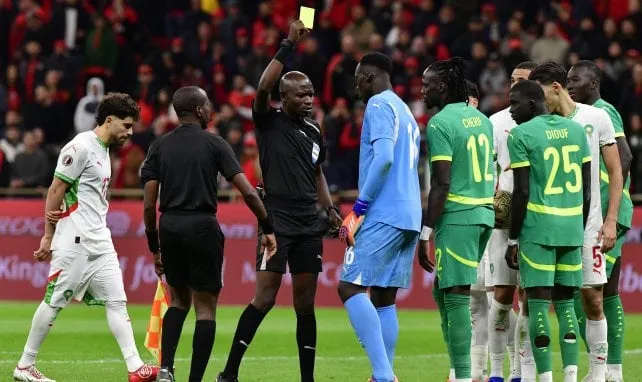
On a night already filled with excitement due to the UEFA Champions League, the CAF Appeals Panel announced its verdict, effectively nullifying the previous ruling made by the Disciplinary Committee. The crux of the case centered around the behavior of the Senegalese players during the final match, particularly their premature exit from the pitch following a controversial penalty awarded to Morocco in the dying moments of the game. While the Disciplinary Committee had initially upheld the match result, the Appeals Jury interpreted the regulations differently, relying on Articles 82 and 84 of the AFCON rules to declare Senegal's actions a serious offense. Consequently, Senegal was disqualified from the final, and the score was officially recorded as 3-0 in favor of Morocco, who reclaimed the continental title.
Individual Sanctions Reassessed and Financial Implications
In addition to the trophy's fate, the Appeals Jury also revisited individual sanctions, notably regarding Moroccan midfielder Ismaël Saibari, who faced significant penalties related to the incident. His suspension was notably reduced to just two official matches, with one being suspended, and the previously imposed fine of $100,000 was completely lifted. Despite Morocco emerging as the victor in this saga, the Moroccan Football Federation did not entirely escape financial repercussions connected to match organization and incidents. However, the Appeals Jury displayed some leniency, resulting in reduced fines for various infractions, including a notable reduction for ball boy misconduct and the use of lasers during the match.
This explosive verdict is poised to ignite further discussions and debates throughout Africa, as it underscores CAF's commitment to strict adherence to match protocols. For Morocco, this decision signifies the end of a prolonged standoff and heralds their first AFCON title since 1976, albeit in a context defined by controversy that will likely remain memorable in the annals of African football. Yet, this ruling is expected to provoke more accusations regarding Morocco's influence within CAF, particularly in light of recent tensions among various football federations.
The saga is far from over, as Senegal is contemplating its next move. The Senegalese Football Federation is set to take its case to the Court of Arbitration for Sport (CAS) in Lausanne, which will face the challenging task of providing a definitive resolution to this extraordinary and historic dispute.
As reported by sportnewsafrica.com.