
Unraveling the Controversy of Urban Licensing in Marrakech
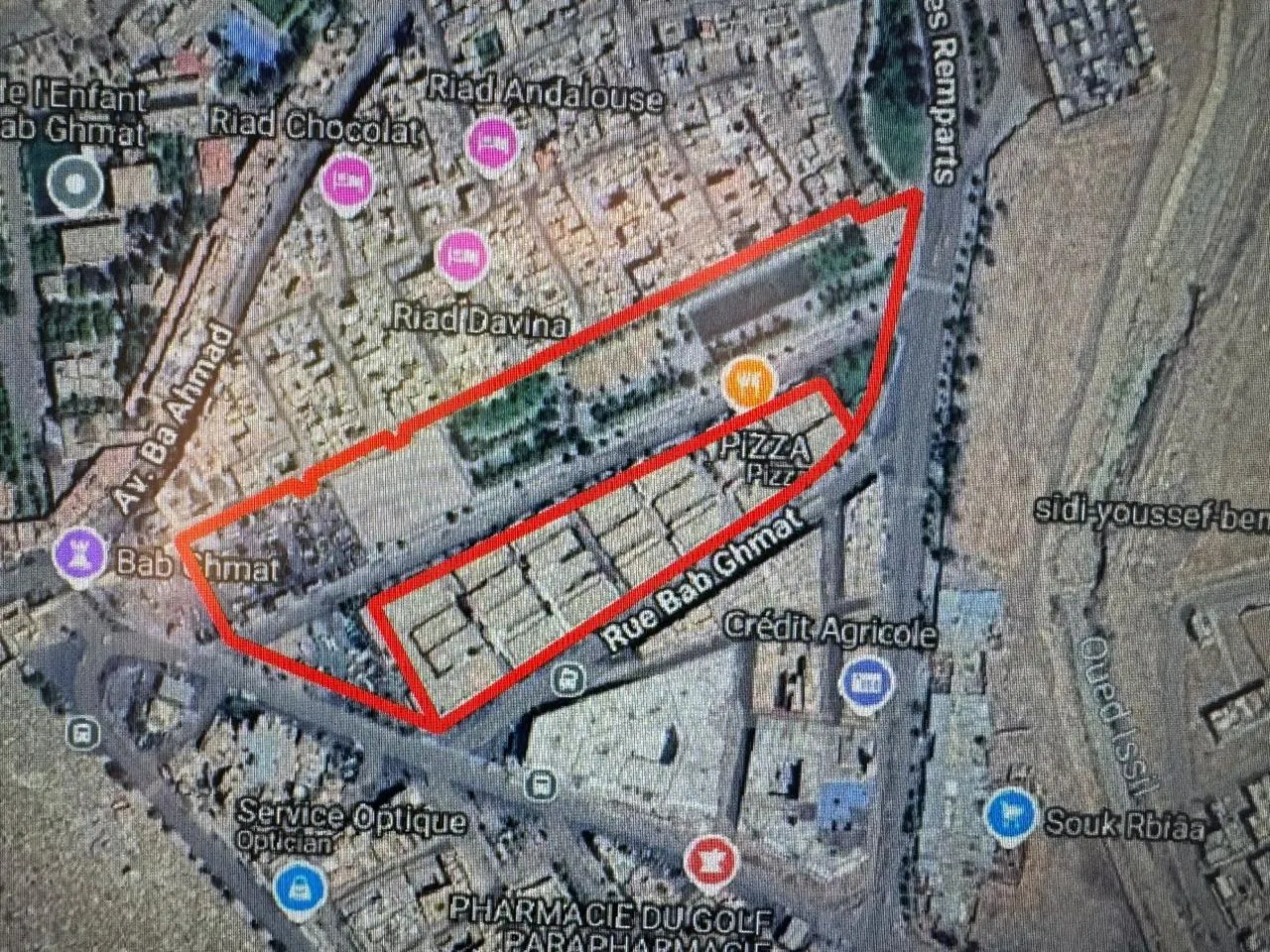
One of the most contentious issues surrounding urban management in the city of Marrakech has resurfaced, centering on a commercial project authorized in 2013, located adjacent to the city’s historic walls. This area is legally designated as strictly protected and prohibited from construction, raising significant questions not only about technical or administrative practices but also about the very essence of the rule of law. Can the stipulations of a historical decree published in the official gazette be bypassed through an administrative meeting? Are all citizens treated equally under urban planning regulations, or do exceptions exist based on influence and power?
Upon revisiting various documents, both old and new, the investigative team at “Barlamane.com” has sought to uncover the intricacies and secrets surrounding this issue in the red city. Since 1914, a royal decree has established a protection zone extending 250 meters around the historic walls of Marrakech, prohibiting any construction that could compromise the cultural and visual integrity of this unique architectural heritage. This decree is not merely an administrative guideline; it constitutes a binding legal framework that can only be amended or repealed by a decree of equal legal authority.
A Troubling Administrative Meeting
In 2013, however, a project known as “Qaysariya” was approved within this protected zone based on what was described as an “exceptional interpretation” that reduced the scope of protection to just 73 meters. This decision raises a critical question: who possesses the authority to diminish the boundaries set forth by a royal decree when such a decree can only be modified or annulled by another decree? A dubious meeting held on November 8, 2013, chaired by a senior official from the Ministry of Culture, allegedly served as the basis for this “exception.” The most alarming aspect, as reported by sources at “Barlamane.com,” is not just the content of the meeting minutes but their nature: an internal administrative document purportedly handwritten, treated as superior to a published legal text.
Adding to the controversy, a member of the benefiting family reportedly attended this meeting, prompting serious concerns about conflicts of interest. How can a party with a direct stake in the project participate in what is supposed to be an impartial administrative discussion? Were other citizens, whose projects were rejected due to the same legal constraints, afforded similar privileges?
As “Barlamane.com” questions the silence of governance bodies, integrity institutions, opposition parliamentary groups, and even the Prime Minister, it is noteworthy that the license was issued while one of the beneficiaries held the position of President of the Marrakech Municipal Council, an essential body in granting urban licenses. This overlap of political responsibility and personal interest raises the specter of potential conflict of interest.
The core issue extends beyond a single commercial project; it represents a dangerous precedent where a legal protective text is rendered negotiable based on circumstances. If the protective measures around the historic walls can be circumvented through an administrative meeting, what prevents future violations of other laws in a similar manner? The principle of legal hierarchy is clear: an administrative decision cannot nullify or amend a higher legal provision. Any deviation from this principle casts doubt on the legitimacy of the decisions made.
The implications of this case resonate beyond mere administrative disputes or legal debates; it engages research institutions, civil society organizations, and national bodies concerned with heritage and culture, posing a real test of the institutions' commitment to the rule of law. When it comes to heritage, the stakes are not solely about stone but also about trust—the trust that the law is applied uniformly to all, or not at all. Until the situation is clarified officially, this case will remain a glaring example of the questions citizens raise regarding spatial justice, decision-making transparency, and the limits of authority in the face of law.
As reported by barlamane.com.