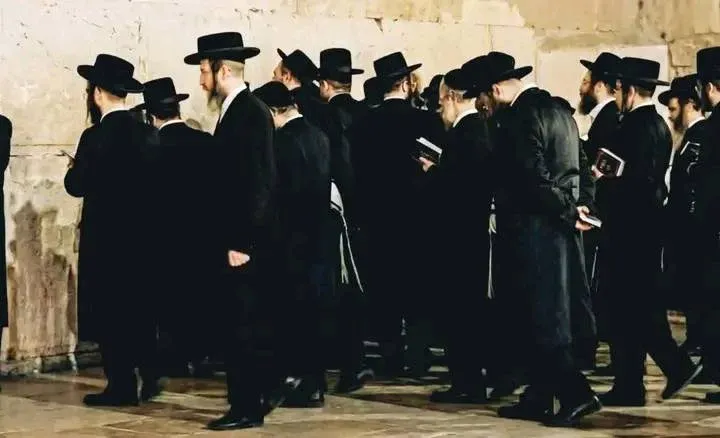
A recent video showcasing a group of Jewish individuals performing religious rituals at the Bab Doukkala in Marrakech has sparked significant controversy, igniting a debate across social media platforms. While the Jewish community described the incident as spontaneous, critics of normalization perceived it as a provocative act that undermines the symbolic significance of the location.
The footage, which surfaced online, depicts a number of Jews in traditional attire engaged in prayers near the historic walls of Bab Doukkala. This led some observers to view the event as a symbolic attempt to transform the site into a new 'Wailing Wall,' thereby intensifying the discussions surrounding the incident.
In response to the uproar, Jackie Kadouch, the head of the Moroccan Jewish community in the Marrakech-Safi region, provided clarifications asserting that the individuals in question were Jews visiting from abroad and belonged to the 'Haredim' community. He explained that they were caught up in prayer while near the site and had no choice but to conduct their prayers there. Kadouch emphasized that these visitors were in the country for religious tours of the 'tombs of the righteous' and to explore historical landmarks, denying any political motives behind their actions. He also pointed out the absence of a nearby synagogue where they could have prayed.
The Haredim community is known for its strict Orthodox Jewish beliefs, adhering to a literal interpretation of religious texts, and its members typically lead a traditional lifestyle that leans towards social isolation and a focus on religious study, often avoiding modern societal trends.
Following the incident, a group of young Moroccans visited Bab Doukkala to clean the area with soap and water, as they felt the site had been 'desecrated.' In a related event, the local front supporting Palestine and opposing normalization organized a protest later that day, attended by dozens waving Palestinian flags and condemning the incident. The group argued that this event was not merely an isolated religious practice but represented a provocative act with normalization implications that jeopardizes the historical significance of Moroccan landmarks.
The front stated that this protest was a defense of the Palestinian cause and a rejection of what they termed 'all forms of Zionist infiltration into Moroccan society.' In a measured response, Abdelilah Benkirane, the Secretary-General of the Justice and Development Party, commented on the matter with caution, noting that he lacked sufficient information to make a definitive judgment, while also recognizing that Jews have been part of the Moroccan fabric for centuries. He added that issues related to religious practices fall under the purview of official authorities, primarily the Ministry of Endowments and Islamic Affairs and the royal institution.
As reported by ar.yabiladi.com.