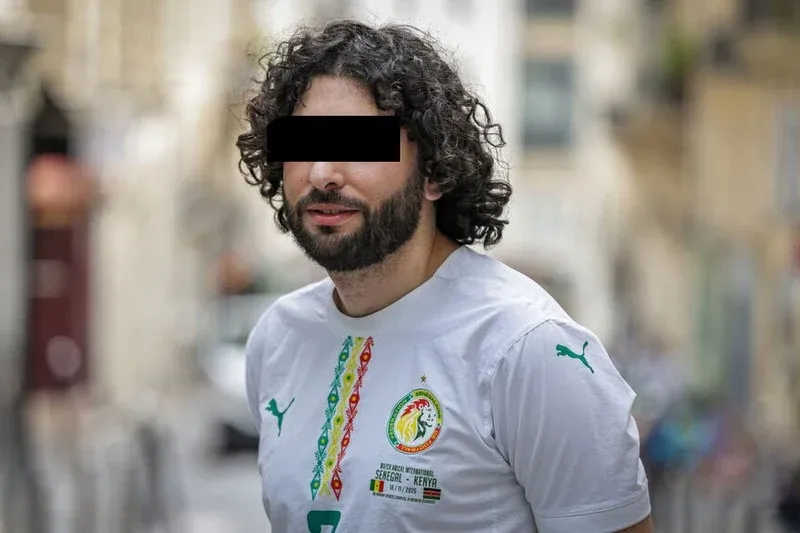

The arrest of a French-Algerian supporter, who claimed to have spent 90 days in a Moroccan prison without justification, has sparked a heated debate surrounding the events that transpired during the Africa Cup of Nations (AFCON) final. According to Moroccan judicial documents reviewed by Hespress, his arrest stemmed from allegations that he was seen throwing projectiles at security forces amidst the violence that erupted during the match.
The individual, a French citizen of Algerian descent and sibling to a video analyst for Senegal's national team, expressed his frustrations to the French newspaper Le Parisien on June 5, claiming he was denied legal representation, unable to inform his family of his situation, and faced communication barriers in French following his detention. However, the judicial records present a contrasting narrative regarding the circumstances of his initial detention.
According to the police documentation, an officer in charge of security at the stadium directly witnessed the defendant engaging in violent acts, specifically throwing hard objects at both public forces and private security personnel. This incident was meticulously recorded in an official observation report that was subsequently submitted to the prosecutors. Following the events, the defendant was initially taken to a police post within the stadium and later transferred to the judicial police headquarters in Rabat after consultation with the public prosecutor.
The records further assert that the accused was informed of his rights in French, as stipulated under Article 66 of Morocco's Code of Criminal Procedure. This included his rights to remain silent, to contact a lawyer, and to notify his family. The documentation confirms that his mother was informed of his arrest and that he indicated she would arrange for legal representation on his behalf. Additionally, it was noted that he consented to answer the questions posed by the investigators. During his custody, which was extended once, he was questioned regarding an injury on his abdomen, which he attributed to resisting arrest, as per the police report.
In a related matter, 18 Senegalese nationals involved in the same case were later granted a royal pardon, highlighting the complexities surrounding this incident. A security source familiar with the investigation emphasized that all procedures were properly documented and conducted in accordance with Moroccan law. This source also criticized Le Parisien for not seeking the Moroccan perspective prior to publishing claims associated with an ongoing judicial case.