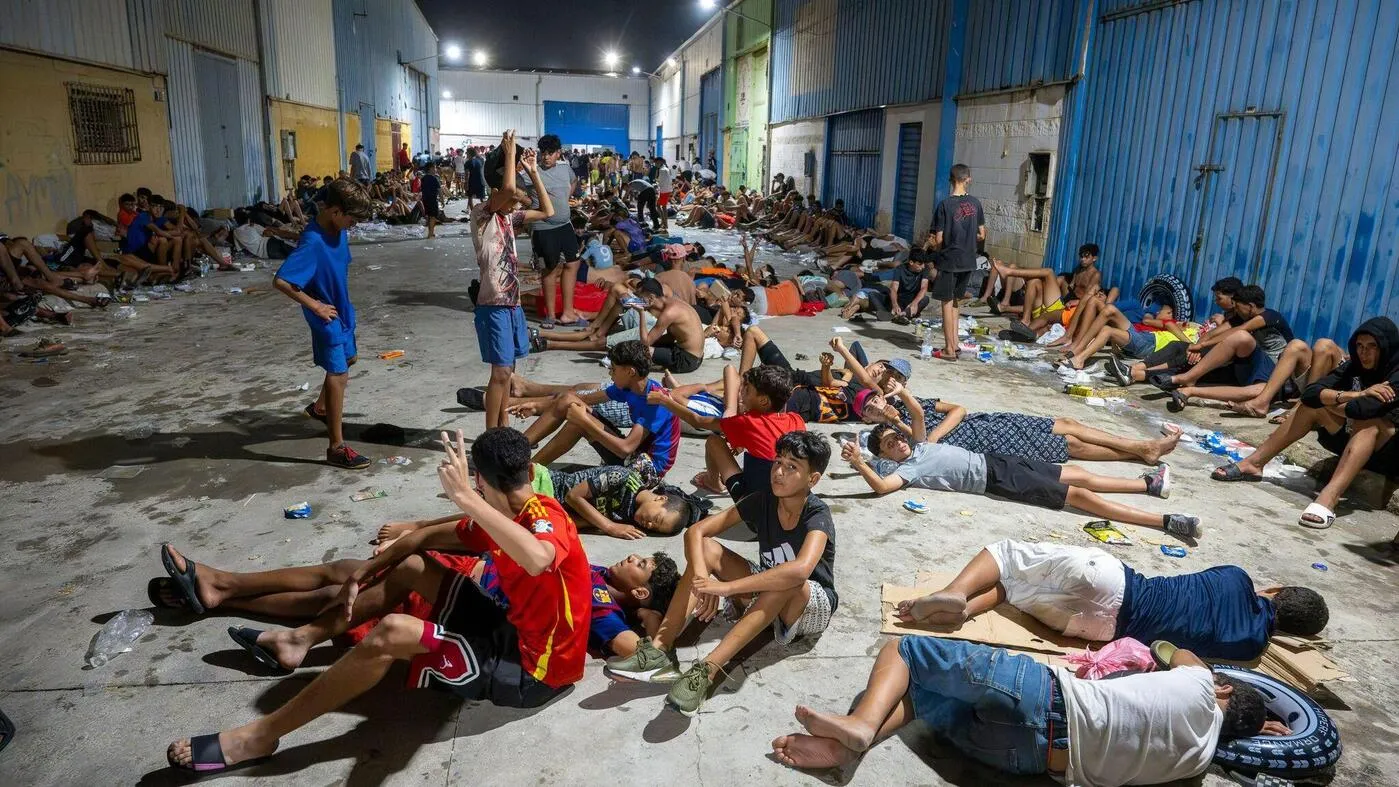
Crisis in Ceuta: Migrant Influx and Government Response
The recent surge of migrants arriving in Ceuta, a Spanish exclave on the northern coast of Africa, has led to a significant crisis, prompting the Spanish government to declare a state of emergency. According to reports, over 48,000 migrants have already returned to Morocco, as confirmed by both RTVE and the newspaper El País, citing figures from the Spanish Ministry of the Interior. These events unfolded amid a backdrop where approximately 60,000 migrants had crossed into Ceuta, a city that hosts a population of around 80,000 within its 20 square kilometers.
The situation escalated rapidly, with images showing not only young men but also women and children navigating the streets of Ceuta. The influx has resulted in widespread panic, leading to many businesses closing their doors due to fears of looting. In response to the chaos, Spanish Prime Minister Pedro Sánchez characterized the situation as an "attack" on the country's territorial integrity, prompting the first military deployment since 2021 to bolster border security.
European Reactions and Border Security Measures
The events in Ceuta have ignited intense political debates across Europe, especially following recent asylum reforms. German Chancellor Friedrich Merz emphasized that robust protection of the EU's external borders is crucial for combating illegal migration. He urged Spain to swiftly regain control of the situation in Ceuta. Similarly, German Foreign Minister Johann Wadephul and Interior Minister Alexander Dobrindt echoed these sentiments, with Dobrindt announcing plans to extend border controls in Germany.
In light of the situation, France has also announced stricter controls at its border with Spain. French President Emmanuel Macron expressed solidarity with Spain, offering any necessary assistance to manage the crisis. Italy, although lacking a land border with Spain, has also indicated that it will take steps to address the escalating situation.
As the crisis unfolds, the death toll continues to rise, with authorities reporting that 57 individuals have drowned in attempts to reach Ceuta. While some suggest a recent Supreme Court ruling in Spain may have triggered this influx, the dissatisfaction among Morocco's younger population also plays a significant role in their migration attempts. The complexity of these dynamics illustrates the broader challenges surrounding migration in Europe today.
As reported by spiegel.de.