Significant Mineralization Results from Agadir Melloul
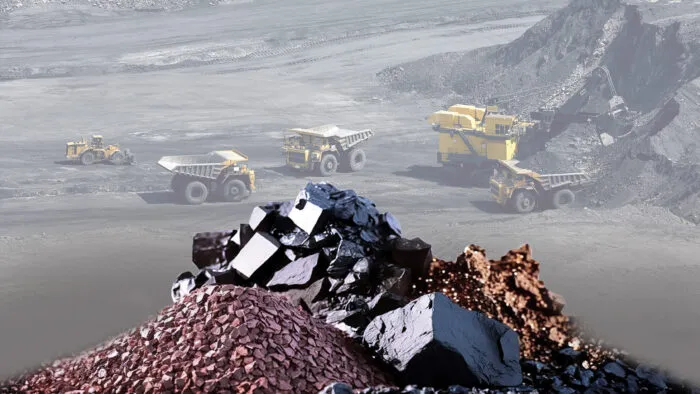
On April 29, Critical Mineral Resources released a series of remarkable analytical results from its drilling program conducted in 2026 at the Agadir Melloul site in Morocco. These findings indicate a continuous mineralization and copper grades that exceed initial expectations in several instances. The company describes a geological structure conducive to open-pit mining, based on favorable technical parameters.
The initial data emerging from this fully financed program reflects a notable acceleration in operations during February and March, a timeframe characterized by favorable climatic conditions that allowed for a monthly drilling rate of approximately 1,200 meters. Management has indicated that these efforts are set to culminate in the publication of a preliminary resource estimate in the third quarter of 2026, providing a clearer outlook on the project's future.
In a concise statement, the company emphasized that "the analytical results demonstrate a coherent copper mineralization, including zones of significant thickness and grade," noting that "certain intersections reach approximately 5 meters of true thickness, well above the average target of 2 meters." This bodes well for technically favorable surface mining configurations.
Geological Data and Drilling Metrics
The detailed results reveal a consistent distribution of grades, accompanied by significant near-surface intersections, reinforcing the hypothesis of an extensive and continuous mineralized system. Various drill results highlight high-grade sequences, including 5.0 meters at 1.20% copper with 0.77 grams per tonne of gold and 1.4 grams per tonne of silver at 24 meters; 3.7 meters at 1.76% copper with 8.6 grams per tonne of silver at 6.3 meters; and 4.0 meters at 1.20% copper with 0.9 grams per tonne of silver at 18 meters.
A detailed examination of drill holes BH100, BH107, BH108, BH110, BH111, and BH114 confirms this consistency, with intersections distributed as follows: 5.0 meters at 1.20% copper, including 3.0 meters at 1.64%; 5.0 meters at 0.77% copper, including 3.0 meters at 1.04%; 4.0 meters at 1.03% copper; 3.0 meters at 0.80% copper; and 7.0 meters at 1.06% copper, including 3.0 meters at 1.49%.
Other drilling results extend the mineralized continuity through homogeneous sequences such as 2.5 meters at 1.40% copper with 8.6 grams per tonne of silver; 3.7 meters at 1.76% copper; 2.6 meters at 0.95% copper, including 1.6 meters at 1.27%; and 1.5 meters at 1.32% copper with 20.31 grams per tonne of silver. The company highlights the rapid delineation of this sedimentary system, noting that "the mineralization encased in sediments is defined quickly as the company aims for the publication of a preliminary resource estimate," now targeted for the third quarter of 2026.
Beyond these results, management emphasizes a considerable potential for expansion, pointing out that "less than 3% of the target area has been drilled," suggesting a significant extension of volumes and grades as work progresses. The internal target remains at a potential of 25 million tonnes in the medium term, while reiterating the conceptual nature of this estimate.
In a more analytical development, CEO Charles Long remarked that "these results confirm a coherent, shallow copper system, with thicknesses and grades compatible with an open-pit mining scenario," adding that "several intersections exceed initial thickness assumptions, enhancing the project's mining inventory and economic prospects. Immediate attention is focused on systematically extending these zones ahead of a preliminary resource estimate." Similarly, Russell Tucker noted that "the drilling results, coupled with those already published, confirm the presence of a near-surface copper and silver deposit with significant potential," while emphasizing that "only a fraction of the project has been tested by drilling," reinforcing the hypothesis of substantial volume increases.
The technical timeline presented is organized according to a rigorous progression, including a metallurgical testing program between May and June 2026, followed by the development of treatment schemes and preliminary plant design by July 2026, alongside geotechnical studies conducted within the same timeframe. The environmental impact study related to the treatment facility is expected to be submitted before August 2026, while the first resource estimate compliant with international standards is anticipated in September 2026. Subsequent steps include mine planning and production scheduling work between October and November 2026, culminating in the completion of a definitive feasibility study targeted for December 2026, accompanied by the corresponding environmental approval subject to regulatory timelines. This methodical sequencing outlines a progressive industrial trajectory, backed by geological results now supported by a substantial empirical foundation.
As reported by barlamane.com.