
Cultural Initiatives Across Morocco's Vibrant Cities
From Marrakech to Tangier, and through Meknes, Dakhla, and Sidi Kacem, numerous cultural initiatives are shining a spotlight on photography, cinema, animation, and international artistic exchanges. These initiatives include exhibitions, festivals, creative residencies, and professional meetings that collectively illustrate the rich diversity of Morocco's cultural landscape.
Marrakech Celebrates Cultural Bridges Between Morocco and Peru
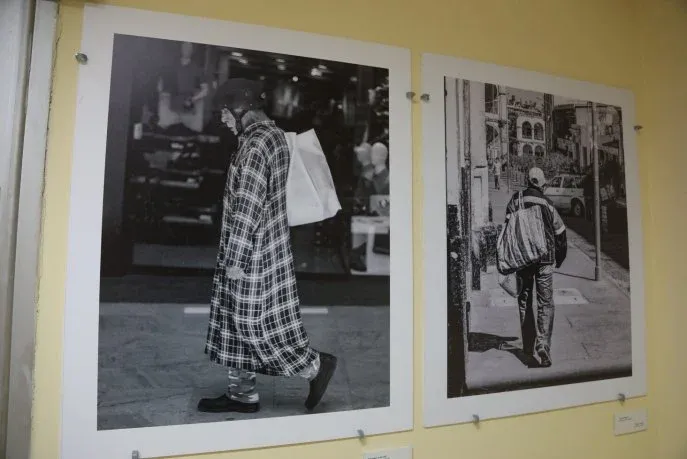
Marrakech is currently hosting the photography exhibition “Portraits of Peru and Morocco” by Peruvian photographer Nicola Moreno, which will run until June 6. The opening event was attended by diplomats, artists, cultural figures, and photography enthusiasts. Organized by the Cervantes Institute in collaboration with the Embassy of Peru in Morocco, the exhibition features nearly forty photographs taken in various Moroccan and Peruvian cities, including Rabat, Tangier, M'diq, Lima, Arequipa, and Moquegua. Through everyday scenes, the exhibition explores the human and cultural similarities between the two countries. Moreno emphasizes his direct visual approach, aiming to convey the emotions and experiences of the people he encountered during his travels.
The director of the Cervantes Institute in Marrakech, Miguel Ángel Sanjosé Ribera, noted that this initiative aligns with the goal of promoting openness to diverse international artistic experiences and fostering intercultural dialogue. This exhibition is part of the third edition of the photography festival “Mai de la photo,” which plays a crucial role in enhancing artistic exchanges between Morocco and Latin America through contemporary photography.
In Sidi Kacem, organizers of the Moroccan Short Film Festival have announced the opening of applications for its 26th edition, scheduled for November 5-8. Filmmakers and producers are encouraged to submit works under thirty minutes, produced after January 1, 2024, with submissions open until June 18. The festival aims to support Moroccan cinematic creation and emerging talents while solidifying its position among national artistic events dedicated to short films.
Meanwhile, in Dakhla, the International Film Festival is set to take place from June 6 to 12, featuring filmmakers from Africa, the Arab world, Europe, and North America. Organized by the Cultural and Artistic Animation Association of the Southern Provinces, this 14th edition will showcase nineteen feature films and documentaries representing twenty-one countries. Nine feature films will compete, including “Quiproquo” by Hamid Basket, “Fragments” by Janane Fatine Mohammadi and Abdelilah Zirat, “Happy Birthday” by Sarah Goher, and “Mikoko” by Angèle Aquerburu Rabatel. The documentary competition will include titles such as “The Clown of Gaza” by Abderrahman Sabah, “Déchirure” by Fouad Souiba, and “The Departure” by Mohamed Fadel Joumani. The program will also feature tributes, workshops, round tables, masterclasses, a panorama of Moroccan cinema, and animated film screenings.
In Tangier, the artistic and educational residency organized by the Darna association concluded on Tuesday at the city's educational farm, attended by national and international partners. This residency, which took place from March to May 2026 in collaboration with the UNESCO Chair of Arts and Learning and ArtEZ University of the Arts from the Netherlands, allowed master's students to develop artistic and educational projects inspired by the association's field experience. The event comes as UNESCO recently commended Darna's efforts in the artistic, educational, and social fields. Since 1995, the association has been developing projects that utilize art as a tool for social inclusion, particularly for vulnerable children. The closing of this residency culminated in a carnival titled “Tangier, Crossroads of Worlds,” bringing together Moroccan and foreign artists to celebrate cultural diversity and artistic exchanges.
In Meknes, French director and screenwriter Patrick Volve advocated for a contemporary reinterpretation of traditional tales in animated cinema. Invited to the International Animation Film Festival of Meknes, he believes that young filmmakers can draw inspiration from folklore to create works relevant to today’s world. His short film “Goldilocks and the Three Berber Monkeys,” presented at the festival, is part of a collection titled “Once Upon a Time,” which revisits classic tales within contemporary and multicultural contexts. Volve explains that the project emphasizes regional dialects and languages to familiarize young Francophone audiences with diverse linguistic realities. Spanning from Morocco to Brazzaville, Corsica, Montreal, and La Réunion, the series blends various cultural universes without always resorting to subtitles, allowing viewers to naturally discover words and phrases from other languages. The director further notes that adaptation involves transforming ancient narratives to resonate with children living in a highly connected environment marked by digital technologies. The FICAM 2026, themed “Youth in Animation Cinema,” continues its conferences and professional meetings focused on contemporary animation issues and the support of new Moroccan talents.
As reported by quid.ma.