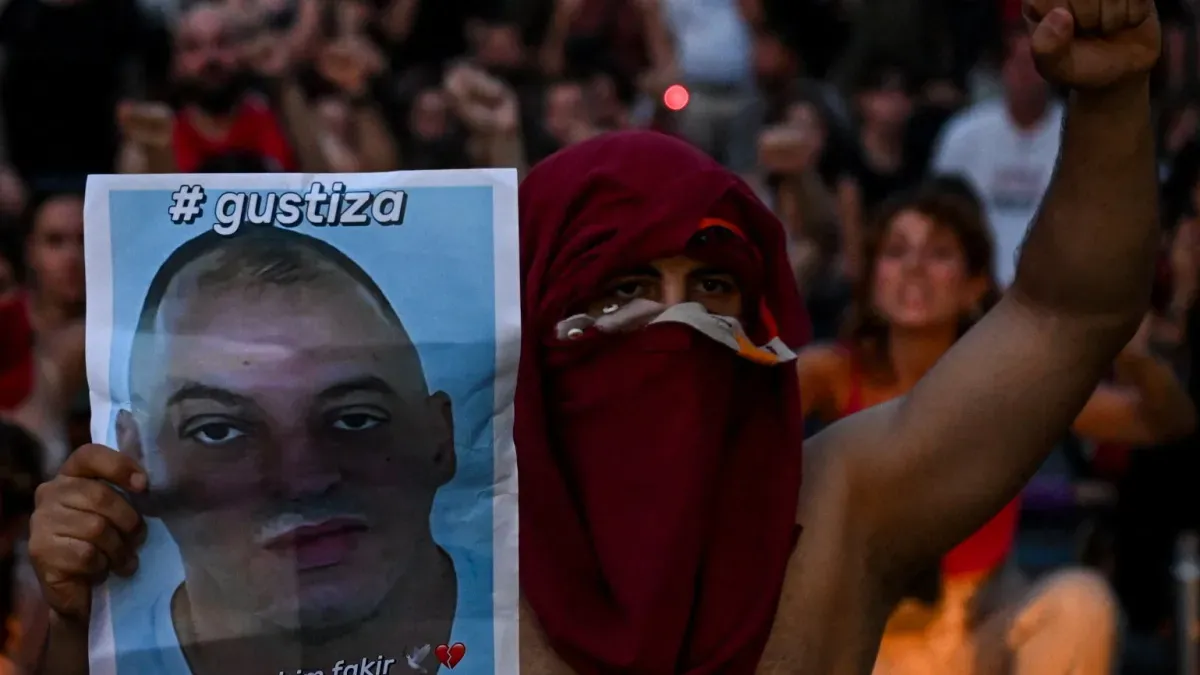
Following the tragic death of a Moroccan immigrant during a violent police operation in Italy, the Moroccan government has swiftly called for a comprehensive investigation into the incident. The Moroccan Foreign Ministry stated on Tuesday evening that the death of 42-year-old Abderrahim Fakir must be "fully clarified," emphasizing the need to identify those responsible and ensure that appropriate legal actions are taken. This incident has sparked widespread outrage and demands for accountability in Italy.
Details of the Police Operation
Abderrahim Fakir died on Sunday on a street in Bologna. A video recorded by a neighbor shows him being forcibly restrained on the ground by two police officers, with his hands cuffed behind his back. In the footage, he can be heard repeatedly calling for help and pleading for the officers to stop. Despite appearing to pose no threat while lying on the ground, the officers continued to apply pressure until his voice faded, only releasing him several minutes later when he was unresponsive.
Several paramedics were present during the incident, but they only turned him over after more than four minutes, by which point it was too late. A doctor pronounced him dead at 12:53 PM. The case has drawn significant media attention in Italy, with many suspecting excessive police violence. Investigators are hoping to shed light on the situation through an autopsy of the body, and the body camera footage from one of the involved officers has been submitted to the public prosecutor's office.
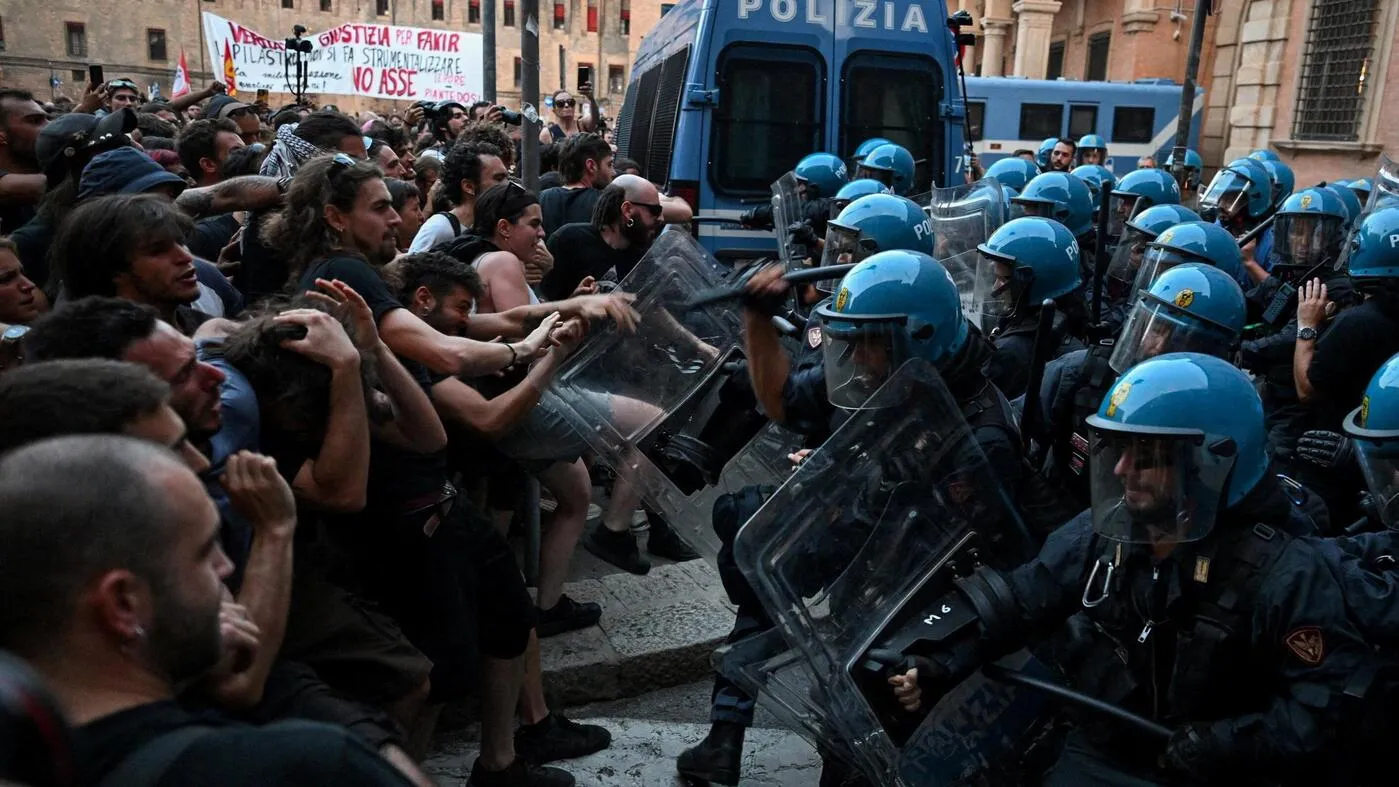
On Tuesday, protests erupted across multiple cities, including Bologna, where thousands gathered in the city center. Demonstrators carried signs with slogans such as "Truth and Justice," demanding accountability for the actions of the police.
Background and Responses
The police operation that led to Fakir's death stemmed from a call made to emergency services regarding a man causing a disturbance. Initial reports suggest that the police officers involved described Fakir as experiencing a psychiatric crisis. Upon their arrival, they allege that he struck their patrol car, prompting them to use pepper spray and subsequently restrain him on the ground.
Following the initial peaceful demonstration, tensions escalated, resulting in clashes between protesters and police. Some demonstrators reportedly threw bottles and Molotov cocktails, while others tore off window grates from armored police vehicles. In response, law enforcement deployed water cannons and tear gas. Reports indicate that at least eleven individuals were injured, including six police officers and five demonstrators, with two requiring hospitalization. The family of the deceased condemned the violence but insisted on accountability for his death.
Fakir had lived in Italy since childhood and held valid residency papers, operating a small cleaning business. His family expressed their grief and demanded justice, with his sister stating, "I will not find peace until my brother is avenged. They beat him and killed him." Barbara Spinelli, a lawyer who assisted Fakir with his residency, described him as a "kind, well-educated, respectful man," expressing her sadness over the tragic turn of events.
As investigations proceed, the Italian government, led by Prime Minister Giorgia Meloni, has promised full transparency regarding the circumstances surrounding Fakir's death. Interior Minister Matteo Pantedosi labeled the incident a "great tragedy," while Deputy Prime Minister Matteo Salvini defended the actions of the police, asserting that they acted professionally. In contrast, Bologna's leftist mayor, Matteo Lepore, criticized the government's response, citing a lack of adequate action and calling for a more compassionate approach to such incidents.
Currently, preliminary investigations are underway against the two police officers involved, as well as four paramedics who, according to video evidence, merely observed the events unfold. Due to Italy's new security law, these officers are not placed directly into a criminal register but instead into a separate preliminary register, which applies in cases where officers appear to have acted within the scope of their duties but later may face regular investigations if justifications for their actions are deemed insufficient. As reported by tagesspiegel.de.