
Unveiling the Giant Mosasaur: A Glimpse into the Past
Recent findings in Morocco have shed new light on the prehistoric marine predator known as the mosasaur, specifically a newly identified giant species named Pluridens imelaki, which thrived approximately 66 million years ago. This discovery not only enhances our understanding of these formidable creatures but also prompts a reevaluation of the ecological dynamics of the oceans just before the mass extinction event that eliminated the dinosaurs. The mosasaur, akin to modern-day orcas in its predatory role, was a dominant force in the marine ecosystems of its time, with some individuals reaching lengths comparable to that of a bus, significantly surpassing many contemporary great white sharks in size.
Unlike the slow-moving crocodiles that share a distant lineage with these reptiles, mosasaurs possessed remarkable speed, likely rivaling that of large tunas or certain cetaceans. This combination of power and agility positioned them as one of the most efficient hunters of the late Cretaceous period, equipped with formidable jaws and a hunting style tailored for capturing swift, soft-bodied organisms such as fish and cephalopods. The long, narrow jaws of Pluridens imelaki contained around 25 relatively small teeth, indicating a specialization that diverged from the more generalized predation strategies observed in other marine reptiles.
Significance of the Discovery and Its Implications
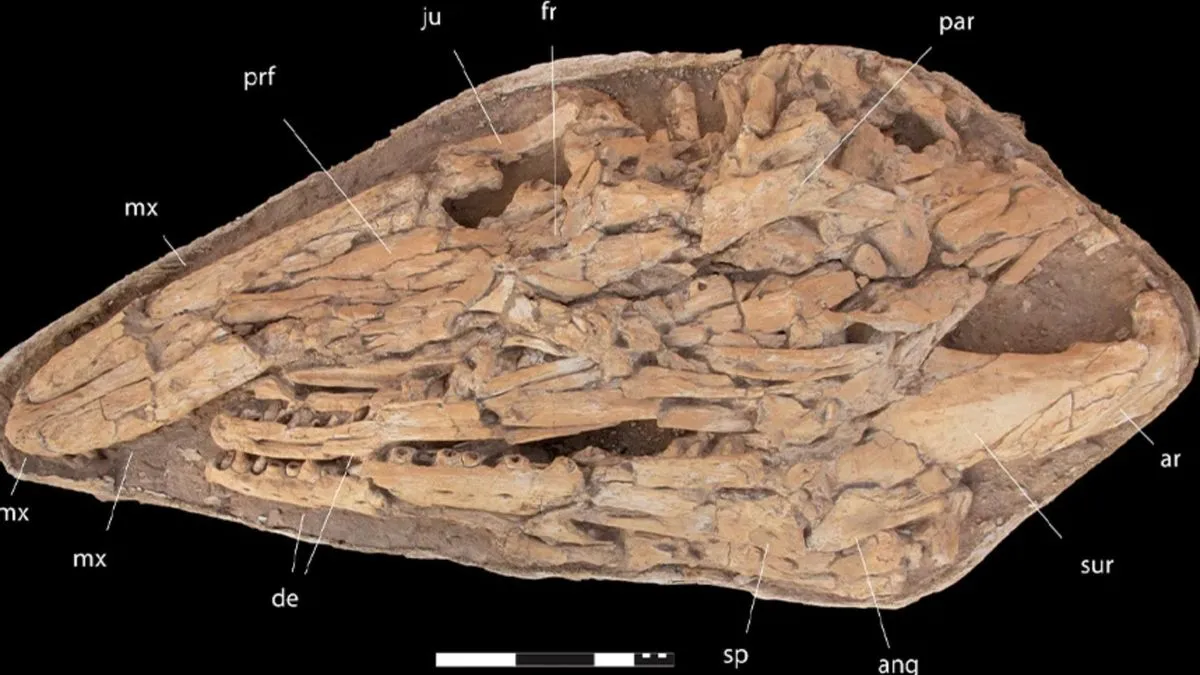
Conducted by a team led by Nicholas R. Longrich from the University of Bath and Nour-Eddine Jalil from multiple prestigious institutions, the study published in the journal Diversity emphasizes the significance of Morocco's phosphate deposits, which are renowned for their rich fossil records. These sediments offer a unique window into the diverse marine ecosystems that existed before the catastrophic event that led to the extinction of the dinosaurs. The fossilized remains of Pluridens imelaki, including a nearly complete skull measuring about 1.25 meters in length, were unearthed in Sidi Chennane, an area celebrated for its abundance of late Cretaceous marine fossils.
The research team noted that the late Maastrichtian phosphate layers of Morocco harbor the most diverse collection of mosasaurids known to date. Their findings challenge previous assumptions regarding the ecological niches occupied by these marine reptiles, suggesting that species like Pluridens imelaki continued to evolve and adapt right up to the end of the Cretaceous, contradicting theories of a widespread decline among large marine reptiles prior to the asteroid impact. This new evidence implies that the northern African oceans maintained a rich variety of life forms, with mosasaurs actively adapting to different feeding strategies.
This remarkable discovery not only expands our catalog of known species but also enhances our understanding of prehistoric food webs and the biodiversity that existed in the oceans just before one of Earth's most significant biological crises. The fossil remains of Pluridens imelaki are currently preserved at the Museum of Natural History in Marrakech, providing a critical resource for paleontologists and researchers alike.
As reported by eldiario.es.