
E-Methanol: Transforming Regulatory Challenges into Strategic Advantages
The emergence of e-methanol represents a significant strategic opportunity for Morocco to establish itself in the burgeoning European green fuel market. However, accessing this lucrative market necessitates the use of renewable source CO₂, which presents a unique challenge for Moroccan e-methanol projects. The country finds itself at a critical juncture, balancing limited biogenic CO₂ sources with the stringent requirements imposed by European regulations. As such, Moroccan initiatives in e-methanol are navigating a complex landscape that demands innovation and compliance.
While global interest in green hydrogen is surging, it is the derivatives of hydrogen that are poised to drive the industry's growth. Among these, green methanol stands out as a frontrunner due to its technological maturity and practicality in the short term. Its unique advantage lies in the fact that it remains liquid at ambient temperatures, seamlessly integrating into existing logistical infrastructures. Contrary to common misconceptions, industrial-scale production of e-methanol is not a distant prospect; it is already a reality, with Denmark and China having launched their first large-scale units in 2025.
Morocco, while prioritizing green ammonia driven by the captive demand of the OCP Group, has also retained flexibility by exploring multiple e-methanol projects. One such initiative is led by the Moeve-Taqa consortium, which aims to replicate the megaproject developed in Huelva, Spain, anticipated to become Europe's first e-methanol production site. However, the pivotal question remains the economic viability of e-methanol within the Moroccan context, a topic that has recently sparked extensive debate at the International E-Methanol and E-Ammonia Conference held at the Euromed University in Fes.
CO₂: The Key to E-Methanol Competitiveness
In addition to green hydrogen, the production of e-methanol relies critically on an adequate supply of CO₂, which is particularly crucial for projects targeting the European market. The European Renewable Energy Directive (RED III) imposes stringent market access rules. To qualify as a "renewable fuel of non-biological origin" (RFNBO), fuels produced outside Europe must adhere to the same production standards as those manufactured within the continent. Specifically, the CO₂ used must be derived from renewable sources or captured sustainably. Fossil CO₂ is explicitly excluded from this classification.
In Morocco, obtaining certification poses several challenges. The available biomass is insufficient for large-scale exploitation, and direct air capture (DAC) remains prohibitively expensive, ranging from €400 to €1,000 per ton. The use of industrial CO₂ is only temporarily permitted, making it a less viable option for long-term investments. Without alignment with these requirements, Moroccan e-methanol will not be counted towards the obligatory quotas under initiatives like ReFuelEU Aviation and FuelEU Maritime, which are crucial drivers of European demand.
Given the aforementioned challenges, the competitiveness of Moroccan methanol production hinges on securing a cost-effective and renewable CO₂ source that meets RED III standards, a prerequisite for accessing the European market. Based in Dakhla, MGH Energy is developing the Janassim project and has already secured 300 kilotons of biogenic CO₂ from Europe. Although importing CO₂ from Europe to Dakhla may seem economically counterintuitive, the rationale lies in Morocco's exceptionally low renewable electricity costs.
Moreover, despite having a capital expenditure (CAPEX) twice that of its counterpart in southern France, Janassim can produce methanol molecules at a cost 10% to 20% lower than MGH's project in France. Concurrently, the company is collaborating with IRESEN on direct air capture, aiming to make this solution more affordable and competitive in the medium term. In the same region, the Nasem Sahra project by HDF Energy, pending validation under the Moroccan Offer, also targets aviation fuel production from e-methanol.
To secure its CO₂ supply, the French energy company is relying on the import of wood in the form of pellets, a dense form of biomass. The combustion or gasification of this biomass releases biogenic CO₂, which is captured from the flue gases (post-combustion capture) using chemical solvents before being reused in e-methanol production through a reaction with green hydrogen.
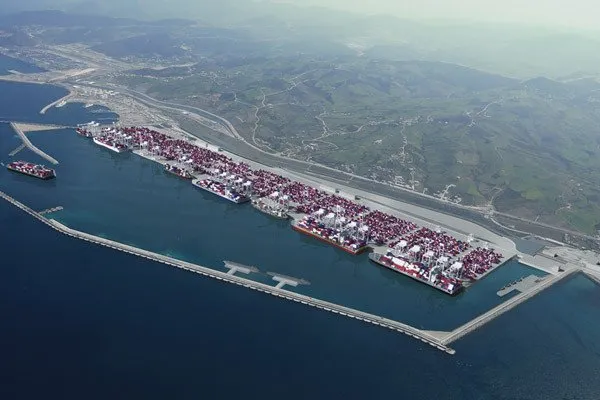
It is no coincidence that the first productions of green methanol emerged in Denmark and China, home to the giants Maersk and COSCO Shipping, respectively. By 2030, these global shipping leaders will need to adjust their intercontinental routes based on the ports capable of supplying them with e-methanol. Certifying its methanol production and achieving competitive pricing will enable Morocco to enhance the attractiveness of its port sector and draw in more international maritime traffic. The expansion of the Jorf Lasfar port, part of the "Green Basin" project, is strategically designed to anticipate future logistical and energy flows, incorporating sectors related to clean energies, particularly green hydrogen.
As reported by medias24.com.