Enhancing Air Connectivity in Morocco
The Moroccan National Tourism Office has announced the launch of an EasyJet base at Marrakech Menara Airport, marking a significant step towards enhancing the air connectivity of the kingdom and supporting tourist influx from key European markets. According to a statement from the office, this new base will accommodate three stationed aircraft, which will enable the provision of a substantial number of seats starting from the first year. This initiative aims to strengthen Morocco's position within the European tourism market while simultaneously supporting the Marrakech destination and its associated locations.
The National Tourism Office emphasized that the opening of this base represents a new momentum for its strategy focused on developing air transport. With three aircraft stationed at Marrakech Menara Airport, a capacity of up to 4 million seats will be available from the first year alone. This figure clearly indicates the high stakes associated with the new base and reflects the office's determination to increase air capacity to Morocco, particularly from European markets that are among the most traditional sources of tourists.
Strategic Expansion with EasyJet
This new base marks EasyJet's first presence on the African continent, adding an extra dimension to this initiative as it not only involves the opening of new routes but also establishes a new operational positioning for the airline within the Moroccan market. The launch will significantly enhance EasyJet's offering towards Morocco through the introduction of six new air routes, increasing the total number of flights to 58 routes connecting the kingdom with its main tourist source markets.
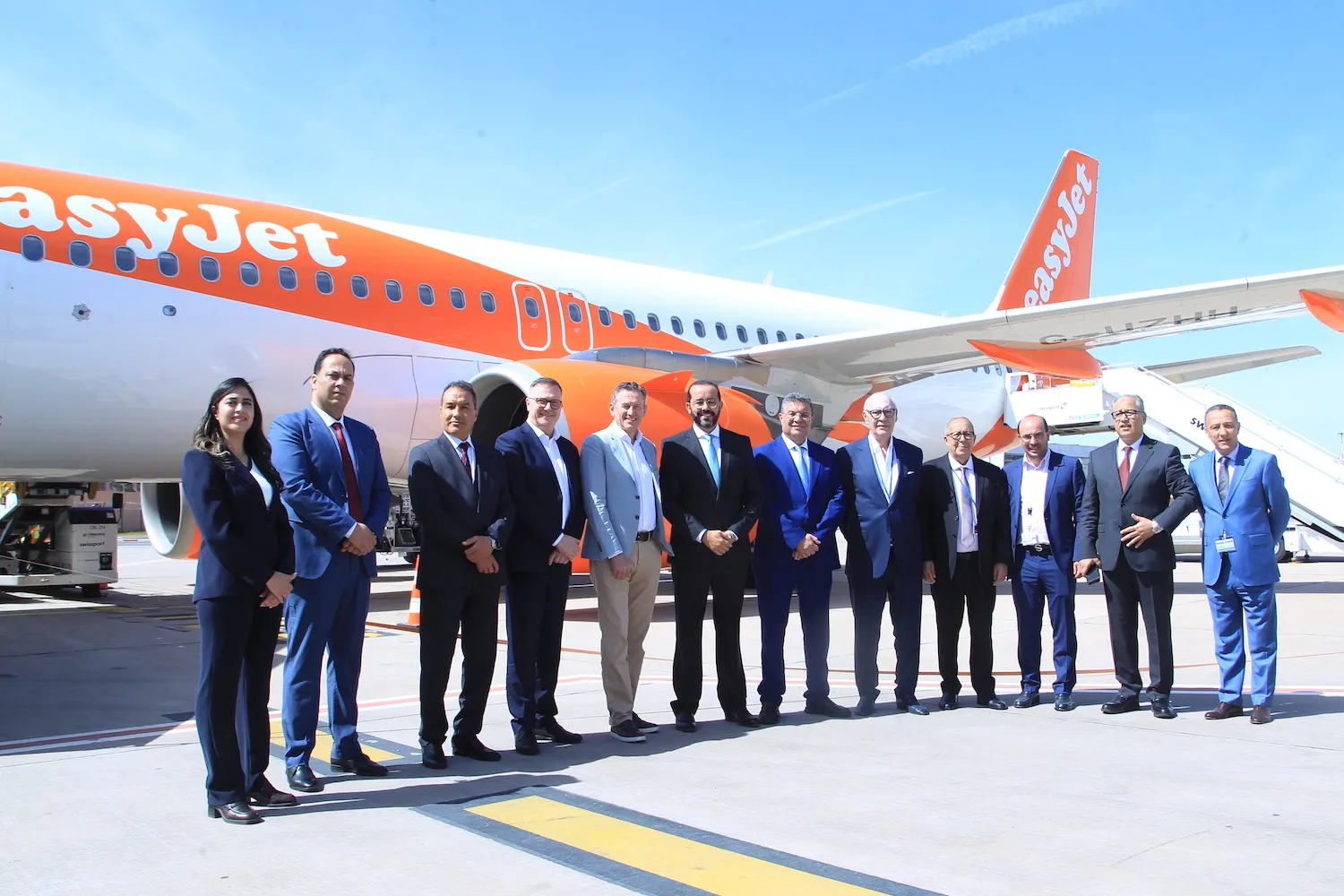
In a ceremony attended by Ashraf Faida, the General Director of the Moroccan National Tourism Office, and Kenton Jarvis, the General Director of EasyJet, this partnership underscores the strategic importance of the project for both parties. Starting from Winter 2026, three new flights will connect Marrakech to Prague, Newcastle, and Zurich. Additionally, three more routes will be introduced in Spring 2026, linking Nantes to Essaouira, Bordeaux to Agadir, and Birmingham to Agadir. These new routes indicate that the potential extends beyond Marrakech, encompassing other tourist cities such as Agadir and Essaouira, thereby promoting the idea of distributing tourist traffic across multiple destinations within the kingdom.
Alongside the launch of new routes, several existing routes from Marrakech will remain operational year-round, including destinations such as Lille, Strasbourg, and Hamburg. This decision offers a sustainable aspect to air connectivity as it does not rely solely on seasonal flights but establishes a continuous presence for the Marrakech destination within the airline's network. This supports the city’s capacity to attract more tourists throughout the year.
This expansion reaffirms Marrakech's central role in Morocco's air and tourism strategy, as it remains one of the most prominent Moroccan destinations for European markets. Thus, any new investment in air connectivity with Marrakech has a direct impact on national tourism activity. On a regional level, the establishment of this new base is expected to create approximately 100 direct jobs, in addition to indirect employment opportunities, highlighting that the project's impact extends beyond air transport. The new base will invigorate the local tourism ecosystem, including reception services, accommodation, transportation, and travel-related activities, thus carrying a clear local economic dimension.
This initiative is part of the ongoing strategic partnership established between the Moroccan National Tourism Office and EasyJet in the fall of 2025. This partnership aims to sustainably enhance air connectivity for Morocco, diversify markets, and support balanced tourism growth. Additionally, it includes the development of EasyJet Holidays, which features over 70 proposed hotel establishments in Marrakech. This collaboration signifies that the cooperation between the two parties extends beyond just air seats; it also encompasses the marketing of the Moroccan destination within accommodation and holiday packages, providing an integrated commercial and tourism dimension to the project.
EasyJet has been present in Morocco since 2006, having transported nearly 20 million passengers to the kingdom. The airline currently operates in five Moroccan airports, including Marrakech, Agadir, Rabat, Essaouira, and Tangier. This widespread presence underscores EasyJet's status within the Moroccan market, making it the leading airline from the United Kingdom and Switzerland to Morocco, and the third most active airline in the kingdom. These figures illustrate that EasyJet is no longer just a transient player within the Moroccan market but has become an integral part of the air connectivity structure relied upon by the tourism sector to attract travelers and diversify their sources.
With the launch of the EasyJet base in Marrakech, the Moroccan National Tourism Office strengthens its commitment to air transport as a key driver of growth. This project reflects Morocco's direction towards expanding connectivity with Europe, simultaneously supporting its main tourist destinations and establishing the foundations for more regular and sustainable growth within the sector.
As reported by ihata.ma.