
New Dynamics in International Football
The upcoming 2026 FIFA World Cup, set to take place in Canada, the United States, and Mexico, will mark a significant milestone as it will be the first tournament featuring 48 teams. This expansion has not only increased the number of participating nations but has also paved the way for the emergence of non-traditional footballing powerhouses. Teams such as Ecuador, Morocco, and Japan are now seen as formidable competitors capable of challenging historically dominant nations on the global stage.
Building Competitive Teams Through Strategic Investment
As we approach this prestigious tournament, a closer examination of these three nations reveals several commonalities in their footballing journeys. Each has embarked on a long-term development strategy characterized by substantial investment in youth training programs and an increasing presence of their players in European leagues. Japan, for instance, has been cultivating its footballing model for over 30 years. The turning point came in 1993 when the country professionalized its domestic league and initiated a plan to elevate football to one of its leading sports. This effort bore fruit five years later when Japan qualified for its first World Cup in France 1998, and they have since been a consistent presence at the tournament, reaching the knockout stages in 2002, 2010, 2018, and 2022.
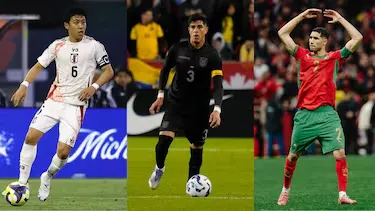
A crucial aspect of Japan's evolution has been the establishment of football academies and training centers. The launch of the "ADN Project" in 2016 aimed to prepare Japanese coaches in Europe while fostering the growth of the domestic league. This ambitious initiative aspires to see Japan crowned world champions by 2050, a vision that the current generation of players, including Takefusa Kubo (Real Sociedad), Kaoru Mitoma (Brighton), and Wataru Endo (Liverpool), embodies. Japan's recent performances, including significant victories over Germany and Spain in the 2022 World Cup, demonstrate their competitive edge as they head into the North American tournament in Group F, alongside the Netherlands, Tunisia, and Sweden.
In South America, Ecuador has emerged as one of the most promising national teams over the past decade. The local federation has made strategic investments in youth development, aiming to create a cohesive model that spans from the Under-15 level to the senior national team. This initiative coincided with the rise of a new generation of players, such as Moisés Caicedo (Chelsea), Piero Hincapié (Arsenal), Kendry Páez (River Plate), and Gonzalo Plata (Flamengo), who combine youth with international experience. The team's playing style is characterized by speed and a robust defensive setup, which has led to significant progress and growth in international competitions. The club Independiente del Valle has played a pivotal role in this transformation, becoming a leading talent incubator in the continent. Under the management of Sebastián Beccacece, Ecuador will compete in Group E of the World Cup against Germany, Curaçao, and Ivory Coast, with many players reaching their peak performance levels by 2026.
Morocco has also shifted from being an underdog to a serious contender, highlighted by their historic run in the 2022 World Cup where they became the first African team to reach the semifinals, defeating Spain and Portugal along the way. The core of this successful squad, including Achraf Hakimi (PSG), Sofyan Amrabat (Real Betis), and Hakim Ziyech (Wydad Casablanca), remains intact, bolstered by a decade-long strategy focused on developing a robust scouting network with Moroccan roots, particularly in France, Belgium, the Netherlands, and Spain. The former coach Walid Regragui symbolized this connection, and while he has since stepped down, his successor, Mohamed Ouahbi, arrives with a strong pedigree, having led Morocco to victory in the Under-20 World Cup.
Infrastructure investment has also been crucial to Morocco's footballing success, with the Mohammed VI Academy serving as the nation’s central training hub. This initiative aims to reduce reliance solely on the diaspora while fostering homegrown talent. Recent successes validate this approach, not only with Morocco reaching the semifinals in Qatar but also clinching the Under-20 World Cup title in Chile in 2025, showcasing players like Othmane Maamma (Watford), a forward born in France and considered a bright prospect for the future.
As they prepare for the North American World Cup, Morocco finds itself in Group C alongside Brazil, Haiti, and Scotland, ready to continue its ascent in international football.
As reported by latercera.com.