
Empowering Democracy Through Open Governance
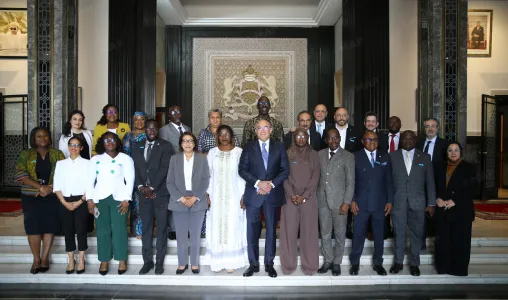
In a significant gathering in Rabat, lawmakers and international stakeholders convened to address the pressing need for open parliaments across Africa as a means to restore public trust in governmental institutions and enhance transparency. This forum, held under the theme "Open Parliaments in Africa," was hosted by Morocco's House of Representatives and is part of a broader initiative stemming from discussions initiated during the OGP Africa-Middle East regional meeting in Marrakech on November 2, 2022.
The participants emphasized the importance of fostering collaboration among African parliaments and urged national governments to implement institutional frameworks that actively involve citizens and civil society in the legislative process. They advocated for improved access to public information and the establishment of mechanisms to monitor and evaluate governmental policies effectively.
Mohamed Ghayate, the Vice President of the House of Representatives, articulated that open governance and transparent parliamentary practices are no longer optional luxuries but essential democratic imperatives. He underscored that these practices are a direct response to the increasing demands from citizens for accountability, transparency, and participation in governance. Ghayate highlighted the crucial role of parliament in embodying these principles, asserting that engagement in openness initiatives is vital for restoring institutional credibility.
Building a Framework for Transparency and Accountability
Reflecting on Morocco's 2011 Constitution, Ghayate noted its pivotal role in promoting participatory democracy, particularly through rights such as access to information and the right to petition. He called for a greater involvement of civil society in the development, execution, and evaluation of public policies to ensure that governance is responsive to the needs of the populace.
Aidan Eyakuze, Director General of the Open Government Partnership (OGP), stressed that the concept of openness must transcend central governments and encompass all entities responsible for legislative processes and public accountability. He proposed a shared-responsibility model that integrates central authorities, local governments, independent institutions, and parliamentary bodies.
Nicole Nkoa, Director of the Francophone Open Government Support Program, characterized the Rabat forum as a landmark event aimed at fortifying open parliamentary practices throughout Africa. She traced the momentum to the commitments made during the Marrakech Summit, where numerous African parliamentary institutions pledged to embrace openness agendas. Nkoa noted that parliamentary networks will play a crucial role in sharing best practices and enhancing cooperation among parliaments.
Moreover, Sammy Obeng, a representative of African civil society, observed that the involvement of parliaments in open government initiatives marks a significant transition towards a more comprehensive "open state" approach. He pointed out that several African parliaments have already adopted tailored open parliament action plans suited to their national contexts. Obeng advocated for the establishment of the African Open Parliaments Network as a platform for collective learning and reform oversight, emphasizing the necessity for civil society's inclusion in its structure, in alignment with OGP principles.
The culmination of this forum was the formal launch of the African Open Parliaments Network, which aims to facilitate dialogue, cooperation, and the promotion of transparency, citizen participation, integrity, and institutional openness across the continent. This initiative represents a proactive step towards enhancing democratic governance in Africa, ensuring that it is responsive, accountable, and inclusive.
As reported by moroccoworldnews.com.