
The growth of female entrepreneurship in Morocco is evident, yet the sustainability of these ventures poses a significant challenge, particularly highlighted by the alarming failure rate of businesses within just a few years of operation. In the Souss-Massa region, where women lead only 12.2% of local enterprises, seasoned female entrepreneurs encounter formidable barriers, notably in accessing financing, securing guarantees, and facing age limitations for credit access. To tackle these issues, local authorities are advocating for collaborative governance and have established a fund of 10 million dirhams aimed at serving as personal guarantees for women seeking bank loans.
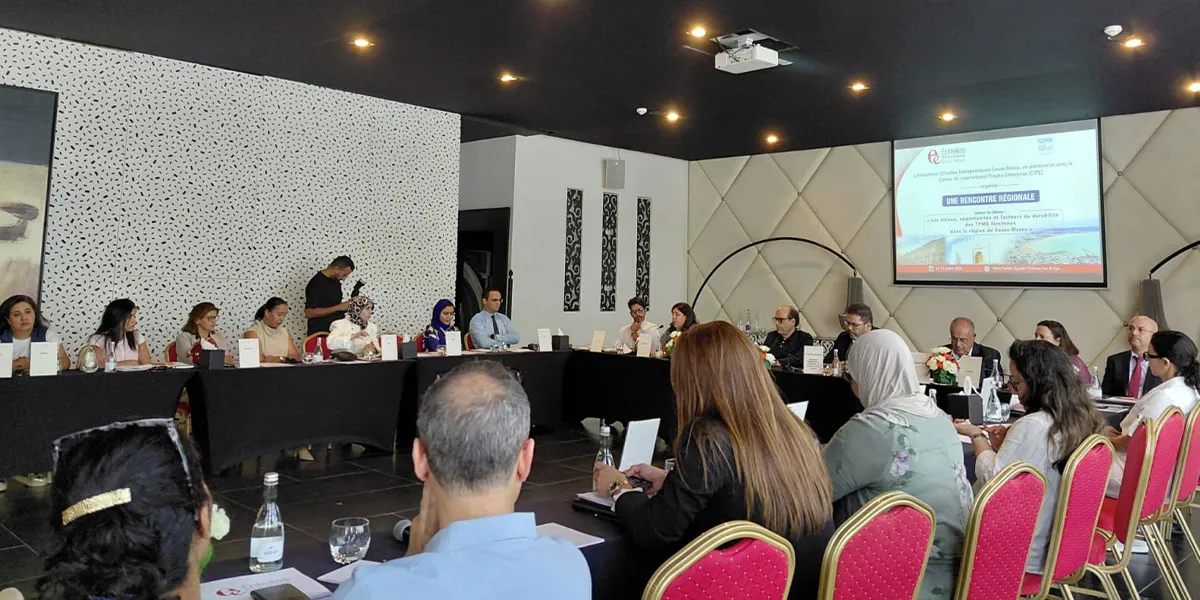
According to the annual report from the Moroccan TPME Observatory for 2023-2024, it is clear that nearly all regions in Morocco have witnessed a rise in the number of women-led businesses. However, this growth is not the core issue; while 12.3% of businesses in Morocco are owned by women, as per World Bank statistics, female entrepreneurship tends to flourish primarily in startup phases rather than in the later stages of business development, particularly in enterprises that have been operational for over a decade. Consequently, the real challenge for female entrepreneurs lies not in the inception of projects but rather in their capacity to survive and thrive over time. This key observation emerged during a regional meeting held last Wednesday in Agadir, organized by the Entrelles-Entrepreneures Souss-Massa Association in collaboration with the Center for International Private Enterprise (CIPE). The aim was to initiate a collective approach to develop a regional program for the sustainability and growth of female small and medium-sized enterprises (SMEs) in Souss-Massa for the period of 2027-2031.
A significant barrier highlighted in accessing credit is the age limit imposed for loan eligibility. "Recent data from the Moroccan TPME Observatory indicates that women currently manage approximately 15.6% of active businesses in Morocco, equating to just over 60,363 enterprises. In our Souss-Massa region, female entrepreneurs are present in strategic sectors such as agriculture, tourism, handicrafts, services, social economy, and manufacturing industries. However, they only manage about 12.2% of regional businesses, totaling nearly 2,657 companies," remarked Khadija Ben Moumen, president of the Entrelles-Entrepreneures Souss-Massa Association. She emphasized that the true challenge is not solely about fostering business creation but ensuring these enterprises can grow, innovate, access markets, secure appropriate financing, and sustain their operations over time.
One of the primary obstacles mentioned is the age limit for loans, which ranges between 40 to 45 years. Current support programs focus primarily on young graduates or first-time entrepreneurs, aiming to facilitate their professional integration. However, the reality on the ground reveals that many women embark on entrepreneurial ventures later in life, often after freeing themselves from certain family obligations. This regulatory age limit thus becomes a major hurdle that excludes experienced female entrepreneurs who are ready to sustain viable projects. Additionally, the absence of differentiation between the individual profile of the project holder (particularly their age) and the legal entity conducting the business complicates the granting of guarantees and the access to credit. Testimonials indicate that this system disproportionately affects the growth of mature businesses, whose female leaders may have depleted their own funds and personal guarantees, leaving them without the essential resources needed for expansion.
In parallel with the proposal for launching a dedicated fund for female entrepreneurship, Karim Achengli, president of the Souss-Massa regional council, has suggested establishing collaborative governance that includes multiple stakeholders. This committee will oversee a fund estimated at 10 million dirhams, entrusted to Souss-Massa Initiative, a regional platform supporting entrepreneurship, which encourages project holders through interest-free and collateral-free loans to bolster the personal contributions of business creators. This fund is designed to serve as a personal guarantee for female entrepreneurs, thereby facilitating easier access to bank credits. The banking institutions present at this meeting reaffirmed their commitment to supporting female entrepreneurship and promoting financial inclusion for women entrepreneurs by simplifying credit access and enhancing support for female leaders, all while aligning with public initiatives. The overarching goal is to reduce the business mortality rate, which is attributed not only to a lack of capital but also to the critical need for training and post-creation support.
Additionally, Fatima Amzil, regional director of ANAPEC, reiterated her institution's commitment to female entrepreneurs, particularly through its cooperation initiated in 2012. Seizing the opportunity presented by the regional president's call, she proposed mobilizing ANAPEC's network of agencies and advisors in line with the action plan advocated by the Entrelles-Entrepreneures Souss-Massa Association. "This future action plan must adapt to the real needs of the region, particularly incorporating women from rural areas who often remain distanced from information channels and networks," she explained, encouraging entrepreneurs to organize collectively and urging all partners at the round table to devise support measures that specifically address the daily constraints faced by women.
Furthermore, Driss Boutti, president of the CGEM Souss-Massa, called for the dismantling of gender stereotypes that hinder women's ambitions within traditionally male-dominated sectors, emphasizing that "access to financing should never be seen as an end in itself. It is the determination to advance, coupled with support and sustainability of the activity, that ensures the viability of enterprises. He finally recommended placing emphasis on a change in mindset to fully unleash the potential of women within the region.
As reported by leseco.ma.