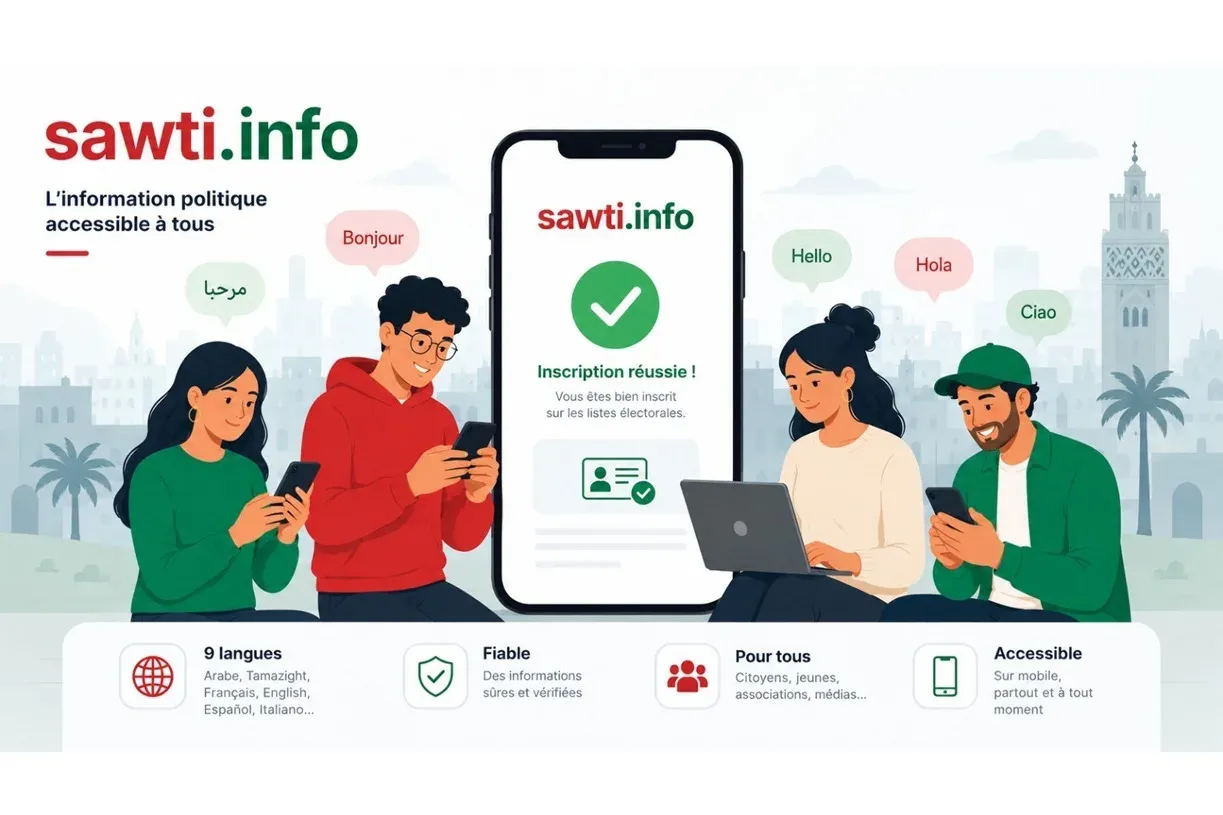
In the lead-up to Morocco's crucial legislative elections on September 23, a new digital initiative called Sawti has emerged, aiming to simplify the processes of voter registration and access to political information for Moroccan citizens, particularly the youth and those living abroad. With the stakes significantly raised, as the elected government will be responsible for overseeing preparations for the highly anticipated 2030 FIFA World Cup, the need for increased voter participation has never been more pressing.
Recent statistics reveal a concerning trend: in the 2021 elections, a staggering 75% of Moroccans aged 18 to 24 did not cast their votes, according to the Ministry of the Interior. This demographic, which arguably has the most at stake in the political landscape—concerning issues such as job opportunities, educational reforms, and healthcare—remains woefully underrepresented in the electoral process. Additionally, with over five million Moroccans living abroad, the challenge of engaging this population in voting is compounded, as even fewer of them managed to vote in recent elections.
The Moroccan government has recognized this critical gap, leading to reforms initiated under the guidance of King Mohammed VI. A new electoral framework now provides public financing for candidates under 35, covering up to 75% of their campaign expenses. This initiative, passed in late 2025, aims to dismantle the barriers that have historically excluded young Moroccans from engaging in formal politics. In this context, Sawti was launched to empower young voters through a user-friendly platform.
As voter registration in Morocco is set to close on June 13, Sawti is taking proactive steps to ensure that young citizens can easily register and participate in the elections. The platform, which allows users to verify their registration status and initiate the enrollment process within minutes, was developed by young Moroccan entrepreneurs Ismaïl Lahlou and Yassine Lahlou Kamal as a nonprofit initiative aimed at enhancing civic engagement and access to reliable political information.
A standout feature of Sawti is its multilingual design, making the platform accessible in nine languages, including Darija, Arabic, French, English, Spanish, Italian, Dutch, and German, with plans to add Tamazight soon. This linguistic diversity is crucial not only for citizens within Morocco but also for members of the diaspora who seek to engage with their home country's political processes. For Moroccans residing abroad, Sawti provides essential information regarding election participation from outside the country, covering registration procedures and voting logistics.
Beyond facilitating registration, the platform offers comprehensive content that demystifies Morocco's political institutions, explains the electoral process, and outlines the key political dynamics at play. The user-friendly interface is specifically designed to accommodate individuals unfamiliar with political jargon or the intricacies of the electoral system. Future additions to the platform include an interactive quiz that will enable users to assess their political views based on their values and perspectives on significant societal issues, although this feature has not yet been launched.
While it remains to be seen whether initiatives like Sawti can substantially increase youth voter turnout, the urgency of the upcoming registration deadline and the insights drawn from both the data and the GenZ 212 protests underscore the platform’s relevance in addressing a critical gap in political participation among young Moroccans.
As reported by moroccoworldnews.com.