
Endrick's Absence in Key Moments: Understanding Ancelotti's Decision
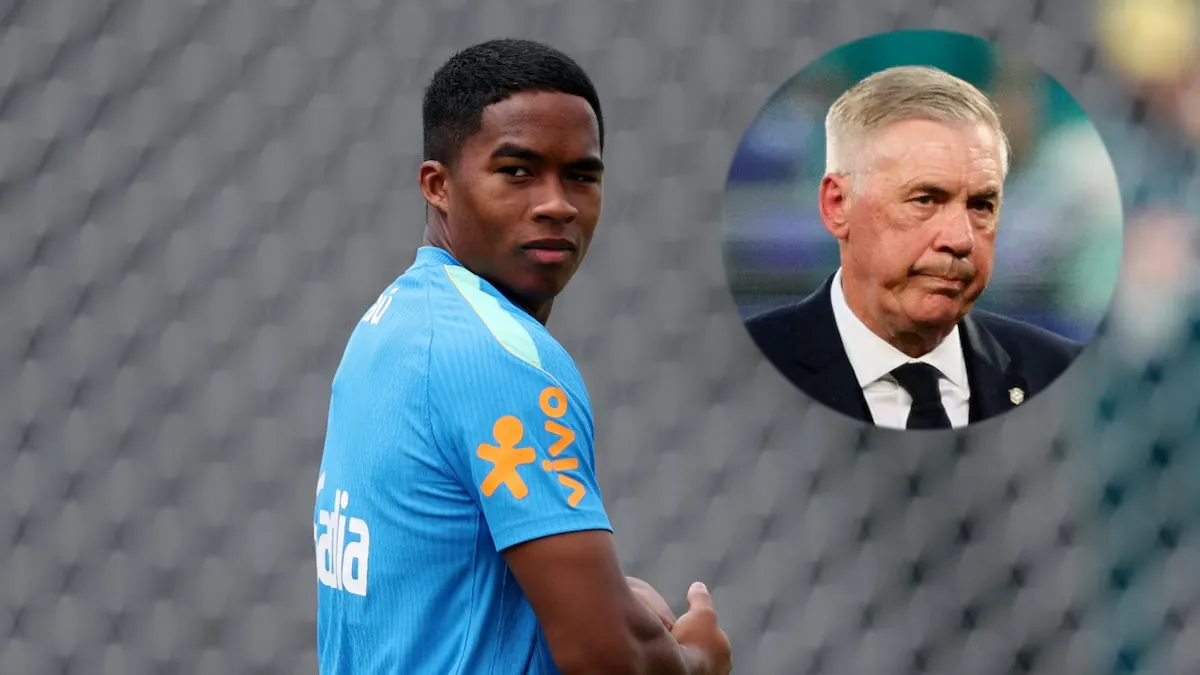
The image of 19-year-old Endrick with his head down, observing from the sidelines as Carlo Ancelotti made his substitutions without calling upon him, quickly spread across the globe. During the tense 1-1 draw between Brazil and Morocco at MetLife Stadium in New Jersey, Endrick did not even warm up with any genuine expectation of being brought onto the pitch. The reasoning behind this decision transcends mere goal-scoring opportunities or fitness levels, delving deep into tactical nuances.
Fans, journalists, and commentators alike have posed a common question: why does Ancelotti seem so hesitant to give Endrick playing time? In the match, the Italian coach opted to start Igor Thiago in the forward position and turned to Matheus Cunha for substitutions rather than Endrick. The young attacker, who shone during his loan spell at Olympique de Lyon before returning to Real Madrid, remained on the bench throughout the second half, missing the chance he hoped for.
As Ancelotti concluded his substitutions, Endrick returned silently to the bench. In the post-match press conference, when asked about the young player's absence, the coach sidestepped the topic with a brief comment: “I will not discuss individual players. I am here to talk about the team.”
According to Brazilian sports outlet UOL Esporte, the heart of the issue does not lie in the quality of the forward—who Ancelotti acknowledges possesses significant potential—but rather in his tactical behavior when the team does not have possession of the ball. Ancelotti expects his foremost forward to apply high pressure during the opponent's ball progression, a role that Endrick is capable of fulfilling but has not executed consistently to the coach's satisfaction. The player tends to drop back frequently to retrieve the ball in deeper positions, which undermines his ability to effectively exert defensive pressure.
The coaching staff has been working diligently with him to maintain his forward position, but progress appears to be slower than anticipated. Moreover, those who have followed Endrick's development within the Brazilian national team have noted a tendency towards improvisation and independent decision-making, often attributed to his youth. When receiving corrections during training, he does not consistently assimilate or apply them in real-time.
In a specific instance illustrating this dynamic, Ancelotti suggested that he control the ball instead of attempting an immediate shot; although the player acknowledged the advice, he repeated the same mistake in a subsequent similar play, opting for a first-touch shot. This recurring pattern observed in practice sessions has hindered his opportunities to feature in matches.
Conversely, those close to Endrick's personal coaching team argue that his impact each time he steps onto the field suggests that tactical understanding and off-ball work are not insurmountable barriers to his game. Their argument is not without merit, as the young forward had significant contributions during friendly matches leading up to the World Cup against Croatia in March, Panama in May, and Egypt in June.
From the national team's perspective, the situation is viewed not as a conflict but as a natural part of the growth process for a remarkably talented young player. Ancelotti and his assistants perceive Endrick's journey as a normal progression in the evolution of a young athlete, emphasizing a focus on development rather than urgency. Nevertheless, the Italian coach has made it clear that he expects to see an evolution in the forward’s tactical awareness before he can assume a more prominent role in the tournament.
The Brazilian debut against Morocco provided an ideal backdrop for this discussion to gain traction. The Verdeamarela struggled initially, losing possession easily, losing duels, and exhibiting defensive frailties. Ismael Saibari capitalized on the spaces left by Gabriel Magalhães to put the African side ahead before halftime. However, Vinicius Júnior equalized with a powerful shot from the left that left goalkeeper Bono with no chance in the 31st minute.
Ancelotti acknowledged his team's shortcomings but with some nuances. After the match, he expressed satisfaction with the point earned, stating, “We expected a better start, but Morocco is a good opponent.” Moments later, during the press conference, he adjusted his tone, saying, “I am not satisfied with the result. We need to work to improve,” as reported by AS.
Vinicius was more direct in his assessment, stating, “The competition, the debut, is always very difficult, but we need to improve and continue evolving because the competition has just begun.” The point secured in New Jersey left Brazil in second place in Group C, trailing Scotland, which defeated Haiti 1-0 on the same day. The Verdeamarela's next match will be against Haiti on Friday, June 19, at Lincoln Financial Field in Philadelphia.
As reported by infobae.com.