
US and Moroccan Forces Conduct Pioneering Military Data Link Test
The United States Air Forces in Europe and Africa (USAFE-AFAFRICA), in collaboration with the US Marine Corps in Africa and the Moroccan Armed Forces, successfully executed an unprecedented interoperability test for secure encrypted communications and tactical data links with an African nation. This significant milestone marks a vital step in strengthening military collaboration and enhancing operational capabilities in the region.
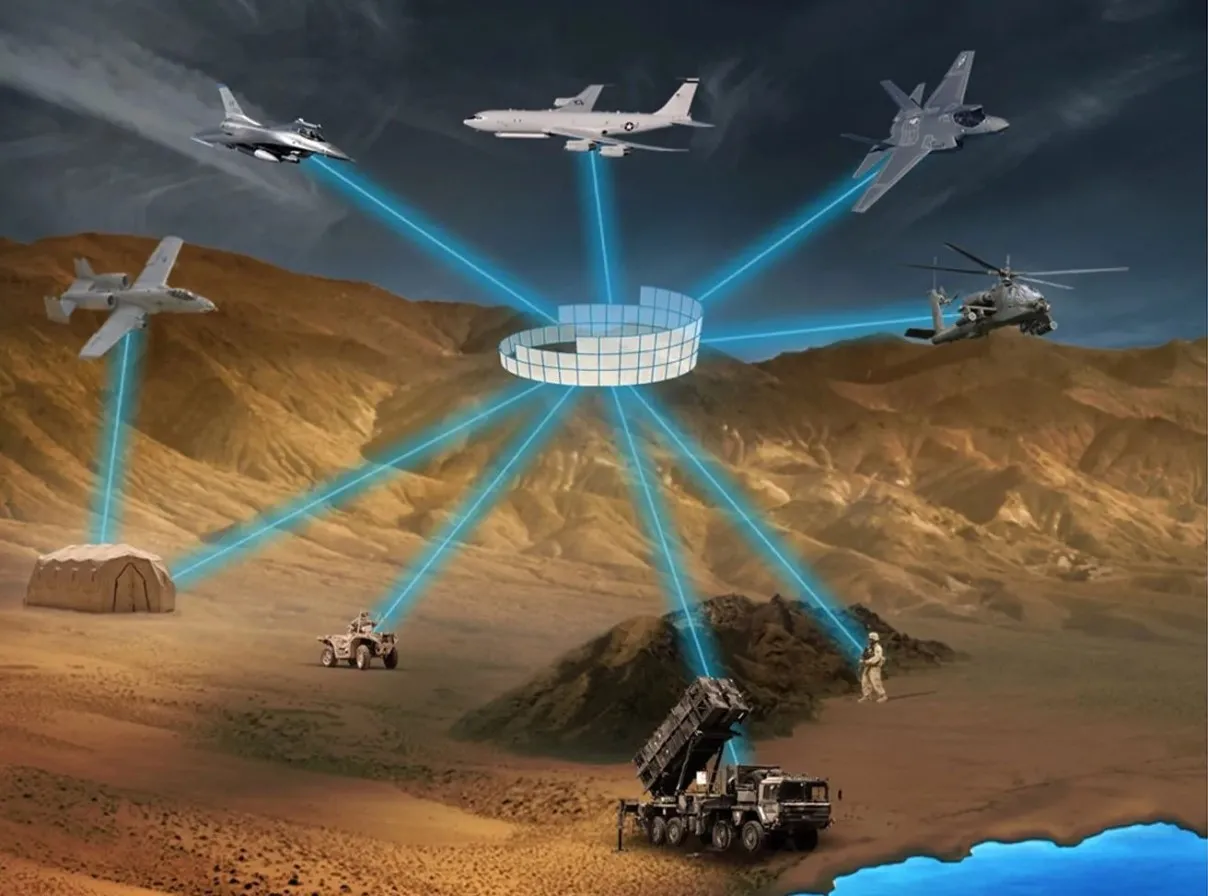
This test featured the demonstration of secure data link capabilities utilizing the 'Link 16' system, alongside the establishment of encrypted voice communications on ultra-high frequency (UHF) between the tactical terminals of both parties involved. The systems enabled the exchange of text messages and direct voice communication, facilitating secure interactions throughout the event. Sergeant First Class Babak Kermanshah, an operations planner at U.S. Command, and Major Kyle Repetti of the Marine Corps oversaw the evaluation of Morocco's capacity to share real-time battlefield data across aerial, terrestrial, and maritime domains, a critical move aimed at fortifying joint command and control.
Major Repetti elaborated on the significance of this initiative, stating that it tested Morocco's ability to integrate into a coalition force through a highly resilient, encrypted, and jamming-resistant tactical data link, thereby enhancing communications across multiple domains. He emphasized that real-time data sharing among various military branches improves situational awareness and operational coordination, benefiting commanders, planners, and personnel on the ground. Similarly, Sergeant Kermanshah highlighted how this integration illustrates the transformation of plans into tangible operational capabilities, noting that one of the objectives of the 'African Lion' exercise is to promote integration through the development of capabilities that elevate readiness levels.
Strategic Collaboration for Enhanced Military Readiness
The requirements for this interoperability initiative stemmed from the findings of the Command and Control Interoperability Board of the U.S. Africa Command (AFRICOM), in alignment with support efforts for Foreign Military Sales (FMS) and interoperability programs. To enable these capabilities, Kermanshah and Repetti collaborated with various entities, including the U.S. Embassy, the Marine Corps, the U.S. European Command (EUCOM), as well as joint liaison officers and air operations squadrons.
This development comes in the context of Morocco's utilization of the 'Link 16' system across its air, naval, and land forces, and within air defense systems as part of its command and control (C4ISR) structures, amidst discussions surrounding the provision of multi-domain solutions to Morocco under the (C6ISR) concept. It is worth noting that 'Link 16' is a standardized communication system developed in 1994, utilized by NATO and coalition forces to exchange real-time tactical data. The system operates in the L-band of the ultra-wide frequency spectrum and transmits data via terminals (MIDS LVT) installed on aircraft, ships, ground vehicles, and command networks. This system plays a crucial role in saving the lives of U.S. troops across multiple operational theaters by providing comprehensive situational awareness to forces.
In a related context, preparatory documents have set the timeframe between April 20 and May 8, 2026, for the main maneuvers to take place. Analyses reveal that this year's edition will represent a qualitative leap from the traditional concept of interoperability to 'human-machine integration.' This will be accompanied by a significant presence of U.S. defense technology companies such as Anduril, Skydio, Lockheed Martin, Overland AI, DroneShield, and Palantir. Elements of experimentation and innovation from Artificial Intelligence (AI) and robotics laboratories will be integrated into the core of combat scenarios, including the use of AI-supported command systems to analyze field data at high speed, directing robotic ground vehicles for direct combat, as well as employing drone swarms in suppression and fire blocking missions alongside traditional reconnaissance missions.
Both parties view these efforts not merely as a temporary success, but as the foundation upon which the 'African Lion 2027' exercise will be built. Planners are optimistic that this integration will be key to facilitating data sharing and developing real-time situational awareness, thereby ensuring more effective operational and tactical planning between U.S. forces and their Moroccan allies in complex environments. As reported by defensa.com.