Growing Instability in the Sahel Region
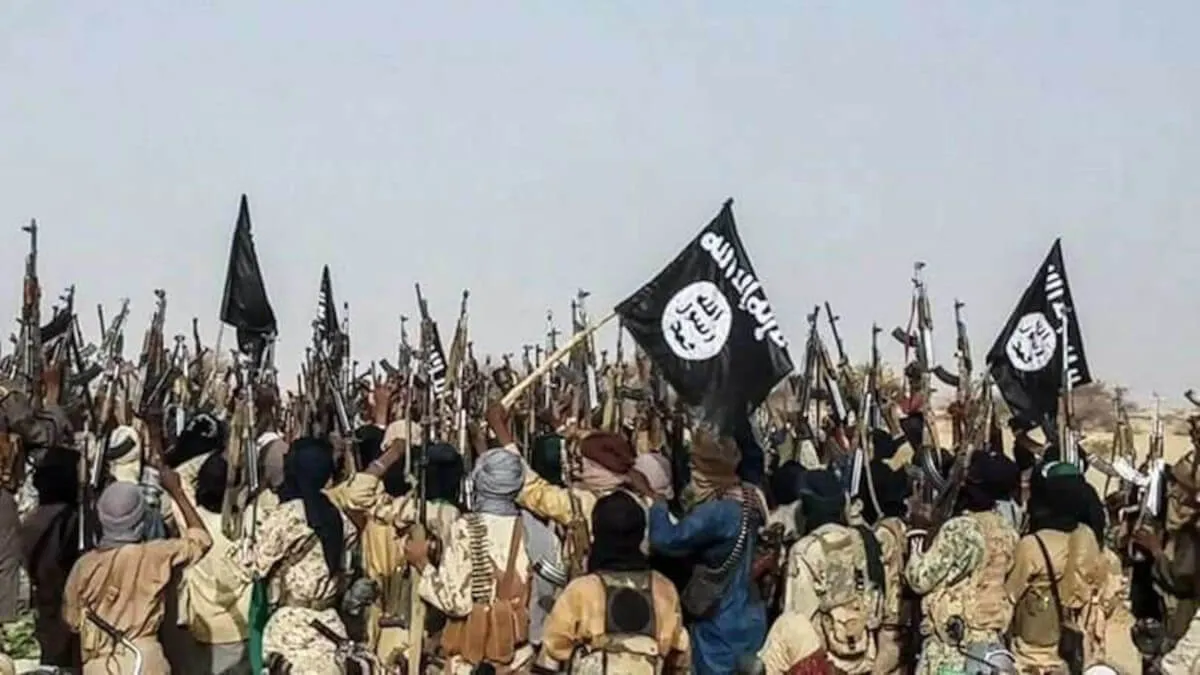
The instability in the Sahel region of Africa remains a significant concern for international powers as Morocco's efforts to alleviate the humanitarian situation in countries like Mali are continually undermined by jihadist rebel attacks on vital supply lines. Recently, armed groups in the Sahel have intensified their campaign to disrupt logistical flows aimed at delivering food supplies to Mali's capital, Bamako, exacerbating the ongoing crisis in the region.
Reports indicate that on May 6, armed members of the Katiba Macina, a faction linked to the Support Group for Islam and Muslims (JNIM), intercepted a convoy of Moroccan trucks destined for Bamako, setting them ablaze without causing harm to the drivers involved. According to Moroccan news outlet Le360, this attack targeted six trucks that had departed from Morocco and were ambushed on the road connecting Gogui Zammal, near the Mauritanian border, with the village of Gogui in Mali, an area known for jihadist operations.
These trucks were part of a humanitarian convoy originating from various Maghreb countries, aimed at providing essential supplies to Bamako, which relies heavily on imports from its neighboring nations. This operation is part of a broader jihadist strategy, associated with Al-Qaeda, to restrict and sever supply routes to the capital from Morocco, Mauritania, and Senegal. This incident is not an isolated occurrence, as similar attacks against Moroccan trucks have been reported in the past, including a January 2025 ambush near the Mali border where four Moroccan drivers were kidnapped in a region known as the "three borders" where Mali, Niger, and Burkina Faso converge.
Jihadist Offensives and Regional Instability
The attack on the Moroccan trucks occurred just two weeks after a series of jihadist assaults targeted various locations in Mali, including Bamako and Kati. On April 25, the JNIM, in collaboration with Tuareg separatist rebels from the Azawad Liberation Front (FLA), launched an offensive aimed at high-profile government officials, including the transitional president and defense minister, resulting in the death of Minister Sadio Camara. The Malian armed forces, supported by mercenaries from the Africa Corps, successfully repelled the assault, although it highlighted the ongoing challenges facing the Malian government.
Malian President Assimi Goita, who leads the military junta established after coups in 2020 and 2021, stated that hundreds of terrorists have been neutralized, and efforts have been made to prevent jihadists from encircling Bamako. However, the recent attacks on Moroccan supply trucks demonstrate the ongoing threat posed by these groups. Meanwhile, Burkina Faso, which is also under military rule, has witnessed a surge in attacks, including a recent incident where 11 civilians supporting the army were killed by jihadists. This situation underscores the jihadists' ability to exploit local discontent among youth frustrated by military abuses.
Recent reports from the International Crisis Group indicate that the JNIM is bolstered by the support of Iyad ag Ghali, a former Tuareg fighter controlling significant regions in Mali and adjacent areas in Burkina Faso and Niger. The jihadists' ambitions extend beyond the Sahel, aiming to establish a new caliphate that could potentially reach North African countries such as Mauritania, Libya, Tunisia, and Morocco, before attempting to penetrate Europe.
In light of the jihadist offensive, which some attribute to the inactivity of European nations, Morocco is playing a crucial role as a regional stabilizer against these expansionist ambitions. The country has initiated the Atlantic Initiative under King Mohammed VI, aiming to establish a logistical corridor that would provide Sahel countries with access to the sea via Morocco's Atlantic ports, such as Tangier Med and the upcoming Dakhla Atlantic. This strategy seeks to foster economic development in Mali, Burkina Faso, and Niger, create jobs, strengthen institutions, and ultimately curb youth discontent that drives them towards jihadism, thereby preventing foreign interference from powers like Russia.
However, this initiative is now under threat from jihadist attacks on supply trucks, necessitating collaboration among all Maghreb countries, including Algeria, to create a barrier against the JNIM's spread into North Africa and subsequently to Europe. For Mediterranean and Atlantic leaders, establishing effective communication, information sharing, and cultural understanding is imperative to counter this evolving threat.
As reported by atalayar.com.