
Iran's Ongoing Attacks on Gulf Nations
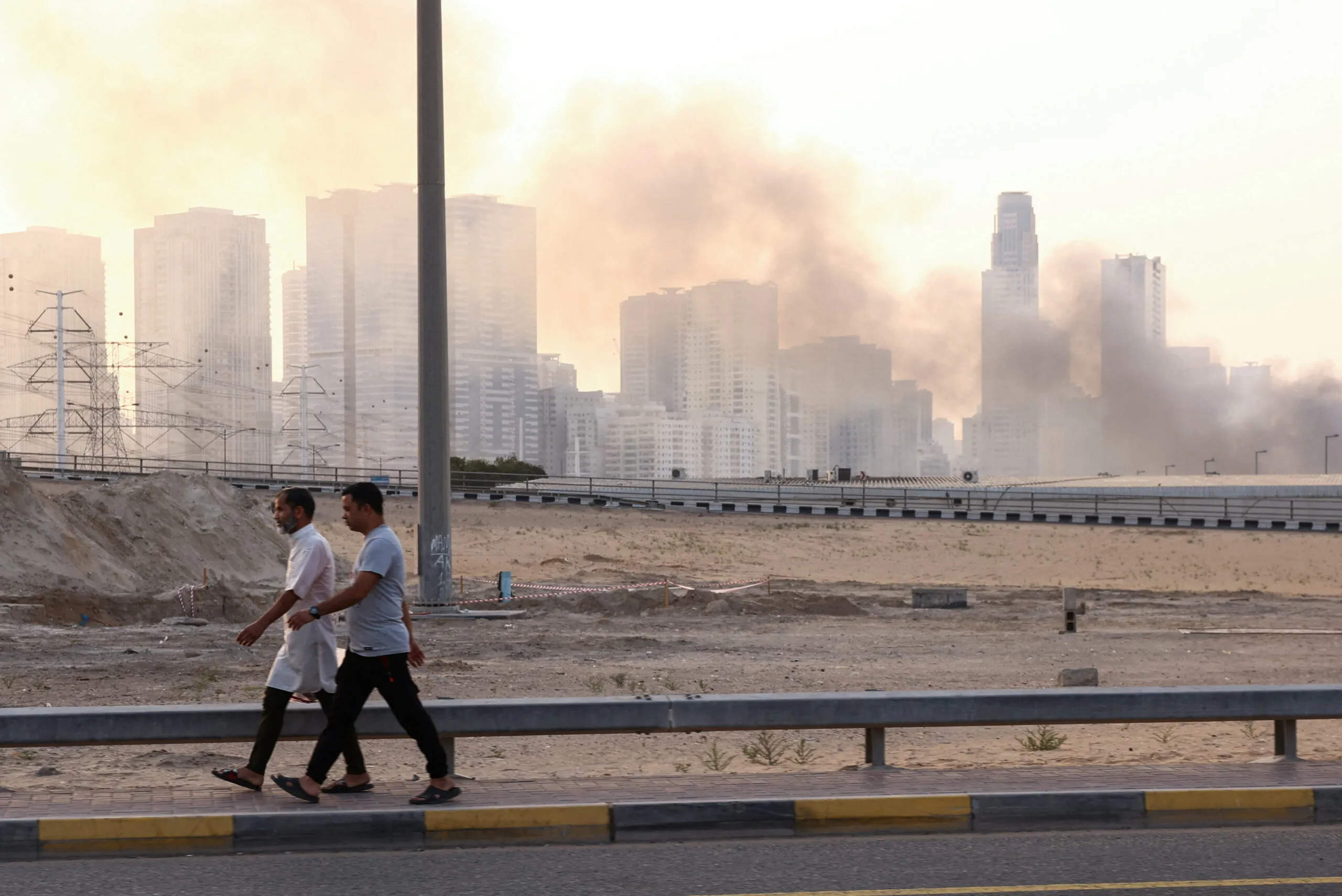
For a full thirty days, Iran has unabatedly continued its unprovoked aggression against the Gulf Arab states. Throughout this month, the Gulf Cooperation Council (GCC) nations have managed to defend themselves against a barrage of plastic missiles and drone attacks without firing a single shot back at Iran. From the inception of this aggression, these nations have remained in a defensive posture, striving to thwart missile strikes aimed at disrupting the holy month of Ramadan and the sacred fasting of believers. Alarmingly, even on the day of Eid, missiles fell upon peaceful civilians. In this context, Bahrain, the small and tranquil island nation situated along the Gulf, has uniquely withstood over 400 plastic missile and drone assaults during the initial twenty days of this crisis. This rampant and systematic wave of terrorist attacks is being justified by Iran under the pretense of the presence of American bases in the Gulf states, despite Iran's knowledge that these bases were vacated long before the onset of the Iranian-American-Israeli conflict, leaving them effectively abandoned in the open seas. The United States has no need for ground bases; it possesses aircraft carriers and long-range missiles. However, Iran's deep-seated animosity towards the Gulf nations compels it to cling to this outdated narrative.
On February 28, the six Gulf nations—namely the UAE, Bahrain, Saudi Arabia, Oman, Qatar, and Kuwait—along with the Hashemite Kingdom of Jordan, were awakened by the blaring of sirens and the sound of incoming missiles and drones. It is widely known and unequivocally acknowledged that these nations have consistently rejected warfare and confrontation from the outset, as they have repeatedly and transparently declared their stance. They have actively facilitated dialogue through Qatar and Oman to mediate between the conflicting parties. Despite enduring nearly a month of blatant Iranian attacks, they continue to exhibit remarkable restraint, demonstrating their unwillingness to be dragged into a conflict they do not wish to partake in.
The Implications of Iran's Actions
Today, under the leadership of the Revolutionary Guard, Iran appears to be pursuing a destructive agenda aimed at the regional states, and should this ambition ever come to fruition, it would ultimately lead to its own self-destruction. This is evident in the aftermath of American and Israeli strikes that have decimated nearly everything in their path; still, the Iranian regime persists on a path toward catastrophe and self-ruin. Since Iran's declaration of its destructive project, known as the "export of the Iranian revolution," it has targeted neighboring Arab nations including Iraq, Syria, Lebanon, Gaza, and Yemen, resulting in significant devastation that these countries will require years to recover from. Following the disbanding of Iran's terrorist operations in the region starting October 7, 2023, Iran found itself compelled to engage directly in conflict with Israel and the United States, having become alienated from the world, its neighbors, and even its own populace, which is now protesting against the war.
Bahrain, a nation that embodies coexistence, tolerance, and peace, has faced open aggression against its civil infrastructure. Iranian attacks have specifically targeted oil production and refining facilities, fuel storage tanks, energy export centers, gas installations, airports and their logistical facilities, government buildings, and vital infrastructure, in a deliberate attempt to inflict harm on critical sectors. The ongoing aggression persists; without the protection of Bahrain's Defense Force, the Ministry of Interior, and the National Guard, the damages and casualties would have been far greater. Despite the conflict primarily being between Iran and Israel, the Iranian regime has directed its aggression towards the Gulf states at a rate far exceeding that which it has directed towards Israel. This raises the question: Why are the Gulf states being targeted despite previously maintaining good relations prior to February 28, 2026?
Despite the Gulf nations' aversion to conflict in the Arab region between Israel, Iran, and the United States, and their calls for the resolution of disputes through peaceful and diplomatic means, the three parties remain insistent on confrontation and asserting their presence. The initial phase of this conflict, dubbed the "Twelve-Day War," has been succeeded by a readiness from the warring factions to engage in a confrontation with no discernible end in sight. But why does Iran specifically target Gulf nations while other countries hosting American bases have not faced similar assaults? Analysts suggest that this may stem from a deeply rooted Persian-Iranian ideology and animosity towards Arabs, a historical grievance linked to the fall of the Sassanian Empire that the Iranian psyche has yet to overcome. This compulsion seems to drive Iran to seek retribution against its neighboring Arab states, even if that involves sectarian and ideological alignments. Others attribute this aggression to the Arab nations' positions during the Iran-Iraq War, which lasted eight years and ended in an Iranian capitulation, famously encapsulated by the words of the late Ayatollah Khomeini, who likened it to drinking poison.
Furthermore, the backdrop of rapid development and prosperity in Gulf nations juxtaposed against Iran's economic turmoil since 1979 cannot be overlooked. The Iranian regime's relentless pursuit of aggression against the Gulf states emphasizes its lack of leverage, fully aware that the Gulf nations cannot unilaterally impose an end to the conflict on powers like the United States and Israel. The resolution must lie among the three parties—Iran, Israel, and the United States—with the Gulf states possessing the necessary relations to facilitate dialogue. Unfortunately, Iran has severed all opportunities for trust and communication with the Gulf nations, leaving no avenue for reconciliation.
Before the onset of hostilities, there were hopes for fostering positive relations with Iran, yet there existed apprehensions from certain politicians and analysts who believed that reforming the Iranian regime was unlikely. Today, following Iran's continued and unwavering aggression against the Gulf states, the consensus is that cohabitation with a regime that harbors malice towards its neighbors is untenable. The peoples of the Gulf Arab states will not forget the transgressions committed by Iran against them; every targeted site serves as a grim reminder of its nefarious actions. The echoes of Iran's missiles and drones will forever resonate, marking the scars of this conflict.
As reported by alayam.com.