
Strategic Insights for Spanish Companies Targeting Moroccan Market
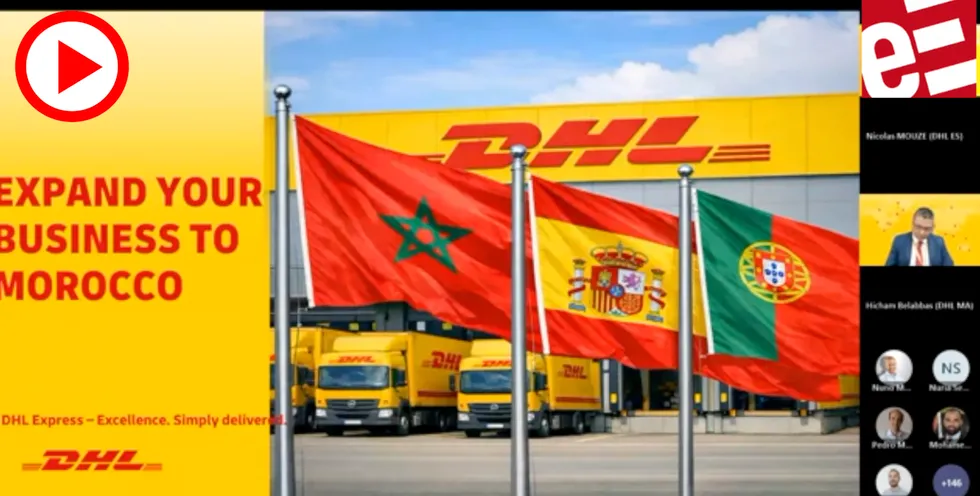
In a recent webinar organized by DHL Express, key insights were shared regarding the potential for Spanish and Portuguese companies looking to expand their operations into Morocco. The session was led by Hisham Belabas, Senior Sales Director at DHL Express Morocco, alongside Muhammed Samiki, Export Clearance Supervisor. The geographical proximity, just 15 kilometers across the sea, coupled with robust trade relations, has propelled bilateral trade to exceed an impressive $22 billion. This burgeoning trade relationship is further supported by Morocco's political stability and a projected GDP growth rate between 4.5% and 5%, establishing the North African nation as a high-priority market for investment and expansion.
Moreover, the upcoming joint hosting of the 2030 World Cup by Spain, Portugal, and Morocco is expected to act as a significant catalyst for unprecedented infrastructure development and economic synergies across these nations. Morocco's economy has transformed dramatically, moving away from its agricultural roots to become a leader in technological sectors, with the automotive industry currently being the largest exporter, producing around 700,000 vehicles annually, and aiming for a staggering 1.5 million by 2030. Major manufacturers like Renault and Stellantis are already achieving high levels of local integration within this thriving sector.
Additionally, Morocco’s aerospace sector is gaining recognition for its quality, with over 140 companies established in the region. A striking statistic shared during the webinar highlighted that virtually every aircraft globally contains at least one component manufactured in Morocco. The country is also making strides in sustainable energy, with ambitious plans to derive 52% of its energy mix from renewable sources by 2030. This initiative not only positions Morocco as a leader in green energy but also allows local factories to operate on clean energy, enhancing their competitiveness in line with European decarbonization regulations.
Regulatory Landscape and Trade Agreements
For Spanish enterprises, the Free Trade Agreement with the European Union presents a significant advantage, enabling tariff exemptions (0% duties) provided that the origin of the goods is certified as preferential. However, DHL Express experts caution about critical changes implemented since July 2022. All B2C shipments (direct sales to consumers) are now subject to taxes from the first euro, effectively removing the previous exemption threshold of $125.
Successful exportation hinges on understanding essential requirements, including the necessity of original invoices stamped by the exporting company for customs clearance in Morocco to benefit from the free trade agreement. Digital signatures alone are insufficient for tariff exemptions. As of July 1, 2022, all purchases by individuals from abroad incur taxation. While products originating from the European Union may avoid duties, they are still liable for the corresponding Moroccan VAT.
Moreover, mandatory security checks are required for certain industrial products, textiles, and machinery, which must be processed before the goods leave Spain or Portugal to ensure compliance with local safety standards. The infrastructure provided by DHL Express, featuring gateways in Tangier and Casablanca, facilitates transit times of just 1 to 2 days from the Iberian Peninsula, often surprising clients with delivery times that can be faster than local purchases.
As reported by empresaexterior.com.