Understanding Political Transformations in Morocco
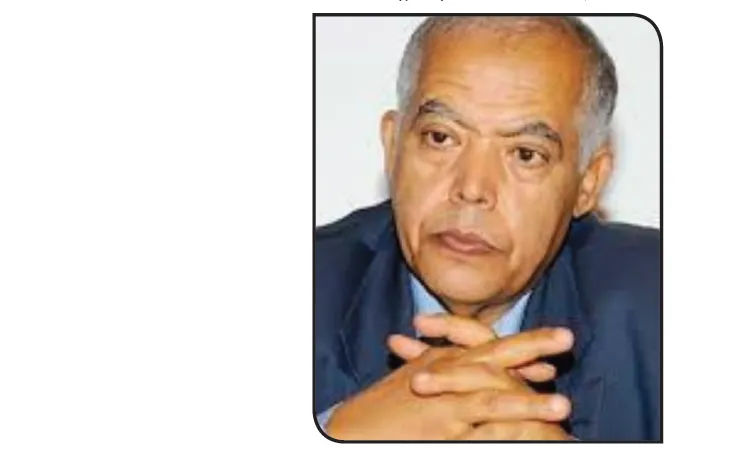
The complex nature of Moroccan political thought extends beyond superficial interpretations, requiring a deeper understanding of the underlying structures and continuities that shape it. In this context, the digital library of Cadi Ayyad University in Marrakech hosted a significant intellectual gathering, featuring the Moroccan thinker and academic Abdullah Saaf. This lecture aimed to analyze the transformations within the political sphere from a perspective that transcends mere description to interrogate the deeper conditions that produce and renew it.
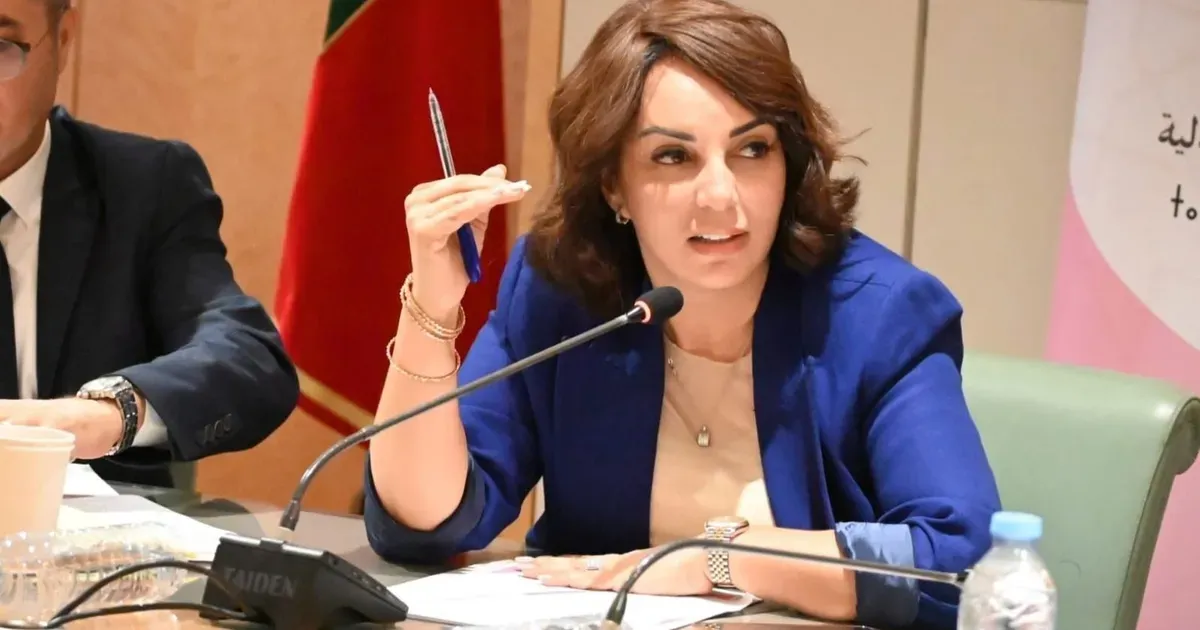
Dr. Mustafa Alarissa, the coordinator of the library's activities, redirected the focus towards a vision nourished by the idea of convergence, emphasizing that thought should not be seen as a luxury but rather as a strategic necessity that reorganizes the relationship between the city and its memory, as well as between culture and its role in solidifying a sense of belonging. Here, culture is not merely a seasonal celebration but an interpretive act that embraces the transformations of the era and responds to its rapidly accelerating digital rhythm. In this framework, the 'instrumental mind' serves as a medium between humans and their transformations, rather than being a mere mechanical tool.
Deciphering the Paradoxes of Change
During the lecture, Saaf guided attendees to deconstruct a central paradox: how can change sometimes merely reproduce stability? He argued that the broader South has not been exempt from transformation; however, it has leaned towards the reinforcement of existing structures rather than their dismantling. Modernity, in his view, appears to be leveraged from within traditional forces rather than opposing them. Consequently, he proposed substituting the term 'democratic transition' with 'political transition,' as the former carries normative baggage that may not correspond to the complexities of the Moroccan reality.
Saaf's analysis unfolded across five thematic axes, starting with the question of change and reproduction. He noted that the overarching system has been recycling itself since the 1970s, despite varying contexts. Next, he addressed the dynamics of social developments, such as unemployment, demographic shifts, and the emergence of nuclear families, as keys to understanding the present. In terms of structural indicators, Saaf emphasized the centrality of the state as a pivotal actor, intersecting with administrative state institutions and a declining elite role in mediation, while society gradually transitions into a more passive recipient rather than an active participant. In this context, the shift from 'hard power' to 'soft power' becomes evident, where governance and negotiation serve as tools for redistributing control rather than monopolizing it. Reflecting on the concept of reform, he pointed out the slow pace of constitutional and political progress, which, despite broadening the scope of freedoms, raises questions about its capacity to bring about genuine structural change.
Saaf also discussed the rise of managerial governance, where ideology recedes in favor of technical considerations, resonating with Jürgen Habermas's theories on the intersection of political and technical realms. He did not overlook the shift in the nature of actors, from traditional party elites to networked and digital elites, and from institutional mediation to direct protest expressions, amidst an increasing intertwining of economic and political spheres. He also noted territorial transformations, where centralization intersects with decentralization in a complex manner that maintains the state's grip, albeit in a more flexible form.
Ultimately, the lecture served as a calm dissection of a major paradox: modernization that does not sever ties with tradition, and change that does not liberate itself from stasis, presenting the Moroccan political landscape as a suspended space between the possibilities of transformation and the limits of continuity. The session concluded with a rich discussion involving a select group of intellectuals, academics, and media representatives from the Red City, transforming the intellectual table into an open rational workshop that reinstates thought as a tool for understanding rather than mere commentary on reality.
As reported by alittihad.info.