
Military Training Innovations at African Lion 2026
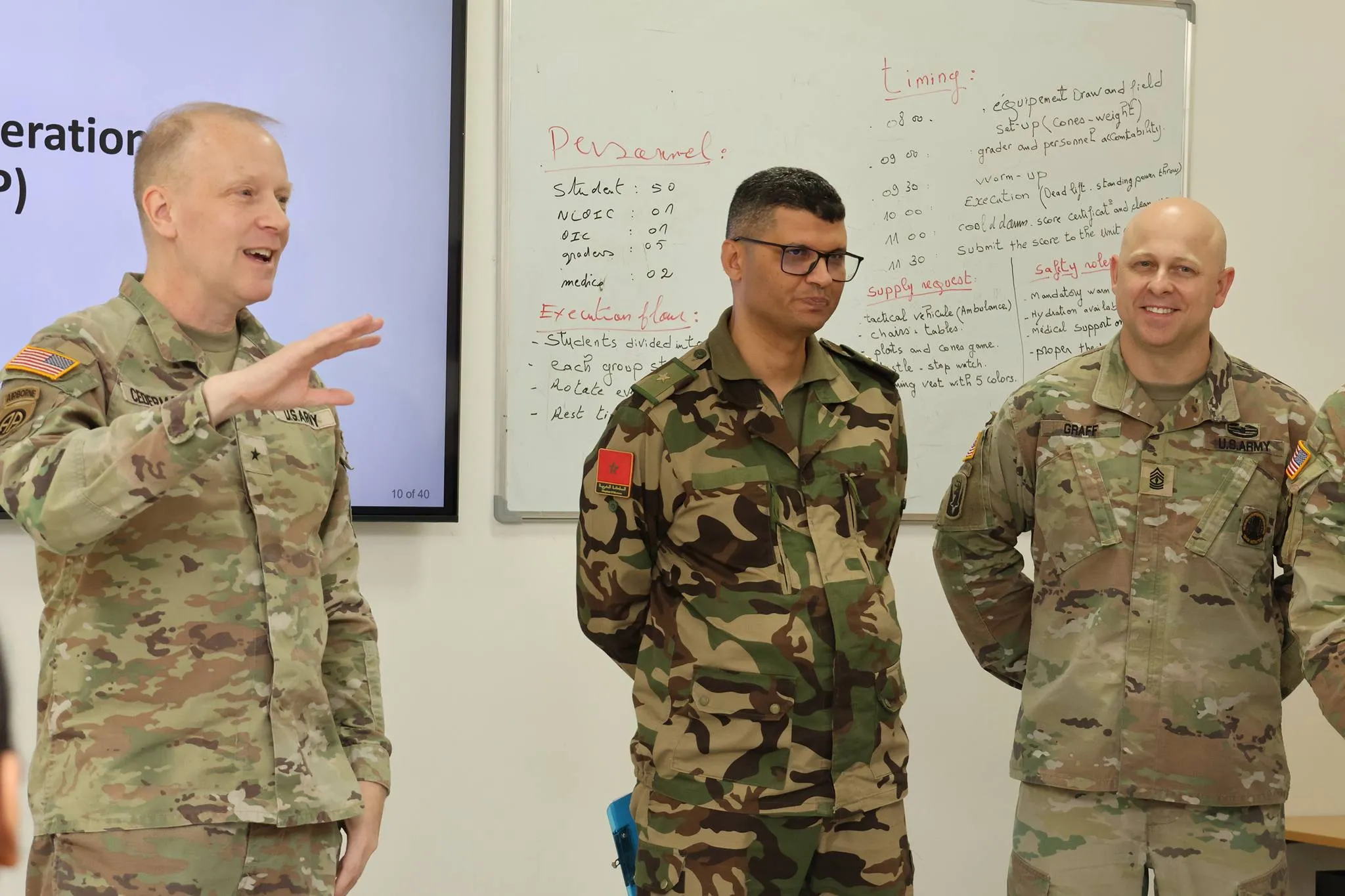
The academic phase of the African Lion exercise is currently taking place in Agadir, Morocco, from April 20 to May 1, 2026. This event sees approximately 400 military personnel from various countries participating in an intensive training program focused on modern warfare technologies, particularly drones and cyber defense, under the supervision of instructors from the U.S. Army, Marine Corps, Air Force, and Space Force, along with other international partners, as reported by the U.S. Embassy in Morocco. The training initiative aims to not only enhance preparation for contemporary challenges but also to foster global partnerships that promote regional security across Africa.
The Royal Armed Forces (FAR) of Morocco highlight that this program is designed to develop operational command skills, improve decision-making capabilities, enhance operational readiness, and help participants adapt to modern warfare concepts which emphasize swift execution, flexibility in command, and multi-domain engagement. This training phase has been crafted to address the evolving nature of contemporary conflict environments, where operational missions demand advanced skills and the ability to function in complex and dynamic settings.
Focus on Cyber Defense and Technology Integration
Key areas of focus within the program include the development of skills in cyber defense systems, satellite operations, and unmanned aerial systems, which will subsequently transition into combat simulation phases to cultivate initiative among military leaders as integral components of the command chain. Keefe Murtaugh, the academic coordinator for the African Lion exercise, emphasizes that this academic phase serves as a critical foundation for subsequent training and operations, aiming to improve technical expertise, accelerate decision-making processes, and enhance operational effectiveness across all domains, all pivotal for reducing decision cycles in modern conflicts.
Courses are tailored for military personnel at all levels, with specific training on unmanned aerial systems covering both tactical execution and operational integration. Major Murtaugh notes that the operator training is aimed at instructing military personnel on drone operations and basic flight training, while the planning course is targeted at non-commissioned officers and officers to strategize the daily employment of drones. Advanced courses delve into emerging fields such as space operations, electromagnetic warfare, and cyber warfare, with this year introducing a new advanced course that merges electronic warfare with space operations.
The 10-day course on cyber operations underscores the exercise's emphasis on innovation and investment in modern capabilities. Lieutenant Mason Elizondo from the U.S. Army explains that the training focuses on introducing Moroccan partner forces to cybersecurity fundamentals and positioning them effectively for threat detection. The objective is to empower partners to execute their missions competently while safeguarding critical infrastructure within cyberspace. This multinational environment also facilitates a bidirectional exchange of knowledge, enhancing innovation and adaptability among participating forces.
Hicham Mouatadid, a political analyst, previously remarked that these advancements transform the exercise into a "continental military laboratory." He pointed out that this evolution aligns with a broader shift toward "cognitive combat systems," where superiority hinges on the ability to orchestrate complex interactions between humans and algorithms. Thus, African Lion is evolving into a testing ground for hybridization, exploring the limits of decision-making delegation and trust conditions between operators and automated systems.
As reported by fr.le360.ma.